Sunday, February 27, 2022
March Through Madness
Monday, February 21, 2022
Hats Off to George Washington
Sunday, February 20, 2022
Brand New World
Thursday, February 3, 2022
Anatomy of a Boss
It was, nonetheless, an era when men were evidently men. Recently, I watched an episode where a haplessly green eighteen year old joined Mr. Favor’s outfit. Ordered to rein in some misbehaving cattle, the youngster was no match for the bovine ensemble’s frenzied antics. Rowdy desperately wanted to intervene on the boy’s behalf, but Mr. Favor, who had assigned him another vital task, refused to allow it. When the poor kid was trampled to death, Rowdy was disgusted with the incredible callousness of his boss, who told him point-blank that “men are replaceable; cattle aren’t.” By the end of the episode, though, Rowdy somehow understood where Mr. Favor was coming from in their cow-eat-cow world.
Favor’s cool hard line, which was probably closer to the reality of the times and job, wouldn’t wash today on the small screen. He was, after all, the show’s leading man, authority figure, and hero. But then when you get right down to it, I suspect there are more than a few boss figures who believe men (and women) are replaceable. Head ‘em up; move ‘em out!
Thursday, January 27, 2022
Beware of the Sponge
(Originally published on 7/11/11)I absolutely loved Friday’s special, which featured square slices of pizza with a very unique consistency. It’s kind of hard to describe all these years later, but I think a "soggy kind of savory" would do this pizza justice. Granted, I was a teenager with teenager taste buds. And no, I’m not quite certain my adult palate would so warmly embrace this pizza’s curious gooeyness, but memories of simpler times, I've found, are rarely simple.
Ah, but leave it to a fine Catholic institution of learning to cast a smothering pall over its five-star culinary hub, which is what the powers-that-were did—and with a pedestrian sponge no less. Yes, a sponge—a sopping, soiled, and bacteria-laden one. In the waning moments of the school’s three lunch periods, a sorry lot of students were assigned either sponge duty or the picking up of garbage from the cafeteria tables and off the cafeteria floor. Student councilors—seniors—would randomly select who would have to perform these messy tasks. On occasion, a general announcement might be made that any boys with red on their ties or girls with blonde hair—or some such things—would have to clean up the spilled milk and splattered mustard with the dirty sponges supplied them after everybody else was sent on his or her merry way.
We were not furnished rubber gloves for this task. Nor did we have time to wash our hands before returning to our next classes. In fact, some of us didn’t even have the time to make it to the next class before the buzzer’s knell. And a few less than sympathetic teachers—the ones who no doubt hated kids and should have been in another profession—would send us to the dean’s office, where we’d be given detention for being thirty seconds, or a minute, late because we were involuntarily cleaning messes off dirty lunch tables with grimy sponges or collecting refuse off tables and the floor.
I’ve since learned that sponge duty is a relic of the past at my alma mater. Evidently, the more informed age in which we live puts a premium on both clean hands and clean thoughts—and it has cast asunder a vaunted tradition. And while I’m philosophically opposed to the nanny state of affairs, I’m not shedding any tears that the nasty sponge, and all that it wrought, has been retired for all time at my old high school. In fact, I hope one has been bronzed and is on display in the school's Cardinal's Room, which celebrates the life and times of the less than savory man for whom the school is named.
Thursday, January 13, 2022
The Return to Normalcy on Hold
On August 9, 1974, Gerald Ford was sworn in as president a few minutes past the noon hour. I was eleven years old at the time and visiting my maternal grandparents in bologna country, leafy Bangor, Pennsylvania. Richard Nixon had delivered his resignation speech the previous night. My adolescence notwithstanding, I was fully aware that the Watergate scandal was a big deal, and that the citizenry at large were fixated on it. But this momentous day in history occurred in an age before Twitter, 24/7 cable television, and free speech zones on college campuses. So, for the average Tom, Dick, and Harriet, it wasn’t quite all consuming.
Still, I remember the relief felt by many Americans as Ford delivered what was, in essence, his inaugural address in the East Room of the White House. It was succinct, self-effacing, and reassuring. “Our long national nightmare is over,” he intoned. Ford was the anti-Nixon and lived up to the billing—the only president to assume office not having been elected by we the people. Upon Vice President Spiro Agnew’s ignominious resignation, he was appointed by Richard Nixon to fill the vacancy and—as instructed by the 25th Amendment to the Constitution—confirmed by both houses of the Congress. “The Constitution works,” Ford also said on that solemn afternoon. Yes, it really does. If only the craven, short-sighted politicians of today could see that.
But it’s a vastly different time and place. My mother
pointed out that Mr. Ford looked somewhat like her dad, my grandfather, all
those years ago. I could see the resemblance, but there the similarities ended.
No, it’s 1974 by a long shot! I was further reminded of this fact while shuttling
back and forth in a car service this past week. One driver’s GPS spoke in a
sensuous woman’s voice: “Turn ri-iiight. Turn le-eeeft.” Listening to these
commands for a half hour was slow torture. Seems, too, that GPS has a mind of
its own—sensuous or all business, it doesn’t matter—particularly on local back
streets. I was dropped off on the street to the west of me, and another time on
the street to the east of me. One driver whizzed past my address before I could
holler, “Stop!”—you know, like the policeman in Frosty the Snowman. (The
Microsoft Word editor suggested I be more inclusive and say, “police officer.”)
No, it’s not 1974 by a long shot! Visiting a patient in a hospital required me filling out a form on my smartphone. It was a real hassle. Approval was then sent to my e-mail address, which I had to access to show a receptionist. That was a hassle, too. I assume there are a fair percentage of folks without a smartphone or with one and not especially proficient in navigating it like me. Nevertheless, I made it from point A to point B and then had to show my vaccination card and ID to advance to point C.
So, what’s the big deal about presenting an ID when
voting? This isn’t the 1950s or 1960s. An ID is essential nowadays for every
adult with a pulse. Recently, I had to display mine when purchasing a bottle of
Nyquil cold medicine. It’s manufactured hysteria for the Twitter rabble and blathering
talking heads obsessed with politics and their respective agendas.
Sadly, the Gerald Ford tonic is no longer available. Its expiration date having long expired. Oh, and New York City pols want non-citizens to have a say in municipal elections. A thirty-day residency requirement is all they ask. What could possibly go wrong? A whole lot more, I fear. Our Long National Nightmare 2.0 is not over and a “Return to Normalcy” seems unlikely anytime soon. Why? Because it’s not 1974 by a long shot!
Tuesday, January 11, 2022
Just Like Rip Van Winkle
A couple of weeks prior to Christmas 1999, I brought a package to a private mailing outlet that I frequently patronized. The local post office is the pits! On this occasion, the shop’s proprietor and I discussed the impending year 2000. “Remember,” he asked, “how we used to calculate how old we would be in the year 2000?” Funny, but I did recall doing such math at some point in my youth. You know, when I felt immortal and impervious to the slings and arrows of life.
The new century seemed so far, far away back then. So
far, in fact, that it appeared as a mirage, something that was just too distant
to ever come to pass. But come to pass it did—and then some—and it’s been
pretty much all downhill since. Well, not all downhill. I am grateful for
Amazon Prime and Netflix. I just binge-watched Cobra Kai season four on
the latter and will be watching Wycliffe for a second time on the
former. Wycliffe is a 1990s British detective series based on novels by W.J.
Burley. It’s pre-Internet and cell phones, and the lead detective has minimal
angst to contend with—his personal life isn’t an unfolding soap opera—which is
a welcome change in the genre. Granted, there are a lot of uber-angst laden
policemen, like Luther, which I enjoyed as well.
Not very long after my philosophical confab with the postmaster-entrepreneur, I visited a friend in Manhattan on New Year’s Eve day 1999. When we parted ways at the 72nd Street subway station entrance, I said to him, “I’ll see you in the next century…century (fade out).” I solemnly uttered the sentence with a distinct accent, reprising the words and manner of Doctor Farwell played by actor Oscar Beregi in The Twilight Zone episode “The Rip Van Winkle Caper.”
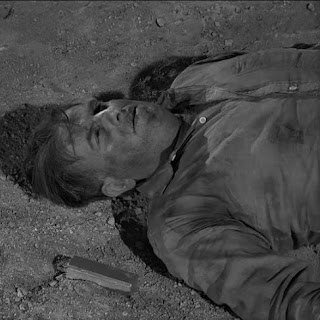
Plot: The mastermind, Farwell, and his cohorts hijack a train load of gold on its way to Fort Knox. The plan: Put everyone in his aberrant entourage to sleep for one hundred years and—when the heat is off—wake up free to spend their ill-gotten gains as extremely rich men. The chief problem with the plan—ingenious as it was—is that the future is an unknown quantity. Farwell and company smell the coffee in 2061 all right, which is only thirty-nine years from now. But that world is full of people driving George Jetson-type Teslas and sporting minimalist-futuristic apparel. The gold bullion, by the way, is worthless, because in the intervening one hundred years, humans found a way to manufacturer the stuff.
Doc Farwell in 1961, of course, didn’t take into
account things like climate change. Had he made it out of Death Valley alive—which
is where the gang slumbered for a century—he’d no doubt have been surprised how
different his home of state of California was and the country at large, too. A
lesson here: The Big Brain figured out how to put people to sleep—with all the
body functions in suspended animation—but was like a helpless child in a new
world full of new things and new attitudes. Think of all the newfangled technology
that would have been at his fingertips had he made it out of the desert. God
only knows what the technology will be like in 2061.
So, why not? Let me calculate my age in 2061. Oh, never mind: I’ll be dead as a doornail then. And considering what I see happening in the here and now on so many fronts, there are worse things than that. Personally, I believe Farwell would have done better to go back in time to 1860, so long as he avoided combat, typhoid fever, and dysentery.