My Facebook homepage recently alerted me of people that I “may know” out in the virtual ether. Despite the word “people” being plural (meaning two or more persons), I received the name of only one soul who might or might not be familiar to me. And a day or so later this very same person was suggested to me as a potential Facebook friend.
Admittedly, I was intrigued with this person’s peculiar name: “Mosholu Parkway.” The surname was certainly unfamiliar to me. I don’t remember any Parkway family living in the old neighborhood, or a kid by that name in my high school class. I, too, just cannot recall anybody named Parkway that I worked alongside. No, I never had an editor named Parkway parsing my words, either.
Hey, wait just a minute here. Mosholu Parkway isn’t a person after all. It’s a leafy Bronx thoroughfare that I’ve driven on countless times. In fact, it’s where a flesh-and-blood person drove up an entrance incline to the parkway (near the New York Botanical Garden in the Bronx) in the wrong lane. Having just purchased a spiffy new set of wheels, he wanted to avoid at all costs a small pothole—“the bump” as it was dubbed—in the wrong but all too literal right lane.
As we inched up the hill on our way home from a Mets' game at Shea Stadium, the car’s two passengers were for—one brief shining moment at least—terrified. Good fortune, though—fate’s huge and generous hand—intervened. We weren’t met at the hilltop by a fellow driver in the left—when we really should have been in the right—lane. Courtesy of a long night game and the lateness of the hour, we were spared a head-on collision on the typically busy Mosholu Parkway—not an actual person, I know, but a friend indeed.
Saturday, September 15, 2012
Sunday, August 26, 2012
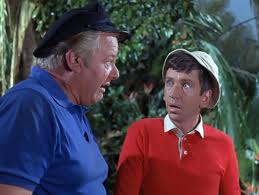
"Uplifting Platitude Central" Meet Gilligan...
Perhaps it was the tufted titmouse I spotted in a local sycamore tree that reminded me of something incredibly uplifting. No, wait just a moment here. I didn’t see a tufted titmouse today, or yesterday for that matter. I don’t even know if the species inhabit this slice of geography. And even had I spotted one, this little bird is too small to resurrect the image that bedazzled my mind and body alike. I could understand had I laid eyes on an eagle, hawk, or even a vulture, but I didn’t see any of them, either. So, it was something else entirely that resurrected the scene of an angelic and well-meaning Gilligan attempting to fly in an episode of Gilligan’s Island entitled, “Will the Real Mr. Howell Please Stand Up?”
Via a radio broadcast, Mr. Howell had discovered that an impostor was back in civilization and spending his money like there was no tomorrow. He thus offered a not inconsiderable sum to the one castaway who could get him off the island and safely back to the mainland. This monetary incentive inspired many clever inventions, including a pontoon boat built by the professor, which is what Howell ultimately settled upon as his last best hope.
Gilligan, on the other hand, had crafted a pair of super-sized bird wings in anticipation of taking flight. For a test run he scaled a very tall tree. But when the Skipper spotted him up above, he told a flapping Gilligan, who was indeed suspended in air and ipso facto flying, “Gilligan, you can’t fly!” “I can’t?” Gilligan asked. “No!” And down Gilligan went—fast and hard to the ground. The laugh track howled heartily at his misfortune.
Since Facebook, aka "Uplifting Platitude Central," is awash in both New Age and Old Religion bromides, I thought I would contribute to the surfeit my very own from Gilligan’s Island, and one with a compelling moral message. That is: “If you believe you can fly, you can. And don’t let anyone tell you otherwise!” On the other hand, perhaps the Skipper was on to something and we really can’t fly—with feathers anyway. Food for thought.
Via a radio broadcast, Mr. Howell had discovered that an impostor was back in civilization and spending his money like there was no tomorrow. He thus offered a not inconsiderable sum to the one castaway who could get him off the island and safely back to the mainland. This monetary incentive inspired many clever inventions, including a pontoon boat built by the professor, which is what Howell ultimately settled upon as his last best hope.
Gilligan, on the other hand, had crafted a pair of super-sized bird wings in anticipation of taking flight. For a test run he scaled a very tall tree. But when the Skipper spotted him up above, he told a flapping Gilligan, who was indeed suspended in air and ipso facto flying, “Gilligan, you can’t fly!” “I can’t?” Gilligan asked. “No!” And down Gilligan went—fast and hard to the ground. The laugh track howled heartily at his misfortune.
Since Facebook, aka "Uplifting Platitude Central," is awash in both New Age and Old Religion bromides, I thought I would contribute to the surfeit my very own from Gilligan’s Island, and one with a compelling moral message. That is: “If you believe you can fly, you can. And don’t let anyone tell you otherwise!” On the other hand, perhaps the Skipper was on to something and we really can’t fly—with feathers anyway. Food for thought.
A footnote: The professor’s guaranteed seaworthy pontoon boat sunk immediately upon launch into the murky waters of the lagoon. One more: the Howell imposter, inebriated from an excess of expensive champagne, fell off a Howell-owned yacht into the ocean waters somewhere and washed up—alive and well—on the island. Coincidence, you say? There are no coincidences in life. At least that’s what I have gleaned in Uplifting Platitude Central.
Saturday, August 25, 2012
The "Back-of-the Head" Image Series
And thus began our not quite award-winning “Back-of-the Head” image series. We weren't the gutsiest of photographers. Getting caught in the act of taking pictures of individuals we really didn’t know concerned us. After all, our prey might have actually questioned why we were doing what we were doing. Some people are camera shy as well. Almost invariably, a case could have been made that something wasn’t quite kosher with our actions.
Looking back all these years later, it would have been best to just tell them the unvarnished truth. Explain that we were in the process of compiling a neighborhood yearbook—a picture book to remember one and all by. Who wouldn’t have wanted to be part of that?
But the yearbook per se never materialized, and so I am left with a hodgepodge of back-of-the-head images of an eclectic cast of characters, including Howie G and his mother, who went for a walk each and every evening at the exact same time. Without fail, they ran their daily errands while chewing over the day’s events. Mother and son were always in intimate conversation, which was kind of special. Oh, I did manage to snap an occasional profile picture and even a few aerial shots from a second-floor window. These photographs will have to suffice in remembering Howie G and company from that very colorful snapshot in time—when city neighborhoods had both character and characters…lots of them in fact.
(Photos from the personal collection of Nicholas Nigro)
Friday, August 24, 2012
The Noble Experiment
For a couple of years in the early 1980s, the family car was a Champagne-colored Chevy Chevette. It looked more like “Army green” to me. During that snapshot in time, an increasing number of folks in the old neighborhood were giving fuel-efficient cars a fair look for the first time in their lives. On the heels of recent gas shortages and unwelcome price spikes, it made sense to drive vehicles without voracious fuel appetites. And, too, reducing energy consumption is always a good idea—for a whole host of reasons—isn't it?
My father owned a light blue 1959 Chevrolet Biscayne for fourteen years. In 1973, he bought a used 1968 Buick Skylark from a neighbor on the next block. It kind of sat on the road—you could almost walk into it. Eight years later, he was coaxed into purchasing the car that was—evidently—driving people happy. It was a noble experiment indeed to buy one with a manual transmission, no air conditioning, and back windows that would only roll down half way—a good gas mileage trifecta. Trouble was that Dad wasn’t exactly “Mr. Smooth” with the stick shift and the pool of alternative drivers was slim. So, when one added the lack of air conditioning and the back window thing to a never-ending series of shaky starts, summertime rides could get pretty hellish. The Chevy Chevette was retired after only a couple of years.
As I gaze upon the city streets three decades later, I see bigger than ever vehicles spewing more and more carbon dioxide into the air and taking up a whole lot of parking space, too. And all of this in an era of high gas prices and the general cost of living off the charts. Occasionally, though, I am heartened when I see a Smart Car whiz by me, but I worry its driver will one day be cast asunder by a runaway SUV or pickup truck. Perhaps it's noble experiment time again.
(Photo from the personal collection of Nicholas Nigro)
My father owned a light blue 1959 Chevrolet Biscayne for fourteen years. In 1973, he bought a used 1968 Buick Skylark from a neighbor on the next block. It kind of sat on the road—you could almost walk into it. Eight years later, he was coaxed into purchasing the car that was—evidently—driving people happy. It was a noble experiment indeed to buy one with a manual transmission, no air conditioning, and back windows that would only roll down half way—a good gas mileage trifecta. Trouble was that Dad wasn’t exactly “Mr. Smooth” with the stick shift and the pool of alternative drivers was slim. So, when one added the lack of air conditioning and the back window thing to a never-ending series of shaky starts, summertime rides could get pretty hellish. The Chevy Chevette was retired after only a couple of years.
As I gaze upon the city streets three decades later, I see bigger than ever vehicles spewing more and more carbon dioxide into the air and taking up a whole lot of parking space, too. And all of this in an era of high gas prices and the general cost of living off the charts. Occasionally, though, I am heartened when I see a Smart Car whiz by me, but I worry its driver will one day be cast asunder by a runaway SUV or pickup truck. Perhaps it's noble experiment time again.
(Photo from the personal collection of Nicholas Nigro)
Sunday, August 19, 2012
Mad Max 2
Time flies these days—even, it seems, when one is not having fun. It’s closing in on a year now since a very special diner, and a secular holy place, served up its last grilled hamburger and bacon, eggs, and home fries breakfast platter. And the really sad thing is that we won’t see its likes again around these parts. Changing tastes, astronomical rents, high-operating costs, and a business-unfriendly bureaucracy have seen to that. The owner of this gritty eatery was there seven days a week—on the physical premises all the time with the exception of several hours on Sunday afternoon—and did virtually all the cooking himself. While he was plying his culinary trade, it was the norm to both greet and bid farewell to this classic diner impresario. I miss the thunderous “Hi!” greetings and equally booming “Take care!” farewells from grill side.
I was reminded of both this personal and societal loss when I bumped into the diner’s number two man for many years. Fortunately, he has found work in the area. While I chatted with him, an old blowhard got out of a car and yelled over, “Hey, Pete!” I asked, “Wasn’t he a diner customer?” Pete replied, “A long time ago.” I, of course, knew that Max was indeed a patron. He was unforgettable.
Almost invariably, Max would double park his huge boat of a car and have arguments with people on the street before entering the diner. He ordered the same thing all the time—like so many of us did—and executed his usual pre-meal ritual. Before eating his ham and egg sandwich, he swallowed a medley of meds and then swigged from a bottle of Pepto-Bismal, which he pulled out of his jacket pocket. Max was always loud and loutish.
What surprised me about seeing Max in the flesh today was that I presumed he was long dead. The man was old, obese, and red-skinned many, many years ago. He appeared then to be among the living courtesy of those pockets full of pills and bottles of Pepto-Bismal. But there Max was—all these years later and in living color—double parked in a heavily trafficked thoroughfare and heading off to purchase lottery tickets, which was where Pete was going, too. Somehow, though, seeing Mad Max alive and well—albeit still old, obese, and red-skinned—made my day.
I was reminded of both this personal and societal loss when I bumped into the diner’s number two man for many years. Fortunately, he has found work in the area. While I chatted with him, an old blowhard got out of a car and yelled over, “Hey, Pete!” I asked, “Wasn’t he a diner customer?” Pete replied, “A long time ago.” I, of course, knew that Max was indeed a patron. He was unforgettable.
Almost invariably, Max would double park his huge boat of a car and have arguments with people on the street before entering the diner. He ordered the same thing all the time—like so many of us did—and executed his usual pre-meal ritual. Before eating his ham and egg sandwich, he swallowed a medley of meds and then swigged from a bottle of Pepto-Bismal, which he pulled out of his jacket pocket. Max was always loud and loutish.
What surprised me about seeing Max in the flesh today was that I presumed he was long dead. The man was old, obese, and red-skinned many, many years ago. He appeared then to be among the living courtesy of those pockets full of pills and bottles of Pepto-Bismal. But there Max was—all these years later and in living color—double parked in a heavily trafficked thoroughfare and heading off to purchase lottery tickets, which was where Pete was going, too. Somehow, though, seeing Mad Max alive and well—albeit still old, obese, and red-skinned—made my day.
Saturday, August 18, 2012
The World We Knew...and Know...
Courtesy of a compelling post and image today in a nostalgic Facebook group, which I am a member, I was reminded of The World Book encyclopedia. My parents purchased a set sometime in the late 1960s from a door-to-door salesman. It seems legitimate door-to-door salespersons really existed once upon a time, and that regular folks occasionally even purchased the things they were peddling. People coming to my door nowadays are, foremost, looked upon with great suspicion and completely ignored if possible.
Anyway, back to more pleasant thoughts and The World Book encyclopedia redux, which resurrected countless memories of school reports researched entirely within these thorough sources of information. Since computers and plagiarism software didn’t yet exist, our teachers had to deduce the Holmesian old-fashioned way whether or not little Jimmy and Mary Pat were turning in someone else’s intellectual property and claiming it as their own.
The World Book didn’t end with its A to Z reservoir of facts on everything from history to science to sports. Annually, the company forwarded its customers a special yearbook, updating the major scientific and technical breakthroughs, watershed cultural shifts, big news stories, and more. I don’t know why, but the things that fascinated me most in those yearbooks were their “Death of Notable Persons” sections. As a youth, I recall combing these lists of recently deceased celebrities, politicians, scientists, businesspersons, et al. There’s no substitute for a dead person to spur interest in all that he or she did to be included in a “Death of Notable Persons” roster in The World Book encyclopedia. I am happy to report that The World Book lives on in the digital age. I fear, though, that kids today don’t give too much thought to dead people of note, because for most of them life began yesterday.
Anyway, back to more pleasant thoughts and The World Book encyclopedia redux, which resurrected countless memories of school reports researched entirely within these thorough sources of information. Since computers and plagiarism software didn’t yet exist, our teachers had to deduce the Holmesian old-fashioned way whether or not little Jimmy and Mary Pat were turning in someone else’s intellectual property and claiming it as their own.
The World Book didn’t end with its A to Z reservoir of facts on everything from history to science to sports. Annually, the company forwarded its customers a special yearbook, updating the major scientific and technical breakthroughs, watershed cultural shifts, big news stories, and more. I don’t know why, but the things that fascinated me most in those yearbooks were their “Death of Notable Persons” sections. As a youth, I recall combing these lists of recently deceased celebrities, politicians, scientists, businesspersons, et al. There’s no substitute for a dead person to spur interest in all that he or she did to be included in a “Death of Notable Persons” roster in The World Book encyclopedia. I am happy to report that The World Book lives on in the digital age. I fear, though, that kids today don’t give too much thought to dead people of note, because for most of them life began yesterday.
Monday, August 13, 2012
Channeling Uncle Kevin
While I was growing up in the 1960s and 1970s, it was commonplace in the neighborhood for multi-generations to be living under the same roofs. Three family homes in the Bronx's Kingsbridge often housed three tenant families who were blood relations. One such extended family lived on the next block. A bachelor named Kevin resided in the ground floor apartment; his brother and sister-in-law directly above him.; and Kevin’s nephew, wife, and several great nieces and great nephews above them.
It seems just about everybody in the old neighborhood had a moniker of some kind. While Kevin wasn't related to me in any way, he was known to a lot of people, including me, as “Uncle Kevin.” What distinguished the man in that colorful snapshot in time was his wooden leg and stilted gait. If memory serves, he had lost a good portion of his right leg in World War I. Naturally, Uncle Kevin’s story fascinated us local kids. He was, however, a taciturn gentleman with an emotional force field around him, which we respected. In other words, we didn’t feel we should badger him with questions about how he lost his leg, what it’s like to strap on a wooden leg every morning, and can we—just maybe—have a look-see.
Fast forward forty years and Uncle Kevin came back into my life. No, not physically or via a medium’s séance. Rather, I thought about him when suddenly, and without fair warning, when I found myself wearing a locked leg. Not the wooden kind like Uncle Kevin wore, but one that functioned similarly. My high-tech, computerized prosthetic knee—the vaunted C-Leg—at long last malfunctioned after four and one-half years of noble service. And when it did, the knee locked up and assumed its safety mode. Wearers can awkwardly—and very gingerly—maneuver around in the safety mode. But until they are serviced, the C-Legs are little more than pricey peg legs.
When I first got my C-Leg, I asked my prosthetist about the ramifications of a dead battery or a computer malfunction. Putting my capacity to walk in a computer’s hands didn’t come naturally to me. “What would happen if I were out and about and something went awry?” I asked. “You’ll be able to get home,” he replied. And he was right about that. As a ten-year-old boy, I pined to see what Uncle Kevin’s leg looked like and kind of wished he was my real uncle. Now, pushing fifty—and courtesy of life’s unpredictable and sometimes Byzantine twists and turns—I’d appreciate a gander even more. I will, though, have to content myself by walking in Uncle Kevin’s shoes today, tomorrow, and for the immediate future—and hope I don't fall on my face along the way. Uncle Kevin—veteran and amputee—didn’t have it easy but, in retrospect, he made it look so.
It seems just about everybody in the old neighborhood had a moniker of some kind. While Kevin wasn't related to me in any way, he was known to a lot of people, including me, as “Uncle Kevin.” What distinguished the man in that colorful snapshot in time was his wooden leg and stilted gait. If memory serves, he had lost a good portion of his right leg in World War I. Naturally, Uncle Kevin’s story fascinated us local kids. He was, however, a taciturn gentleman with an emotional force field around him, which we respected. In other words, we didn’t feel we should badger him with questions about how he lost his leg, what it’s like to strap on a wooden leg every morning, and can we—just maybe—have a look-see.
Fast forward forty years and Uncle Kevin came back into my life. No, not physically or via a medium’s séance. Rather, I thought about him when suddenly, and without fair warning, when I found myself wearing a locked leg. Not the wooden kind like Uncle Kevin wore, but one that functioned similarly. My high-tech, computerized prosthetic knee—the vaunted C-Leg—at long last malfunctioned after four and one-half years of noble service. And when it did, the knee locked up and assumed its safety mode. Wearers can awkwardly—and very gingerly—maneuver around in the safety mode. But until they are serviced, the C-Legs are little more than pricey peg legs.
When I first got my C-Leg, I asked my prosthetist about the ramifications of a dead battery or a computer malfunction. Putting my capacity to walk in a computer’s hands didn’t come naturally to me. “What would happen if I were out and about and something went awry?” I asked. “You’ll be able to get home,” he replied. And he was right about that. As a ten-year-old boy, I pined to see what Uncle Kevin’s leg looked like and kind of wished he was my real uncle. Now, pushing fifty—and courtesy of life’s unpredictable and sometimes Byzantine twists and turns—I’d appreciate a gander even more. I will, though, have to content myself by walking in Uncle Kevin’s shoes today, tomorrow, and for the immediate future—and hope I don't fall on my face along the way. Uncle Kevin—veteran and amputee—didn’t have it easy but, in retrospect, he made it look so.
Monday, June 25, 2012
A Night to Remember
Thirty-nine years ago on this very night—June 25, 1973—I attended my first Mets' game at “beautiful Shea Stadium.” That’s how announcer Curt Gowdy described the place a mere four years earlier in a World Series highlight film. Anyway, it was more than beautiful to me as a ten-year-old boy. From the vantage point of my wide-eyes, it was awe-inspiring—Shea Stadium was the quintessential Wonder of the World. While I had been to Yankee Stadium on multiple occasions, I had only seen the "Big Shea" through the screen of my family’s black-and-white television set. So, to experience Shea Stadium live and in living color with its totally unique ballpark din—in close proximity to LaGuardia Airport runways—made it a night to remember.
An older neighbor of mine chauffeured a bunch of us to the game in a fire truck red Rebel, a classic AMC car from early 1970s. We had acquired the tickets by cutting coupons from the backs of Dairylea brand milk cartons, which wasn’t as easy as it sounds. Looking back, the actual ticket values were $1.30 a pop—grandstand seating in the stadium’s uber-high altitude upper deck. (They cost a $1.50 a couple of years later.) The Mets just weren’t doling out box seats to the area’s milk carton cutters. But it was a simpler time when free tickets of any kind mattered.
While I remembered this very special day in history—hence this blog—I didn’t recall the starting pitcher or the lineup. I knew for certain my boyhood idol, Tom Seaver, wasn’t on the mound, and was pretty sure the legendary Willie Mays didn't get into the game, either. Yogi Berra was the team’s manager—I knew that—and a not especially memorable Met named Jim Gosger was one of the outfielders that night. I don’t know why I remembered Gosger being in the game, but I did. I recalled, too, the tragic outcome. Entering the ninth inning, my team led two to nothing. The opposition Chicago Cubs, however, scored three runs and won the game. I was cruelly razzed by a couple of older males who accompanied me to the ballpark—fans, of course, of my home borough's team in that other league and the Mets' cross-town rivals. Crestfallen, my older sister, who also was along for the ride, bought me a Mets' helmet as we exited paradise—so all was not lost. And life went on—almost four decades and counting as a matter of fact.
Postscript: Due to the magic of the Internet and the unfathomable depths of the information superhighway, I resurrected that evening’s box score. I was right about Jim Gosger. Tug McGraw blew a save opportunity and Jon Matlack took the loss that night. The attendance was 31,984 and the game time temperature was seventy degrees, close to where it is as I write these words.
An older neighbor of mine chauffeured a bunch of us to the game in a fire truck red Rebel, a classic AMC car from early 1970s. We had acquired the tickets by cutting coupons from the backs of Dairylea brand milk cartons, which wasn’t as easy as it sounds. Looking back, the actual ticket values were $1.30 a pop—grandstand seating in the stadium’s uber-high altitude upper deck. (They cost a $1.50 a couple of years later.) The Mets just weren’t doling out box seats to the area’s milk carton cutters. But it was a simpler time when free tickets of any kind mattered.
While I remembered this very special day in history—hence this blog—I didn’t recall the starting pitcher or the lineup. I knew for certain my boyhood idol, Tom Seaver, wasn’t on the mound, and was pretty sure the legendary Willie Mays didn't get into the game, either. Yogi Berra was the team’s manager—I knew that—and a not especially memorable Met named Jim Gosger was one of the outfielders that night. I don’t know why I remembered Gosger being in the game, but I did. I recalled, too, the tragic outcome. Entering the ninth inning, my team led two to nothing. The opposition Chicago Cubs, however, scored three runs and won the game. I was cruelly razzed by a couple of older males who accompanied me to the ballpark—fans, of course, of my home borough's team in that other league and the Mets' cross-town rivals. Crestfallen, my older sister, who also was along for the ride, bought me a Mets' helmet as we exited paradise—so all was not lost. And life went on—almost four decades and counting as a matter of fact.
Postscript: Due to the magic of the Internet and the unfathomable depths of the information superhighway, I resurrected that evening’s box score. I was right about Jim Gosger. Tug McGraw blew a save opportunity and Jon Matlack took the loss that night. The attendance was 31,984 and the game time temperature was seventy degrees, close to where it is as I write these words.
Saturday, June 23, 2012
Touched by a Rat
Angels touch some people, or so I hear. No such luck for me today, who was however touched by a rat at the 14th Street subway station in lower Manhattan. I’ve spotted these creatures there before, running along not only the tracks but the narrow platform as well. Suffice it to say this is not a good place to shriek “eek” and panic.
I suppose it doesn't help that I always seek out the last car of the subway train, which usually gets me a seat for the trip home, but also happens to be near a considerable garbage dumpster of some kind. While resting my weary body against this thing several hours ago, a rodent with a very long tail scurried by me and then returned for an encore over my foot simultaneous with a northbound Number 1 train pulling into the station. I genuinely feared my new friend might join me for the ride. Happily, though, it had other plans. While I’m not a superstitious sort, this kind of close encounter in an excessively humid, urine-smelling underground subway lair did not bode well for the future.
Subway rides can turn on a dime into a ride from hell. All it takes is one passenger or multiple passengers to make this nightmare a reality. Foremost, you don’t want to ride with a deranged soul who could conceivably kill you on the train. That didn’t happen today. You also don’t want a malodorous individual, who hasn’t bathed since the Clinton administration, to sit nearby. That didn’t happen, either. No, this group from hell was a couple of boorish families who never missed a beat in their ill-mannered, shrill, and stupid ways. The subway car was their playground. If I printed out a transcript of what I heard on the train from 96th Street in Manhattan until when I exited in the Bronx several miles later, there would be no periods in it. One woman even painted her nails on the journey while standing only inches away from me. I still have a headache.
I could decipher the disgust on the faces of the rest of the subway car’s passengers—a New York City melting pot if ever there was one—even though most of them were, on the surface, stone faced. Generally speaking, people, including me, prefer not to confront boors, who live by their perverse boorish codes. In other words, they’ll scratch your eyes out for telling them to tone down their boorishness.
As the train inched closer and closer to where I called home, and this unsavory brood didn’t exit, I grew increasingly anxious. I dreaded the thought they might actually live near me and that I might actually see them again. When I heard one of them inquire as to where they were getting off, the reply sounded a little too much like my station. I was prepared to stay on the train. Turns out, I was mistaken and exited where I intended to exit. Walking ever so gingerly down this elevated subway station’s steps, I was greeted by a woman I know from my neighborhood who regularly asks passersby for quarters, even though she insists on at least a dollar’s worth of them. I said rather testily, “Can you at least wait until I get down?” She said she wanted to get something to eat from a local fast-food joint called Popeye’s. I gave her multiple quarters and she promptly hopped on a bus that pulled alongside her. She didn’t use the change to pay the fare, I detected, and the bus was poised to take her a long way from Popeye’s. Damn that rat. Evidently, angels don’t ride the subways. And I don’t blame them.
I suppose it doesn't help that I always seek out the last car of the subway train, which usually gets me a seat for the trip home, but also happens to be near a considerable garbage dumpster of some kind. While resting my weary body against this thing several hours ago, a rodent with a very long tail scurried by me and then returned for an encore over my foot simultaneous with a northbound Number 1 train pulling into the station. I genuinely feared my new friend might join me for the ride. Happily, though, it had other plans. While I’m not a superstitious sort, this kind of close encounter in an excessively humid, urine-smelling underground subway lair did not bode well for the future.
Subway rides can turn on a dime into a ride from hell. All it takes is one passenger or multiple passengers to make this nightmare a reality. Foremost, you don’t want to ride with a deranged soul who could conceivably kill you on the train. That didn’t happen today. You also don’t want a malodorous individual, who hasn’t bathed since the Clinton administration, to sit nearby. That didn’t happen, either. No, this group from hell was a couple of boorish families who never missed a beat in their ill-mannered, shrill, and stupid ways. The subway car was their playground. If I printed out a transcript of what I heard on the train from 96th Street in Manhattan until when I exited in the Bronx several miles later, there would be no periods in it. One woman even painted her nails on the journey while standing only inches away from me. I still have a headache.
I could decipher the disgust on the faces of the rest of the subway car’s passengers—a New York City melting pot if ever there was one—even though most of them were, on the surface, stone faced. Generally speaking, people, including me, prefer not to confront boors, who live by their perverse boorish codes. In other words, they’ll scratch your eyes out for telling them to tone down their boorishness.
As the train inched closer and closer to where I called home, and this unsavory brood didn’t exit, I grew increasingly anxious. I dreaded the thought they might actually live near me and that I might actually see them again. When I heard one of them inquire as to where they were getting off, the reply sounded a little too much like my station. I was prepared to stay on the train. Turns out, I was mistaken and exited where I intended to exit. Walking ever so gingerly down this elevated subway station’s steps, I was greeted by a woman I know from my neighborhood who regularly asks passersby for quarters, even though she insists on at least a dollar’s worth of them. I said rather testily, “Can you at least wait until I get down?” She said she wanted to get something to eat from a local fast-food joint called Popeye’s. I gave her multiple quarters and she promptly hopped on a bus that pulled alongside her. She didn’t use the change to pay the fare, I detected, and the bus was poised to take her a long way from Popeye’s. Damn that rat. Evidently, angels don’t ride the subways. And I don’t blame them.
Saturday, June 16, 2012
Thrice Bitten
Sadly, Pedro Borbon died a couple of weeks ago at the not-so-old age of sixty-five. He was a pretty good relief pitcher for the Cincinnati Reds—the Big Red Machine—during the 1970s. What I remember most about him, though, occurred during the National League playoffs in 1973 against my beloved Mets. That’s when Pedro took a hearty bite or two out of a Mets' baseball cap.
It occurred during a famous bench-clearing brawl initiated by a Bud Harrelson-Pete Rose dust-up at second base. After order was restored, Borbon, who had his own cap knocked off in a brouhaha with Mets' pitcher “Buzz” Capra, reached down to the ground and placed what he thought was his own cap on his head, except that it wasn’t. It belonged to outfielder Cleon Jones of the Mets. When Borbon realized his faux pas, he either bit a fair-sized hole in it or shred it to pieces, depending on which accounts you want to believe, and tossed it to the ground in utter disgust. Capra claims he still has the cap as a memento of that wild and wooly occurrence in an amazing comeback season.
Via a Google search, I couldn’t help but take a stroll down memory lane into the life and times of Pedro Bordon. And, you know what, I never knew he was a serial biter. I thought the Mets' cap was the long and short of his Dracula-esque antics. A year later, it seems, during another bench-clearing brawl, Borbon took a considerable bite out of the side of a Pittsburgh Pirates player named Daryl Patterson, who was actually given a post-game tetanus shot. Fast forward a few years and Borbon, in a Cincinnati disco, took another considerable bite out of someone's hide—well, actually, out of a bouncer's chest. When the exasperated Reds' management traded him away in 1979, urban legend has it that Borbon put a voodoo hex on the organization. He later denied the allegation. Evidently, the big shots either forgave him or believed him, because he was elected to the Cincinnati Reds Hall of Fame in 2010. All’s well that ends well. RIP Pedro Borbon, a true original.
It occurred during a famous bench-clearing brawl initiated by a Bud Harrelson-Pete Rose dust-up at second base. After order was restored, Borbon, who had his own cap knocked off in a brouhaha with Mets' pitcher “Buzz” Capra, reached down to the ground and placed what he thought was his own cap on his head, except that it wasn’t. It belonged to outfielder Cleon Jones of the Mets. When Borbon realized his faux pas, he either bit a fair-sized hole in it or shred it to pieces, depending on which accounts you want to believe, and tossed it to the ground in utter disgust. Capra claims he still has the cap as a memento of that wild and wooly occurrence in an amazing comeback season.
Via a Google search, I couldn’t help but take a stroll down memory lane into the life and times of Pedro Bordon. And, you know what, I never knew he was a serial biter. I thought the Mets' cap was the long and short of his Dracula-esque antics. A year later, it seems, during another bench-clearing brawl, Borbon took a considerable bite out of the side of a Pittsburgh Pirates player named Daryl Patterson, who was actually given a post-game tetanus shot. Fast forward a few years and Borbon, in a Cincinnati disco, took another considerable bite out of someone's hide—well, actually, out of a bouncer's chest. When the exasperated Reds' management traded him away in 1979, urban legend has it that Borbon put a voodoo hex on the organization. He later denied the allegation. Evidently, the big shots either forgave him or believed him, because he was elected to the Cincinnati Reds Hall of Fame in 2010. All’s well that ends well. RIP Pedro Borbon, a true original.
Friday, June 8, 2012
Why Donut Holes Matter
The Hubble Space Telescope did not take the image accompanying this blog. It is not a snapshot from the mystifying ether in some light-years away locale in our unfathomable universe. Rather, it’s an ordinary donut—plain as plain can be—that I placed directly on my scanner glass and one that’ll probably eat for breakfast tomorrow morning.
I purchased a six-pack of these donuts from one of my least favorite retailers and one that I patronize all the time—Rite Aid, a pharmacy chain that theoretically should be providing its customers with economies of scale bargains. They are not. Nonetheless, I was peculiarly struck by this dollar pack of six donuts and couldn’t resist. As far as I was concerned, the holes in each one of them set a new and incredibly low standard. What must today's onion rings look like? The donuts seemed, in fact, to embody the times we live in—a less for more society with little hope for a turnaround anytime soon.
Alas, our toilet papers’ widths have been considerably shaved while the circumferences of their cardboard nuclei have noticeably expanded. The bars of soap in our showers are smaller and less dense than ever before. In other words, they self-destruct in very short order after only a few full-body cleanings. And when half-gallons of our favorite orange juices morph into 59-ounce cartons and cost more, too, one cannot help but envision even bigger and bigger donut holes in the offing.
I purchased a six-pack of these donuts from one of my least favorite retailers and one that I patronize all the time—Rite Aid, a pharmacy chain that theoretically should be providing its customers with economies of scale bargains. They are not. Nonetheless, I was peculiarly struck by this dollar pack of six donuts and couldn’t resist. As far as I was concerned, the holes in each one of them set a new and incredibly low standard. What must today's onion rings look like? The donuts seemed, in fact, to embody the times we live in—a less for more society with little hope for a turnaround anytime soon.
Alas, our toilet papers’ widths have been considerably shaved while the circumferences of their cardboard nuclei have noticeably expanded. The bars of soap in our showers are smaller and less dense than ever before. In other words, they self-destruct in very short order after only a few full-body cleanings. And when half-gallons of our favorite orange juices morph into 59-ounce cartons and cost more, too, one cannot help but envision even bigger and bigger donut holes in the offing.
Sunday, April 29, 2012
Let's Go to the Correction Tape
I’ve seen them hanging on store hooks for many years now. But somehow today, I was taken aback or, more aptly, taken back to simpler times. It’s the little things in life that mean so much. I’m truly heartened that liquid paper—correction fluid—still exists in some form in these fast changing and highly technological times we live in. It’s called “BIC Wite-Out” nowadays and on sale at Staples and your favorite office supplies retailer, too, I suppose.
Contemplating this product’s role in my life and times, I recalled that Michael Nesmith of The Monkees fame had some familial connection with its inventor. So, what is one to do in this modern age, but Google. In this instance: “Michael Nesmith Correction Fluid.” Yes, it was his mother and a lowly secretary, Beth Nesmith Graham, who invented what was originally called “Mistake Out.” Mother and son lived happily ever after—financially at least. And this explains, also, why Mike Nesmith had no interest in Monkees reunions and appearances at autograph signings and nerd-populated conventions.
Anyway, this modern day liquid paper sighting of mine had some serious legs. It returned me to Cardinal Spellman High School, thirty plus years ago, and a senior-year typing class. It’s where I learned to type on a manual typewriter. We physically had to push a handle to advance our papers to the next line. We used a product called "correction tape" then—not the fluid—to mask our many errors, which we thought was simultaneously clean, cool, and a major technological advance. From what I’ve recently gleaned, it was indeed that. It covered over our multiple typing miscues, yes, and it could not be used as an inhalant, which liquid paper—evidently—was by some wayward and experimenting youth in those days of yore.
Courtesy of computers and advanced printing capabilities, we can certainly turn out pristine-looking copy these days. The problem is that dummies and dumbness can look really sharp in the new millennium, without any liquid paper or correction tape, which presents a whole new set of problems for educators and entrepreneurs. You can’t judge a book by its cover…most especially in the here and now.
(Photo from the personal collection of Nicholas Nigro)
Contemplating this product’s role in my life and times, I recalled that Michael Nesmith of The Monkees fame had some familial connection with its inventor. So, what is one to do in this modern age, but Google. In this instance: “Michael Nesmith Correction Fluid.” Yes, it was his mother and a lowly secretary, Beth Nesmith Graham, who invented what was originally called “Mistake Out.” Mother and son lived happily ever after—financially at least. And this explains, also, why Mike Nesmith had no interest in Monkees reunions and appearances at autograph signings and nerd-populated conventions.
Anyway, this modern day liquid paper sighting of mine had some serious legs. It returned me to Cardinal Spellman High School, thirty plus years ago, and a senior-year typing class. It’s where I learned to type on a manual typewriter. We physically had to push a handle to advance our papers to the next line. We used a product called "correction tape" then—not the fluid—to mask our many errors, which we thought was simultaneously clean, cool, and a major technological advance. From what I’ve recently gleaned, it was indeed that. It covered over our multiple typing miscues, yes, and it could not be used as an inhalant, which liquid paper—evidently—was by some wayward and experimenting youth in those days of yore.
Courtesy of computers and advanced printing capabilities, we can certainly turn out pristine-looking copy these days. The problem is that dummies and dumbness can look really sharp in the new millennium, without any liquid paper or correction tape, which presents a whole new set of problems for educators and entrepreneurs. You can’t judge a book by its cover…most especially in the here and now.
(Photo from the personal collection of Nicholas Nigro)
Friday, April 20, 2012
The New Call of the Wild
While sitting in the front passenger seat of my friend’s spanking new set of wheels yesterday, he announced that he needed to call his wife. Simultaneously, he wanted to show me just one example of his vehicle’s incredible technological prowess—an extra perk if you will. He informed me that he could now place the call without punching numbers into anything, or even locating a stored name in his cell phone address book. No, this phone call of his could be made exclusively with voice commands uttered in the general direction of the car’s dashboard.
I listened as my friend said, “Call.” Awaiting a response, he gazed intently at the magical dashboard. The ghost in the machine was, however, uncooperative and, evidently, couldn’t decipher this introductory salvo of his—the one that was supposed to get this hands-off phone call business rolling. It responded all right, but with words to the effect that it was unable to make heads or tails of the command. I don’t know why, but it sort of reminded me of a Marine sergeant chiding his underlings: “I can’t hearrrrr you!”
After a few more unsuccessful attempts, I said to my friend, “Why don’t you just place the call the old fashioned way?” But he would have none of it. “Call,” he said. The obstinate ghost in the machine again told him something just wasn’t kosher. “Call.” “I can’t hearrrrr you!” “Call!” “I can’t hearrrrr you!” “Call!!!” “I can’t hearrrrr you!”
After about half a dozen of these “Call” commands getting louder and louder and leading to dead ends each and every time, I excused myself. My friend, who is pushing eighty, was clearly under the bewitching spell of a computer chip somewhere in his car's dashboard. Were we both in a Twilight Zone episode? As I walked away from the car, I heard yet another “Call” of the wild, and then another one after that. I haven’t spoken to my friend since, but I sure hope that call went through and that he didn’t, in fact, enter the Twilight Zone for real.
I listened as my friend said, “Call.” Awaiting a response, he gazed intently at the magical dashboard. The ghost in the machine was, however, uncooperative and, evidently, couldn’t decipher this introductory salvo of his—the one that was supposed to get this hands-off phone call business rolling. It responded all right, but with words to the effect that it was unable to make heads or tails of the command. I don’t know why, but it sort of reminded me of a Marine sergeant chiding his underlings: “I can’t hearrrrr you!”
After a few more unsuccessful attempts, I said to my friend, “Why don’t you just place the call the old fashioned way?” But he would have none of it. “Call,” he said. The obstinate ghost in the machine again told him something just wasn’t kosher. “Call.” “I can’t hearrrrr you!” “Call!” “I can’t hearrrrr you!” “Call!!!” “I can’t hearrrrr you!”
After about half a dozen of these “Call” commands getting louder and louder and leading to dead ends each and every time, I excused myself. My friend, who is pushing eighty, was clearly under the bewitching spell of a computer chip somewhere in his car's dashboard. Were we both in a Twilight Zone episode? As I walked away from the car, I heard yet another “Call” of the wild, and then another one after that. I haven’t spoken to my friend since, but I sure hope that call went through and that he didn’t, in fact, enter the Twilight Zone for real.
Sunday, April 15, 2012
Strange Things Are Happening...
It was eighty degrees in the Bronx today. It felt like summer but smelled like spring—and an accelerated spring at that—which is an unnatural fusion that always makes me feel a bit off, even melancholy (although not to the degree of Civil War diarist Mary Chesnut). I don’t exactly know why. I suspect it’s got something to do with body chemistry, or maybe it just reminds me of my schooldays, when fleeting whiffs of summertime were transient reminders of what was in the offing or, worse yet, what had just passed. Perhaps these false summers underscored the hell I felt was experiencing. Looking back, I guess I didn’t like school all that much, although higher education certainly had its moments. But then we were finished with all that college stuff in the middle of May.
As I write these words, the scents of lilacs and some other spring shrubs that I can’t identify are wafting through my open window—again much earlier than they normally would be. A big ash tree just outside is greener than I‘ve ever seen it at this time of year. And, my pansies are already getting that stringy quality—typically a late spring phenomenon and byproduct of the increasingly hotter days of May and June.
Very soon in this most peculiar springtime, the Mister Softee truck will materialize and pull into a nearby driveway. I will then be compelled to listen as the franchisee chums for business with the Mister Softee jingle playing on a loop—way too loudly and for way too long in my opinion. And on top of all that, the fumes from the idling truck will quickly consume the natural spring fragrances in the ether. Yes, even Mister Softee began making his appointed rounds earlier this year.
A couple of years ago, I got on a Mister Softee milkshake kick for $4.50 a pop and, if one is to trust the truck's calorie chart, 450 calories a serving. During that period, the Mister Softee ambiance didn’t bother me in the least. In fact, I welcomed the sight, sounds, and smells as part of the abiding Mister Softee experience. Now that I've sworn off the milkshakes as too rich for my blood, it drives me bananas. Honestly, the Mr. Softee jingle plays in my ears long after the truck pulls away. It's insidious. But I am not Mayor Bloomberg, nor a member of the New York City council, who seem to know what's best for us on a whole host of fronts. I can live with Mister Softee and his music, just as I can with this spring—where strange things are happening.
As I write these words, the scents of lilacs and some other spring shrubs that I can’t identify are wafting through my open window—again much earlier than they normally would be. A big ash tree just outside is greener than I‘ve ever seen it at this time of year. And, my pansies are already getting that stringy quality—typically a late spring phenomenon and byproduct of the increasingly hotter days of May and June.
Very soon in this most peculiar springtime, the Mister Softee truck will materialize and pull into a nearby driveway. I will then be compelled to listen as the franchisee chums for business with the Mister Softee jingle playing on a loop—way too loudly and for way too long in my opinion. And on top of all that, the fumes from the idling truck will quickly consume the natural spring fragrances in the ether. Yes, even Mister Softee began making his appointed rounds earlier this year.
A couple of years ago, I got on a Mister Softee milkshake kick for $4.50 a pop and, if one is to trust the truck's calorie chart, 450 calories a serving. During that period, the Mister Softee ambiance didn’t bother me in the least. In fact, I welcomed the sight, sounds, and smells as part of the abiding Mister Softee experience. Now that I've sworn off the milkshakes as too rich for my blood, it drives me bananas. Honestly, the Mr. Softee jingle plays in my ears long after the truck pulls away. It's insidious. But I am not Mayor Bloomberg, nor a member of the New York City council, who seem to know what's best for us on a whole host of fronts. I can live with Mister Softee and his music, just as I can with this spring—where strange things are happening.
Friday, March 9, 2012
The Three Stooges in the New Age
As a boy, I recall watching The Three Stooges on local
station WPIX, Channel 11. A genial host by the name of Officer Joe Bolton would
introduce the shorts. Festooned in a police uniform, this affable authority figure would always tell us the stooges were only acting, and that we should
definitely not poke our family and friends in the eyes or whack them over the head
with hammers. I suppose there were a small percentage of kids who mimicked the
stooges and slapped their peers’ faces with unrestrained force and blow-torched their backsides. The vast majority of us, though, knew it wasn’t real. Even at the tender young ages of six, seven, and eight, we had no problem distinguishing fantasy from reality.
A grammar school friend of mine had parents who wouldn't under any circumstances allow him to watch The Three Stooges. They thought Moe, Larry, and Curly (and later Shemp and Joe
Besser) celebrated violence and encouraged bullying. In other words, The Three Stooges set a very poor example. My friend’s parents were—for lack of
a better word—“progressives” at a time and in a neighborhood when that sort of
thing was the exception to the rule. I’m not here to pass judgment on their parenting skills—one way or the other—almost forty years later. A case
certainly could be made that The Three Stooges were definitely more suited for
maturer audiences than second, third, and fourth graders.
When I watch The Three Stooges all these years later, I
see them in a decidedly different light—a new light in fact. They are, really
and truly, New Age. True, they aren’t for children in the new millennium—where
fantasy and reality have become so blurred that even a contemporary Officer Joe
Bolton couldn’t save the day. The Three Stooges nonetheless teach us so many
things. We can live vicariously through Moe, Larry, and Curly. We don’t need to
ever express our anger and frustrations with aggressive and callous acts when
we have the stooges, who can do it for us. The Three Stooges are, I
think, the quintessential New Age therapy, and we owe Moe, Larry, and Curly
(and Shemp and Joe Besser, too) a monumental debt of gratitude.
Monday, February 27, 2012
Mr. Pathmark and Life Lessons
A Pathmark supermarket commercial from the past is the wind beneath the wings of this essay. I am pleased to report this northeastern chain of stores is still around, which is good news considering the demise of so many others, including Bohack, Grand Union, and Peter Reeves. I’m happy, too, to convey that “Mr. Pathmark,” the longtime spokesperson for the grocery store is alive as well, and still active at the ripe old age of eighty-nine.
While I’m pretty good in linking old and recognizable character actors’ faces with their names, this fellow always gave me fits. The face and especially the voice were as familiar as familiar can be in the New York City area. That's because he was ubiquitous on local television—for decades—as Pathmark’s genial and trusted pitchman.
In the final episode of the long-running and popular Little House on the Prairie television show, a super-greedy, unctuously creepy entrepreneur clandestinely but legally bought up all of the land in the town of Walnut Grove. He attempted to drive the locals—one and all—away. Left with little recourse, the townspeople decided to blow up all of the buildings, which they owned, with dynamite—painful as that was—to zing this bloodless, over-reaching capitalist. And the actor who played villain Nathan Lassiter was none other than “Mr. Pathmark,” James Karen.
This veteran of Broadway, television, and film took on the role of a scoundrel—the man largely responsible for the incineration of an incredibly warm and fuzzy, syrupy special TV town. But he was simultaneously “Mr. Pathmark.” I recall reading somewhere that the supermarket chain received oodles of letters demanding Mr. Karen’s firing. After all, how could they employ the ghastly man who forced the men and women of Walnut Grove to blow up their homes and businesses? Mr. Karen was understandably upset that he could lose a very good job because a certain percentage of the public couldn’t decipher fantasy from reality—couldn’t separate a television show depicting a town in the 1880s with a guy reporting on sales of toilet paper, frozen peas, and laundry detergent one hundred years later.
I nevertheless take solace that “Mr. Pathmark” not only lives, but has left an enduring legacy for those of us who grew up in the northeast and watched television in the simpler times—with the simpler supermarkets—of the 1970s and 1980s.
While I’m pretty good in linking old and recognizable character actors’ faces with their names, this fellow always gave me fits. The face and especially the voice were as familiar as familiar can be in the New York City area. That's because he was ubiquitous on local television—for decades—as Pathmark’s genial and trusted pitchman.
In the final episode of the long-running and popular Little House on the Prairie television show, a super-greedy, unctuously creepy entrepreneur clandestinely but legally bought up all of the land in the town of Walnut Grove. He attempted to drive the locals—one and all—away. Left with little recourse, the townspeople decided to blow up all of the buildings, which they owned, with dynamite—painful as that was—to zing this bloodless, over-reaching capitalist. And the actor who played villain Nathan Lassiter was none other than “Mr. Pathmark,” James Karen.
This veteran of Broadway, television, and film took on the role of a scoundrel—the man largely responsible for the incineration of an incredibly warm and fuzzy, syrupy special TV town. But he was simultaneously “Mr. Pathmark.” I recall reading somewhere that the supermarket chain received oodles of letters demanding Mr. Karen’s firing. After all, how could they employ the ghastly man who forced the men and women of Walnut Grove to blow up their homes and businesses? Mr. Karen was understandably upset that he could lose a very good job because a certain percentage of the public couldn’t decipher fantasy from reality—couldn’t separate a television show depicting a town in the 1880s with a guy reporting on sales of toilet paper, frozen peas, and laundry detergent one hundred years later.
I nevertheless take solace that “Mr. Pathmark” not only lives, but has left an enduring legacy for those of us who grew up in the northeast and watched television in the simpler times—with the simpler supermarkets—of the 1970s and 1980s.
Sunday, February 12, 2012
Big Retailer Is Watching You
Not too long ago, I visited the retail shop of an old friend. Well, actually, the owner of a pet food and supply superstore successfully waging battle against Petco and PetSmart, the predominant national chains. Once upon a time, I worked alongside this very same man in the very same industry. I daresay it was a simpler time on numerous fronts. In my fledgling years in this business, the aforementioned big-box retailers didn’t exist. And even after they arrived on the scene, they were relatively few in number and not yet in the New York City metropolitan area. By and large, mom-and-pops ruled the roost in the 1980s and into the early-1990s in what was definitely a rapidly expanding trade.
In the early years of my affiliation with the business of pets, primitive computers played an infinitesimal role only. We didn’t scan merchandise at the point-of-sale and track store inventory with them. We actually handwrote product orders and called our suppliers on land-line telephones. As you might imagine, this process took an awful lot of time with hundreds of individual products having to be read out—one by one by one—and transcribed by hand on the receiving end. As far as we were concerned, the advent of the Fax machine was akin to the invention of the wheel and the printing press.
But what was most striking to me in my friend’s contemporary retail setting—in close proximity of where the old place conducted business—was modern technology meeting the modern consumer. Thievery is more rampant than ever, I was told. Sure, it was a considerable problem—with customers and employees alike—even back in the day. But now it’s off-the-charts. So much of the merchandise is locked tightly in cases, or on hooks that require a manager’s key to set them free. In the store’s backroom office is a wall of cameras covering every square foot of the place, including the cashiers’ stations. My old friend can thus watch all the goings-on from the comforts of his office and, he says, in his living room at home, too.
When I was on the retail frontlines, the pinching of stuff was largely for personal use. You know: Somebody would steal a flea collar for his dog, or a tube of Petromalt for his cat’s hairball problem. Now, apparently, stealing big-ticket items to sell on eBay and elsewhere is big…really big. It’s all kind of sad that it’s come to this: Big-box retailers driving out mom-and-pops—both small and not so small—and each one of them having little choice but to watch our every move, be we shoppers or hired hands.
(Photo from the personal collection of Nicholas Nigro)
In the early years of my affiliation with the business of pets, primitive computers played an infinitesimal role only. We didn’t scan merchandise at the point-of-sale and track store inventory with them. We actually handwrote product orders and called our suppliers on land-line telephones. As you might imagine, this process took an awful lot of time with hundreds of individual products having to be read out—one by one by one—and transcribed by hand on the receiving end. As far as we were concerned, the advent of the Fax machine was akin to the invention of the wheel and the printing press.
But what was most striking to me in my friend’s contemporary retail setting—in close proximity of where the old place conducted business—was modern technology meeting the modern consumer. Thievery is more rampant than ever, I was told. Sure, it was a considerable problem—with customers and employees alike—even back in the day. But now it’s off-the-charts. So much of the merchandise is locked tightly in cases, or on hooks that require a manager’s key to set them free. In the store’s backroom office is a wall of cameras covering every square foot of the place, including the cashiers’ stations. My old friend can thus watch all the goings-on from the comforts of his office and, he says, in his living room at home, too.
When I was on the retail frontlines, the pinching of stuff was largely for personal use. You know: Somebody would steal a flea collar for his dog, or a tube of Petromalt for his cat’s hairball problem. Now, apparently, stealing big-ticket items to sell on eBay and elsewhere is big…really big. It’s all kind of sad that it’s come to this: Big-box retailers driving out mom-and-pops—both small and not so small—and each one of them having little choice but to watch our every move, be we shoppers or hired hands.
(Photo from the personal collection of Nicholas Nigro)
Friday, February 10, 2012
The Prose and Con
While combing through my vast personal archives recently, I encountered a mother lode of materials from my high-school days, including a junior-year English class essay. It was a character sketch of some sort on King Arthur that I wrote more than thirty years ago. I remembered only being very pleased when I got it back with a “great! 100” scrawled atop it. I showed it to a buddy of mine—an aspiring writer even as a teenager—who harrumphed and promptly informed me in no uncertain terms how really lame it was. Teens are a very competitive bunch.
Reading this essay all these years later made me cringe, which is what I typically do when visiting past scribblings from high school, college, and well beyond those years, too. I would like to believe this boyhood pal of mine was practicing a variation of tough love, and that he was merely prodding me to strive to do better, and then better than that, and not to ever rest on my laurels. Without him, I might still be wallowing in high-school prose like this: “Arthur was a weak man. He was weak in character and he was weak physically. He needed a cane to support himself, and when he spoke he sounded like a growling tiger. He loved to bark out orders and he loved attention.”
Thirty plus years ago at the callow age of sixteen, I wasn’t entertaining a dream of one day being a writer, or really anything else for that matter. When I entered Manhattan College a couple of years later, I initially planned on—for lack of a better idea—studying accounting. I took the introductory course, Accounting 101, required of all business students and fast ruled out that notion. I had an affable sixty-something professor who, if memory serves, returned his corrected exams to us in grade order—highest to lowest. I somehow figured that out. And I was not just one among the bottom feeders in the class, hopelessly trapped in the sediment at the bottom of the barrel.
At that point in my life, basic accounting was the most boring subject matter imaginable. Nevertheless, I had little choice but to sign on with part two of this opening salvo during a second semester. I can confidently say that not knowing what the hell has gone on in act one is a harbinger for bad tidings during the second. Still, I carried on with the very same professor, who didn’t instill accounting basics in my eighteen-year-old brain on the first go-round, because he was at once very genial and—apparently—graded on a warm and reassuring curve. In other words, as long as you showed up for his class, being completely clueless merited a “C.”
I would very likely be in better financial shape had Accounting 101 and 102 struck my fancy in 1980 and 1981, but it just wasn’t meant to be. And that friend of mine who unmercifully scoffed at my high-school essay subsequently served as one of my writing mentors. He still scoffs on occasion but—in the big picture—destiny’s child is spawned in some of the oddest places and under the strangest of circumstances.
(Photo from the personal collection of Nicholas Nigro)
Reading this essay all these years later made me cringe, which is what I typically do when visiting past scribblings from high school, college, and well beyond those years, too. I would like to believe this boyhood pal of mine was practicing a variation of tough love, and that he was merely prodding me to strive to do better, and then better than that, and not to ever rest on my laurels. Without him, I might still be wallowing in high-school prose like this: “Arthur was a weak man. He was weak in character and he was weak physically. He needed a cane to support himself, and when he spoke he sounded like a growling tiger. He loved to bark out orders and he loved attention.”
Thirty plus years ago at the callow age of sixteen, I wasn’t entertaining a dream of one day being a writer, or really anything else for that matter. When I entered Manhattan College a couple of years later, I initially planned on—for lack of a better idea—studying accounting. I took the introductory course, Accounting 101, required of all business students and fast ruled out that notion. I had an affable sixty-something professor who, if memory serves, returned his corrected exams to us in grade order—highest to lowest. I somehow figured that out. And I was not just one among the bottom feeders in the class, hopelessly trapped in the sediment at the bottom of the barrel.
At that point in my life, basic accounting was the most boring subject matter imaginable. Nevertheless, I had little choice but to sign on with part two of this opening salvo during a second semester. I can confidently say that not knowing what the hell has gone on in act one is a harbinger for bad tidings during the second. Still, I carried on with the very same professor, who didn’t instill accounting basics in my eighteen-year-old brain on the first go-round, because he was at once very genial and—apparently—graded on a warm and reassuring curve. In other words, as long as you showed up for his class, being completely clueless merited a “C.”
I would very likely be in better financial shape had Accounting 101 and 102 struck my fancy in 1980 and 1981, but it just wasn’t meant to be. And that friend of mine who unmercifully scoffed at my high-school essay subsequently served as one of my writing mentors. He still scoffs on occasion but—in the big picture—destiny’s child is spawned in some of the oddest places and under the strangest of circumstances.
(Photo from the personal collection of Nicholas Nigro)
Tuesday, January 24, 2012
Death Be Not Proud...in the Twenty-first Century
Prior to the new millennium, I didn’t give that much thought to serious illness, medical matters, and the possibility of shuffling off this mortal coil in the blink of an eye. The only time I had called on a doctor in my adult life up to the age of forty, and somewhat beyond that, was for waxy build-up in an ear. A summer vacation's sea water compounded the problem, which I made considerably worse with my repeated attempts to clear out the thing. The ought years, however, altered my thinking patterns on the subject of life and death, and not just because of what happened to me but to so many others as well.
We should all have living wills. Perhaps I will make one someday. We should also make absolutely clear whether we wish to be waked at a funeral parlor at quite an expense, and have all too many people feel obliged to send costly flower arrangements that will find their way into the undertaker's trash in under twenty-four hours. I should, too, attend to this matter.
But right now, I’m more interested in the phone call or Internet announcement of my death. One of the most difficult things for family members and friends to do upon a death of a loved one is to notify others of the passing. Obviously, certain folks merit notification that a close relation, or good friend, is no longer among the living. This is not something the human species enjoys doing as a rule, and I was thinking of those who might someday have to pass along this final word vis-Ã -vis me.
So, here’s my proposal in this technological age of ours with iPhones, Flip Cams, and social media outlets like Facebook, to make everyone’s life a whole lot easier. Why don’t we all—in addition to preparing our living wills, etc.—record our “I’ve just died” or “I’m dead” YouTube and such videos right now, so that others in our lives can place them on social media sites, or use the audio portions to make robo-telephone calls to those who really and truly merit one. This would not only benefit the living compelled to both sorrowfully and awkwardly announce a dearly departed’s death, but also add a special touch, too—from you and from me. Now that it’s so possible, we should, in fact, be the ones who announce we are dead as a doornail—and not somebody else. I, for one, will be recording my “I am dead” proclamation and I hope you will join me.
We should all have living wills. Perhaps I will make one someday. We should also make absolutely clear whether we wish to be waked at a funeral parlor at quite an expense, and have all too many people feel obliged to send costly flower arrangements that will find their way into the undertaker's trash in under twenty-four hours. I should, too, attend to this matter.
But right now, I’m more interested in the phone call or Internet announcement of my death. One of the most difficult things for family members and friends to do upon a death of a loved one is to notify others of the passing. Obviously, certain folks merit notification that a close relation, or good friend, is no longer among the living. This is not something the human species enjoys doing as a rule, and I was thinking of those who might someday have to pass along this final word vis-Ã -vis me.
So, here’s my proposal in this technological age of ours with iPhones, Flip Cams, and social media outlets like Facebook, to make everyone’s life a whole lot easier. Why don’t we all—in addition to preparing our living wills, etc.—record our “I’ve just died” or “I’m dead” YouTube and such videos right now, so that others in our lives can place them on social media sites, or use the audio portions to make robo-telephone calls to those who really and truly merit one. This would not only benefit the living compelled to both sorrowfully and awkwardly announce a dearly departed’s death, but also add a special touch, too—from you and from me. Now that it’s so possible, we should, in fact, be the ones who announce we are dead as a doornail—and not somebody else. I, for one, will be recording my “I am dead” proclamation and I hope you will join me.
Sunday, January 22, 2012
Goodbye, Mr. Fence
Some four decades ago, a family moved into the old neighborhood. They purchased a Tudor-style single-family house. It bordered on the extended communal backyard of three-family homes where I grew up and where I played wiffle ball, catch, and touch football.
The new family on the block was an odd one. The parents were older and so were their three sons. There were thus no tailor-made bonds between them and us. The patriarch of the family was actually kind of scary. I think he liked to drink a little more than he should have, and also suspect he was a bit off. It seemed the man’s abiding obsession was tending to the fence at the end of our shared backyards, so that no one could even look into—never mind enter—his. He was constantly patching it up. In those days in the Bronx’s Kingsbridge, patchwork fences were pretty commonplace. Aesthetic appeal took a back seat to utilitarianism almost every time. Still, it just couldn't be helped. Our various spaldeens, hockey pucks, and rubber hard balls from our lengthy concrete play land often pelted his revered fence and the fence owner did not like it—not one bit.
The ten-year-old me assigned our mysterious neighbor the moniker: “Mr. Fence.” The family was so detached and secretive that most of us on the block didn’t even know their surname. So, some of the locals came to believe the family’s last name was actually “Fence.” I recall overhearing an elderly neighbor of mine saying that she saw “Mr. Fence” at Sunday Mass, and the little me felt sort of proud at having infused this almost-sinister local character with, if you will, character.
Mrs. Fence, on the other hand, mostly stayed indoors. Eventually, she made a friend with another standoffish neighbor, who gleefully reported to one and all how Mrs. Fence believed what an unfriendly neighborhood, with very unfriendly people, we lived in. At some point in time, my brother and I were peddling on our front stoop smooth-looking rocks that we had amassed —I think along the Jersey Shore where we vacationed—and painted, adding slogans to a few of them like “New York, the Big Apple.”
When Mr. Fence plucked down a quarter for a “New York, the Big Apple” rock, I never again saw him in quite the same negative light. I was certain he didn’t really want a not especially special stone with the words “New York, the Big Apple” scrawled on it with magic markers. The man went out in style. I will thus remember my customer, Mr. Fence, and not the guy who had the trunk of his car searched by the police for a gun—that some Exxon gas station attendant down the block had reported seeing during a routine inspection. Goodbye, Mr. Fence…and thank you for the business.
The new family on the block was an odd one. The parents were older and so were their three sons. There were thus no tailor-made bonds between them and us. The patriarch of the family was actually kind of scary. I think he liked to drink a little more than he should have, and also suspect he was a bit off. It seemed the man’s abiding obsession was tending to the fence at the end of our shared backyards, so that no one could even look into—never mind enter—his. He was constantly patching it up. In those days in the Bronx’s Kingsbridge, patchwork fences were pretty commonplace. Aesthetic appeal took a back seat to utilitarianism almost every time. Still, it just couldn't be helped. Our various spaldeens, hockey pucks, and rubber hard balls from our lengthy concrete play land often pelted his revered fence and the fence owner did not like it—not one bit.
The ten-year-old me assigned our mysterious neighbor the moniker: “Mr. Fence.” The family was so detached and secretive that most of us on the block didn’t even know their surname. So, some of the locals came to believe the family’s last name was actually “Fence.” I recall overhearing an elderly neighbor of mine saying that she saw “Mr. Fence” at Sunday Mass, and the little me felt sort of proud at having infused this almost-sinister local character with, if you will, character.
Mrs. Fence, on the other hand, mostly stayed indoors. Eventually, she made a friend with another standoffish neighbor, who gleefully reported to one and all how Mrs. Fence believed what an unfriendly neighborhood, with very unfriendly people, we lived in. At some point in time, my brother and I were peddling on our front stoop smooth-looking rocks that we had amassed —I think along the Jersey Shore where we vacationed—and painted, adding slogans to a few of them like “New York, the Big Apple.”
When Mr. Fence plucked down a quarter for a “New York, the Big Apple” rock, I never again saw him in quite the same negative light. I was certain he didn’t really want a not especially special stone with the words “New York, the Big Apple” scrawled on it with magic markers. The man went out in style. I will thus remember my customer, Mr. Fence, and not the guy who had the trunk of his car searched by the police for a gun—that some Exxon gas station attendant down the block had reported seeing during a routine inspection. Goodbye, Mr. Fence…and thank you for the business.
Subscribe to:
Posts (Atom)


ZkiBPIDDC,PDQ~~60_3.jpg)