Thursday, October 20, 2016

Stream Along with Me

As a boy growing up in the always-fascinating 1970s, I wasn’t especially fond of fall. From my youthful perspective, autumns in New York typically represented abrupt and unpleasant endings of pleasant summers and—most critical of all—the beginnings of agonizingly long school years. However, there were a handful of silver linings in those past autumnal clouds, like the three networks’ spanking new prime-time TV schedules. Brand new episodes of familiar and favorite shows—like Kojak and Sanford and Son—plus a fair share of debut programs to sample, made fall evenings the highlight of increasingly dark days. Back then, sitting in front of the boob tube was a welcome elixir for the autumn blues.

Well, that was then and this is now. The three networks—CBS, NBC, and ABC—still promote their fall prime-time schedules in the months of September and October. But the competition is stiffer than ever before. There are cable channels aplenty to tune into and countless other visual distractions to occupy one's time. When I mull over this extended, hysterical, and most bizarre of election years—this latest autumn in New York for me—I can’t help but hark back to the good old days. Or, I should say, the good old nights. When I was a fourth grader in St. John’s grammar school, 1971-72, Friday evenings were a special time. Weekends were in the offing and the ABC prime-time lineup on that most appreciated of weekdays was quite something: The Brady Bunch, The Partridge Family, Room 222, The Odd Couple, and Love, American Style. I recall watching these shows one after another, missing Love, American Style occasionally because it was at once past my bedtime and rather adult-themed. Fast forward to the seventh grade, 1974-75, and CBS’s mind-boggling Saturday night offering: All in the Family, The Jeffersons, The Mary Tyler Moore Show, The Bob Newhart Show, and The Carol Burnett Show.

For sure, it was a less insane time because of the prime-time bounty. I gave some serious thought recently to this singular time of year—to fall. The leaves turn a kaleidoscope of  colors and fall, which means—for me at least—a lot of sweeping and bagging. But I’m old-fashioned. Nowadays, excruciatingly loud leaf blowers are the rage—they should be outlawed—and compound the insanity that is seemingly everywhere. For some strange reason in this fallback of mine, I remembered looking forward to, and eventually watching, a couple of brand new sitcoms on the 1970s fall network schedules: The Montefuscos,with the always-impressive Joe Sirola—who is happily still among the living—and The Dumplings, with the always-large James Coco, who is not. The former series ran for nine episodes in 1975, and the latter, for ten episodes in 1976. I suspect I watched them all.

Consider, though, how times have changed. We’ve got a whole lot more to choose from on television and via other venues. But less is sometimes better, I believe, even if The Montefuscos and The Dumplings weren’t exactly laugh riots. When cable TV first came my way, I took advantage of the additional choices and watched nascent political debate shows like Crossfire with Tom Braden debating Pat Buchanan. And then along came FOX, MSNBC, and more and more contentious blather night after night after night. Too many people have gotten hopelessly hooked on the daily vitriol, and it's definitely taken its toll.

Happily, I've weaned myself off of all that but, unhappily, can’t fall back—like in those days gone by—on the prime-time lineups of the networks. Netflix streaming has been my savior in these stressed times. Stream along with me, I say, and watch Poirot, Inspector George Gently, and Foyle’s War. Let the talking heads talk to the wall for a day or two or three, Sing a happy song. You’ll feel better. You’ll be less angry, too, with lower blood pressure. Remember that Mary Richards could turn the world on with her smile. And neither Bill O’Reilly nor Chris Matthews can do that.

Sunday, October 9, 2016

The Orange Man, Pretty in Pollution, and the Surreal Life

As a boy growing up in the extraordinarily colorful 1970s, I didn’t give much thought to what my adult life would be like. In fact, I didn’t give it any thought. And that, I think, was a good thing. Kids should concentrate on being kids because—poof—childhood will be a memory soon enough. Youthful exuberance fades fast and time accelerates as the years multiply.

But here I am—forty years later—in the surreal life. The Orange Man is running for president and in a heaping helping of hot water courtesy of some Cro-Magnon "locker room talk" he engaged in when he was a mere lad of fifty-nine. There’s a big debate tonight between him and his opponent, Hillary Clinton, and God only knows what the Orange Man will be packing. No surprise here: The anti-social media is atwitter with the usual suspects sounding off from both sides of political divide and—in the vast majority of instances—beating a dead horse. The world was a whole lot quieter in the 1970s. Everyone had opinions, of course, but they weren’t blasted out to the wider world—unfiltered—from anywhere and everywhere with a mere tap or click.

Permit me now to change colors from orange to green. While I was walking through nearby Van Cortlandt Park recently, I visited the shores of its fabled lake. I had previously read a news story in the local paper that reported how the lake was in the alarming grip of an algae bloom. The cause: a pollution source as yet determined. I was somewhat taken aback by the visual of Van Cortlandt Lake wearin’ o’ the green. Algae had indeed turned considerable parts of the lake’s surface a bright light green with a pot of gold no doubt in the vicinity. Strangely, the scene reminded me of my youth when Ma made us pudding for dessert. Sometimes she prepared the instant kind, which was tasty enough, but not nearly as satisfying as the cooked variety. Cooked pudding required some serious stirring over a stove jet and developed a skin—a delicious skin—as it cooled in the refrigerator. Although I never consumed a green version, the lake nonetheless resembled cooked pudding to me.

Really, the lake looked most beguiling in its hues of light green—Pretty in Pollution. I wouldn’t be at all surprised if some virtual genius generates a meme utilizing its present incarnation as rock-solid proof that pollution isn’t a problem worth fretting over. After all, it looks mighty cool in its Van Cortlandt Lake masquerade.

Lastly, on the eve of Columbus Day here in New York, I take some small solace that I haven’t yet spotted a “Wanted for Murder” poster on Facebook. Yada…yada…yada. Can’t we just enjoy a holiday, attend the parades, and go autumn leaf watching somewhere? The Orange Man, I believe, has sidetracked the most rabid of the rabid anti-Columbus crowd. And for that, I suppose, he is owed a debt of gratitude. Then again, I wouldn’t mind if this Monday in October was renamed Acorns Fall on Your Head Day. Who could oppose such a non-controversial and oh-so fitting day of remembrance in this life so surreal?

(Photos two and three from the personal collection of Nicholas Nigro)

Tuesday, October 4, 2016

The Brisk Iced Tea Redemption

Several days ago I called on a nearby pizzeria located under the El—the quintessence of gritty ambiance in the Bronx. I ordered a slice with a sausage topping and a bottle of Brisk Iced Tea, something I had done on previous occasions without a hitch. But on this day, I encountered a major snafu in earshot of the Number 1 train coming and going from its first and last stop at W242nd Street. As I plopped down at a table with my fine fare and liquid refreshment, I reached first for the latter to twist off its top. But it just wouldn't cooperate with me. I concluded my hands were a bit sweaty—and the likely fly in the ointment—so I endeavored to get the cursed thing off with the aid of a napkin and then my shirt. Good fortune didn’t shine my way.

I momentarily considered taking the bottle up to the counter and asking a member of the staff to open it for me. However, my pride got the best of me. The slice of pizza wasn’t overly hot, so I opted to consume it without my iced-tea chaser. I surmised that afterwards I could take the bottle with me—across Broadway—into Van Cortlandt Park and go the extra mile there. In some secluded spot—if required—I could make unsightly faces and embarrassing grunts to tap into that elusive iced tea.

While I had unsuccessfully utilized my shirt—in Operation Twist and Shout—in the confines of the pizza parlor, I would do so once more in the great outdoors, but with a little more sweat and toil in this second round. Lady luck was missing in action—again! I had to concede the Brisk Iced Tea bottle had gotten the best of me. And a half-mile from home with multiple errands still to run, it was decision time. I chose not to carry this dastardly bottle around with me. I was thus compelled to toss in a park garbage pail twenty fluid ounces of iced tea—the very size that gave former New York City Mayor Mike Bloomberg sleepless nights. I didn’t like the idea of throwing away—in this throwaway society of ours—an unopened bottle that cost me $1.75. All things being equal, I would have preferred taking it home with me and employing the nuclear option therein—a nutcracker, wrench, or hedge clipper.

Nevertheless, I was bound and determined to wipe that day of infamy away—with all its inherent bad memories—by retracing my steps and actions. And the sooner the better! So yesterday, I returned to the scene of the crime against my psyche and ordered a another slice of pizza with sausage and bottle of Brisk Iced Tea. I was extremely anxious because, I knew, there would be no third act in this drama. I was handed the bottle before my warming pizza came out of the oven. I opened it at the counter this go-round with the intention of asking for help if—God forbid—bad fortune befell me again.

Lo and behold the iced tea bottle opened for me with incredible ease and I experienced a New Age moment. You know: If at first you don’t succeed—try, try again. I was only left to wonder if anything like that ever happened to Joel Osteen or one of his peers in the God business. For the Brisk Iced Tea Bottle Redemption, I think, is sermon material indeed.

(Photos from the personal collection of Nicholas Nigro)

Wednesday, September 28, 2016

That Time in September

Yesterday morning a house blew up not too far from me—in the Bronx neighborhood of Kingsbridge where I grew up. When I heard and indeed felt the blast at approximately 7:30 a.m., I feared it might have occurred in the building I called home—an instinctive first reaction that I have experienced in the past. Distant sounding car alarms, however, told me otherwise. When I eventually opened my front door to have a look around, I spied fire trucks nearby, never imagining the horror of what transpired only moments before: a mammoth gas explosion in a residence—once owned by “Aunt Bee” and “the dentist”—that, very tragically, killed one of New York’s Bravest.

It happened on a patch of earth very familiar to me. And Aunt Bee’s been gone for some twenty years now. She suffered from a terminal form of cancer at the end of her life. I remember her telling my mother—who was friendly with her—how she hoped to, at the very least, live long enough to witness the verdict in the O.J. Simpson murder trial. For like countless Americans at the time, Aunt Bee was riveted by the antics of—to name just a few—Johnnie Cochran, Marcia Clark, and Judge Lance Ito. I can’t recall whether or not she was granted her last wish, but I can say with certainty that it’s very fortunate she and her dentist husband—who owned that modest corner house for many, many years—weren’t on this earthly plane to see it become a smoldering pile of rubble.

In recent years, Aunt Bee’s former abode had become one among many sorry signs of the times. That is, Aunt Bee-esque homeowners residing on the properties with their families have been sadly replaced—in all too many instances—with absentee owners renting to everyone and anyone. Everyone and anyone, it should be noted, who can fork over their exorbitant asking prices. Unsurprisingly, this is a recipe for high turnover and, too, shenanigans and unlawful activities. 

It appears from news reports that Aunt Bee’s old place had become a drug lab of some kind—growing marijuana plants—and the unsavory tenants may have illegally tapped into a gas line or employed another such dangerous maneuver. The owner of the house says he knew absolutely nothing about the renters. I’m inclined to believe him. Apparently, this man owns multiple homes in a neighborhood that means absolutely nothing to him. One thing and one thing only drives him—making money and the more the merrier. The drug lab operators—low lives all—could obviously afford paying the piper. And this is the sad end-result.

(Photos two and three from the personal collection of Nicholas Nigro)

Thursday, September 22, 2016

September Song

In the ethereal radiance of the 1969 World Championship season, I became a Met fan at the impressionable age of seven. Personally, I consider the “Miracle Mets "the class of 1973. In fact, catcher Jerry Grote once said: "It (1969) was no miracle. Now, '73 was a miracle!" I was there and I was aware then—and armed with that indispensable youthful exuberance—during that memorable September pennant drive. It was a dramatically different time to be alive, to be a baseball fan, and to be a kid—a better time, I daresay, on a whole host of fronts.

It’s kind of hard to believe that forty-three years have passed since that amazing September song when the Mets catapulted from fifth place—and nine games under .500—on the last day in August to first place on September 21st. They were 76-76 after sweeping the Pirates in a two-game series at Shea Stadium that night, which was good enough to be on top in what was a mediocre 1973 Eastern Division. The Mets finished the season with a record of 82-79, beating out the second place St. Louis Cardinals, at 81-81, by a game-and-a-half.

So much happened along the way, including "Willie Mays Night" at Shea Stadium on September 25th. I recall watching it on WOR-TV, Channel 9—the Mets televised three-quarters of their games on free TV back then. Willie had announced his retirement after the season. At forty-two with a pair of bum knees and slower reflexes, he was a mere shadow of his former self, and everybody knew it, including Willie. “Growing old is just a helpless hurt,” he said.

Still, just having him in New York for the last two years of his stellar career—that began in New York with the Giants—seemed so right, so special, and almost mystical from a baseball fan’s perspective. The fans of yesteryear were more steeped in the game’s history, too. No matter how poorly or uninspired Willie Mays played in the last year of his career, he was nonetheless revered and justifiably so. Just seeing him in a Mets' uniform, with that famous number twenty-four on the back, was worth more than words can express. And, yes, he supplied us with some great moments, but Willie was with the Mets primarily because owner Joan Payson wanted him in New York, where he belonged, for the final curtain. She also promised San Francisco Giants owner Horace Stoneham that she’d take care of him financially after his playing career was over.

I remember "Willie Mays Night" being quite a poignant affair with the baseball legend announcing his departure from the game before a full house at Shea Stadium in an excitingly tight pennant race. Mets' announcer Lindsay Nelson was on the field in the role of master of ceremonies, which he did so well, and bedecked in one of his ultra-colorful sports jackets. It was even loud on my family’s black-and-white TV set. Two of the game's greats, Joe DiMaggio and Stan Musial, were also on hand to pay their respects and watch Willie receive a treasure trove of gifts, including an expensive fur coat for the Misses and a Cadillac for himself. But it was the baseball giant's words that night that struck an appropriate and resonant chord. “When I look at the kids over here, the way they’re playing, the way they’re fighting for themselves...it tells me one thing,” he said. “Willie, say goodbye to America.”

The ten-year-old me couldn’t fully appreciate then what he said next, but I found it moving nonetheless. “I never feel that I would ever quit baseball,” Willie said, “but as you know, it always come a time for someone to get out.” For twenty-two years he played the game—America's pastime—and it came to end, just like everything else does. Now, forty more years have passed, and Willie Mays is eighty-two years old. Time passes by for sure and there’s nothing we can do about it. But really, there is “always a time for someone to get out”—in baseball and in so many other areas of life as well.

Tuesday, September 6, 2016

The Court Is Now in Session

As a youth, I remember watching a Ronald Reagan movie for the first time. I knew him, then, as a former actor and politician—a man who had his eyes fixed on the presidency, not an Academy Award. I was struck in the film not by how the future president delivered his lines, which he did reasonably well in my opinion, but by his reactions to his co-stars delivering theirs. Actually, they would be better described as no reactions. Reagan seemed only to be awaiting his turn again.

Fast forward to the present and I am besieged in the bright light of day—real life—with all too many individuals just waiting for their turns. Men and women who relish holding court—period and end of story. People who seek out any old pair of ears within shouting distance so they can ramble on and on and on about their extraordinary lives and times; so they can flaunt their incredible knowledge and insight on matters great and small.

This sort of behavior bothers me so much now that I’ve literally run into traffic to avoid some of these self-absorbed bores, who don’t care a whit what I, or anyone else for that matter, have to say. I’m a big believer in conversation, but not one-way conversation where I silently sit or stand at attention. It appears Jerry, George, Elaine, and Kramer weren’t the only ones averse to learning. There are an awful lot of folks in my circle who love nothing more than the sounds of their own voices. Anything I might say—a word in edgewise—acts merely as a segue and is fuel for further raving. Let me tell you what happened to me.

Well, the court is now in session and I swear to tell the whole truth and nothing but the truth. You blowhards and know-it-alls—and you don’t know who you are, that’s the problem—just might want to listen on occasion to others. You will be surprised that there are actually a few things you don’t know. It’s possible, too, that you might actually learn an invaluable thing or two. You’ll still get your say. Fear not! And if you engage in genuine give-and-take with your family, friends, and neighbors, they might even be enlightened by something you have to say. Anything’s possible. But until that time, I’m still going to assume the risk of running into traffic to avoid you when I can—because I know who your are—and tune you out when I have no choice but to be in your intolerable presence.

Monday, August 15, 2016

The Handwriting Is Not on the Wall Anymore

It was only recently that I learned that school kids—many, if not most of them—were no longer being taught how to write in script. The contemporary educators call it cursive script. I must admit to being stunned at the news that penmanship instruction has seemingly gone the way of the beeper, typewriter, and Rolodex. It’s something I assumed was in the “here to eternity” column—infinite like the barber profession, Coca-Cola, and cat litter.

I appreciate, of course, that this is an advanced technological age we live in, where the physical act of writing a letter by hand—to someone or some entity—is quite rare, just as note taking at school or at the office is. But—as I recall from my school days—writing by hand in a penmanship all my own took my writing to a higher level, even when it was less than artistic. I couldn’t conceive of printing out an essay during those years. Printing the individual letters of the alphabet to form words, instead of in script, would have taken a whole lot longer and, too, taken away a fair chunk of my individuality. Sitting down, putting pen to paper, and writing by hand in script stimulates the brain in ways not realized when banging away on a keyboard. I read where students who took notes in their own cursive writing hands, rather than on their laptops, had a much better recall of the materials. Makes perfect sense to me.

Okay, so the handwriting is not on the wall anymore. I understand. Who needs a personal signature when our eyeballs can be scanned? But I just thought of something. I collected all sorts of things as a boy, including autographs. I’d get players at the ballpark to sign my scorecard if possible. And it was all very exciting. Acquiring an obscure journeyman’s signature was even a thrill. Fast-forward a couple of decades from now and the autograph, I guess, will be reduced to something akin to a caveman’s mark.

Anyway, in expressing my surprise at penmanship’s untimely swan song, I was apprised of this college-aged young man who cannot read anything written in script. It's all Greek to him and might as well be hieroglyphics—because he can’t decipher a word of it. And I suppose he is not alone in this affliction. For starters, let’s rule out a career as a historian. Fifty years from now, maybe, he could cut the mustard and research a biography of someone from this Pokemon Go day and age of ours by combing through e-mails, tweets, and Facebook posts, but not now.

So, yes, it’s going, going, gone—the postcard from a friend or family member written in that familiar hand. The grammar and high school tests handwritten by the teacher and mimeographed on top of that. The teacher commentary with that personal touch on the report card—the one that came in a brown envelope where we wrote in script our names and classroom numbers. All I can say is that if John Hancock were alive today he’d be rolling over in his grave. And I’d bet the ranch that most folks who don’t write or read script haven’t a clue who John Hancock was.

(Photos from the personal collection of Nicholas Nigro)

Saturday, August 13, 2016

Channeling Iron Eyes Cody

I’ve often written about the colorful and simpler 1970s, my all-time favorite decade. For I was boy growing up in the Bronx back then. The fact that New York City suffered through a fiscal crisis during those years—with conspicuous cuts in services like policing, sanitation, and park upkeep—mattered little to me. Sure, that snapshot in time has a well-deserved reputation for being on the scarier and the dirtier side of the ledger. The subways, for one, were an unattractive visual of grime and graffiti, crime infested, and prone to break down. And, while on the subject of visuals, the urban decay in some parts of the city resembled war zones and became photo-op stopovers for grandstanding politicians of all stripes.

I nevertheless remember that my neighborhood and the surrounding ones were a whole lot cleaner and certainly less congested than they are today. There are so many more vehicles on the area roads in 2016—and it’s every man and every woman for him or herself. Crossing the street at a green light is sometimes more dangerous than crossing on red. Pedestrians, it appears, no longer have the right away.

Recently, I’ve been channeling Iron Eyes Cody, aka the “Crying Indian,” from the popular “Keep America Beautiful” public service announcement commercials of the 1970s. Cody is seen in them canoeing through litter-strewn waterways with unsightly, belching smokestacks in the backdrop. He is understandably distraught at what he beholds. Later, on foot, Cody emerges at the edge of a busy highway, where a bag of garbage is hurled out of a passing car’s window. It burst open at his feet. This indignity is the proverbial straw that broke the camel’s back and Cody sheds a famously big tear.

Fast forward forty years and “there’s a lot of litter messing up our land” and those “litterbugs are getting out of hand.” What I know wasn’t the norm in the old neighborhood—fiscal crisis or not—were individuals in parked cars using the great outdoors as a garbage dump. It’s commonplace in these parts to find today’s lunch remains or yesterday’s lottery stubs strewn across the ground at curbside. Apparently, it’s too much for too many people to find a nearby garbage can. They are—I can attest—all over the place. Can’t find a litter receptacle? Take the stuff home and dispose of it there! Is that too much to ask?

It’s all very disheartening and a sign of the times. When I walk around nowadays, I often feel like Iron Eyes Cody, who, by the way, was not a Native American but a second-generation Sicilian actor born Espera Oscar de Corti. Tossed out of non-moving cars, Win 4 lottery stubs seem to be the litter de jour of the oblivious and inconsiderate. All I can say to these Win 4 folks is: Take 5, will you, and consider what you are doing. And, until you learn that littering is a no-no, I hope you don't win and lose over and over and over.

(Photo three from the personal collection of Nicholas Nigro)

Thursday, July 21, 2016

Midsummer Musings

Since I don't typically do politics in this blog, look upon this as a theatrical review. Yes, it was positively surreal seeing Scott Baio—Chachi Arcola—as a featured speaker at the Republican National Convention this week. Perfectamundo, he wasn’t. If the Democrats are smart they have recruited Donny Most—or Anson Williams if he wasn't available—for their upcoming convention. Donny, who prefers the moniker "Don" now, has still got it, I hear.

Honestly, it’s too bad actor Eddie Albert isn’t around anymore and
doing Ecotrin commercials. The punch line that he delivered with great élan some three decades ago—and what distinguished this safety-coated aspirin product then as well as now—was: “It’s orange!” Were he still among the living, Albert could have effortlessly reprised the pithy phrase in ads for the GOP standard-bearer.

There are certain politicians, I believe, who really should have heeded George Costanza’s power of example. He didn’t learn all that much along life’s highways and byways, but he did appreciate how it was better to “go out on a high note.” Take Rudy Giuliani and Chris Christie. Respectively, they were “America’s Mayor” and “America’s Governor.” For one brief shining moment at least—post-9/11 and post-Superstorm Sandy—they seemed to transcend partisan politics and actually lead. But for ambitious politicians of any stripe, going out on a high note is a pretty tall order.

Uber-tough prosecutor Chris Christie, by the way, said Melania Trump’s speech at the convention was at least 93% original. As a writer who has worked with publishers and their plagiarizing check software programs, I can say without hesitation that seven percent of somebody else’s words in a book of mine—without attribution—wouldn’t cut the mustard. It would cut the cheese instead, and I’d be branded for life as a cheat in the business. Oh, and I wouldn’t get paid anything further and have to return my advance on top of that.

A Facebook friend of a friend of a friend recently remarked how he “couldn’t wait until the election was over” so he could “get back” to liking his “friends.” I fear there is a gaping hole in this well-intentioned fellow’s overly optimistic outlook. Let’s call it the Wishful Thinking Department, because this election—regardless of who wins—will never be over. It is a contemporary never-ending story—a Groundhog Day. While “The Nothing” threatened Fantasia in The NeverEnding Story, “The Something” threatens us. But the former was a fantasy and the latter is real—all too real. Wah wah wah.

Saturday, July 16, 2016

Lotsa Luck!

I heard the first of summer’s cicada bug’s yesterday—incessantly loud buzzing in the trees of a nearby park. For me at least, their melodious vociferousness has this uncanny knack of underscoring summertime’s one-two punch of heat and hush. It’s actually been pretty hot in New York City the last few days, but I’ve experienced a whole lot worse over the course of my life. Growing up on the top floor of a three-family house in the Bronx, without any air conditioning, wasn’t for the faint-hearted, particularly in the days of recurring summer brownouts that did a number on our ice cubes. My father absolutely believed that feeling the deleterious combination of heat and humidity was psychological, not biological. In other words, it was all in our heads. I must say that the paternal side of my family—the Italian side—left very small carbon footprints in their wake. Nothing was wasted, including electricity to run those totally unnecessary—downright sinister—air conditioners.

If the temperatures were in the nineties and the humidity levels unbearable, it mattered little when I was a kid. My contemporaries and I bore much of the discomfort in the great outdoors. It was summer after all, a once-a-year thing to be relished. I don’t want to beat what has become an annual dead horse, but youths outside in the warm climes have gone the way of the VHS tape. They certainly are not playing the venerable street games that my generation played. And we were the Last of the Mohicans, as it were, who played the games little people had played for generations in urban milieus. Of course, as a fifty-something fellow now, who has grown accustomed to the more-or-less serene summertime streets, I’m kind of happy my windows are not being pelted with spaldeens and Wiffle balls, or my paths being intersected by marauding kids playing Round-up, Ringolevio, and Flashlight by night.

I was a big fan of a sitcom called Lotsa Luck! The show aired for one season (1973-74) only and starred Dom DeLuise. It had a great opening theme song that lamented the passage of time—when one “used to buy a pickle” that “only used to cost a nickel.” It emphasized, too, how things had taken a serious turn for the worse in the mid-1970s with its high inflation, increased traffic, and big-time stress and anxiety wherever one turned. Alas, the good old days “could be forgotten,” the song said, because “the world has gotten rotten.” And the cold hard reality was that “every day is getting tougher and it keeps on getting rougher.” The lyrical punch line and only apparent elixir for a world in such a sorry state were ample doses of luck—lotsa luck in fact! “In order to survive just to keep yourself alive,” one needed a heaping helping of it.

Well, more than forty years have passed and, I daresay, the rottenness of the world has reached new and unimaginable heights, making 1973 and 1974 a "Marshmallow World" by comparison. I hesitate to turn on the TV nowadays for fear of encountering the tragedy du jure. And there’s no light that I can see at the end of this tunnel. What exactly will the world be like in another forty years? I take some solace in the fact that my luck will have run out by then. But in the meantime: Lotsa luck!


Sunday, July 10, 2016

I Say the Neon Lights Are Not So Bright on Broadway

They say the neon lights are bright on Broadway. Honestly, I don’t know who they are, but they are definitely painting with a broad brush. Because the part of Broadway I traversed today was virtually neon free. Granted, there may have been a neon sign or two in the shop windows in the vicinity of the first or last stop—depending on which way one is headed—of the Number 1 train. But, really, even the contemporary retail light-up signs appear to be fast and furiously moving away from neon. Cheaper to buy and maintain, I guess.

The dearth of bright neon lights notwithstanding on that renowned thoroughfare, I was nonetheless pleased to patronize a certain pizzeria on Broadway. In the Bronx, yes—but still the same Broadway. One, in fact, that’s been more or less in the same locale since 1969—it moved a couple of doors down after a fire some years back but has since returned to its original address. It's been my alma mater's— Manhattan College—preferred pizza spot since astronaut Neil Armstrong took “one small step for man” and “one giant leap for mankind.” I cannot remember it not being there. In this day and age in New York City, that’s saying an awful lot. But it’s not just that this neighborhood pizza joint endures, and has through dramatically changing times and changing landlords reaching for the jugular. It’s that the very same family still owns and operates the place.

I ate at this establishment every now and then twenty-five and thirty years ago, but not recently because—let’s just say—it’s a wee bit off-the-beaten trail for me in the here and now. What pleasantly surprised me, though, when I walked into the shop late this morning—after all these years—was seeing the father of this father-son business behind the counter. I remembered him in that very guise from my college days in the 1980s, so I figured he’d be up in the years and long retired. But there he was in the flesh—looking a little older, naturally, but pretty much as he did when Ronald Reagan was president.

The slice of pizza was hearty with ample cheese and priced at New York’s current going rate, $2.75, the cost of a subway fare. It was somewhat on the bland side, I’d concede, but nothing that a topping like pepperoni or sausage couldn’t turn into a better-than-average New York slice of pizza. And as a footnote to this Bronx pizza tale: Italian-Americans run the place. That’s very unusual in 2016. Pizza and Italians are mostly a memory around here, even in Italy it seems. Of course, my favorite pizza of all-time was the culinary work of art of a Greek fellow named George, a.k.a. Sam, whose likes are getting harder and harder to come by in this extraordinarily cheesy business and more than extraordinary cheesy times in which we live.

Monday, July 4, 2016

Our Very Own “Cousin Brucie”

Once upon a time the Fourth of July was the noisiest of days. When I was a boy growing up in the Bronx during the undeniably freer, very much more colorful, if not-always-safe 1970s, it was. In fact, firecrackers and their more dangerous and ear-splitting cousins—M-80s and Ash Cans to name a couple—exploded weeks before Independence Day. A handful of locals even established reputations for being “fireworks impresarios” and put on annual shows for their appreciative neighbors.

Bruce was one such fellow—a young guy but not a little kid like me—from a generation that came of age in the late sixties and early seventies, when girls and boys both wore their hair long, smoked things that smelled a wee bit funny, and made a concerted effort to dress not to kill. They dressed to the ones, twos, and maybe the threes—tops.

Bruce sported long, shoulder-length blond hair and was renowned in the neighborhood environs for his roller-skating prowess. In those days of yore, a person could roller skate with reckless abandon up and down the area’s back streets with minimal traffic to ward off—and that’s what our “Cousin Brucie” did. But Brucie, the nimbly adept roller skater, was simultaneously a fireworks “Man of the People,” which is why I invariably think of him on the Fourth of July.

Forty years ago, firecrackers, Bottle Rockets, Roman Candles, Ground Chasers, Cherry Bombs, etc. were all illegal on the streets of New York, but nonetheless readily available—ubiquitous in the hands of men, women, and children alike. “You can get them in Chinatown” was something I remember hearing. The bottom line was that New York’s Finest weren’t overly concerned with confiscating fireworks in the 1970s. They more or less turned a blind eye and let Brucie and company do their Fourth of July things. And why not? They were once-a-year affairs. No harm done. Well, that was then and this is now. I may have heard a stray firecracker or two over this weekend, but for the most part the fireworks I do hear nowadays are the legally sanctioned ones—at the exhibitions in area parks and elsewhere.

In other words, there are no more neighborhood “Cousin Brucies” plying their trades in the big city. They are no longer roller skating up and down the streets—in their distinctive roller-derby crouches—and they are definitely not putting on Independence Day “Night to Remember” extravaganzas for their friends and neighbors. There are no more mornings after the Fourth, either, when the local streets would be awash in spent firecrackers and such, including a smattering that didn’t detonate, which were prized keepsakes for those lucky enough to find them.

Granted, it’s a whole lot safer now on the Fourth of July in these parts, and at my age I appreciate the general quietude compared with yesteryear. Unsolicited firecrackers are very, very annoying. Still, I can’t help but feel that kids today are missing out on something that was at once really fun and something to look forward to every year. Having a “Cousin Brucie” of our own was sort of special, which I guess is why I associate him with the Fourth of July all these years later.

Wednesday, June 29, 2016

The Eliot Ness Story

He told me that his former co-workers called him “Eliot Ness.” Why? Because his first name was Eliot and last name something like Ness, but not quite. I also learned that Eliot was of Cuban descent and was—once upon a time—a fireman. He referenced, too, an ex-wife and a son. It’s possible Eliot’s been around my neighborhood for a while, but I can’t be certain. I never noticed him before we met for the first time.

I encountered Eliot about a month ago when he very vociferously informed me what a beautiful day it was. And he was right on the money: It was a beautiful day. Eliot then asked me how I was doing and offered me a thunderous parting salvo: “God bless you!” There was something slightly menacing about the man, I thought, even though nothing he said—in actual words—suggested that. But if I may employ a relation’s favorite term for the Eliots of this world: He just didn’t seem “right in the head.”

Not having seen him before this meeting of the minds, I didn’t give Eliot a second thought as he wandered away. But then a couple of weeks later he materialized again in my little corner of the world. This time around he extended his hand to me. I discovered now where Eliot shops for food bargains—a German grocery called Aldi’s—and where he lives, too. Again, Eliot seemed hot-wired—inebriated would have been a good guess. I bumped into the man one more time after that and—as the old saying goes—the third time’s a charm. Any and all doubt that Eliot liked his few were removed. The proof was in the pudding: a bottle of Coors Light in his hand, a spare in his back pocket, and beer breath on top of all that.

Eliot shook my hand—that's twice if you’re counting—and admitted to having had a cold one or two. He began waxing nostalgic—about something his ex-wife once said to him—and got emotional. “I’m sorry, I’ve got to go because otherwise I’m going to cry.” It was a poignant moment for sure—sad and all—but I nonetheless heaved a sigh of relief that Eliot went on his merry way with his Coors Light bottles.

There’s obviously a whole lot more to Eliot’s life story than what he relayed to me in our brief tête-à-têtes. After all, everyone’s got a story with some of them—granted—a little more dramatic than others. And so many of these life stories don’t have happy endings—or beginnings and middles for that matter. Suffice it to say, you don’t want to find yourself in middle age with a Coors Light in your hand and one in your back pocket while ambling down a city street. It’s how Eliot arrived in his present predicament—which could happen to just about any of us—that is the most troubling.
Sunday, June 26, 2016

The Summers of Our Content

Season’s greetings: It’s summertime again. I know that for sure because I spied a solitary lightning bug the other night—a rare sighting nowadays. These luminescent insects were—once upon a time—ubiquitous in the old neighborhood. But the one-two punch of over-building and excessive lighting has pretty much cast them asunder in these parts.

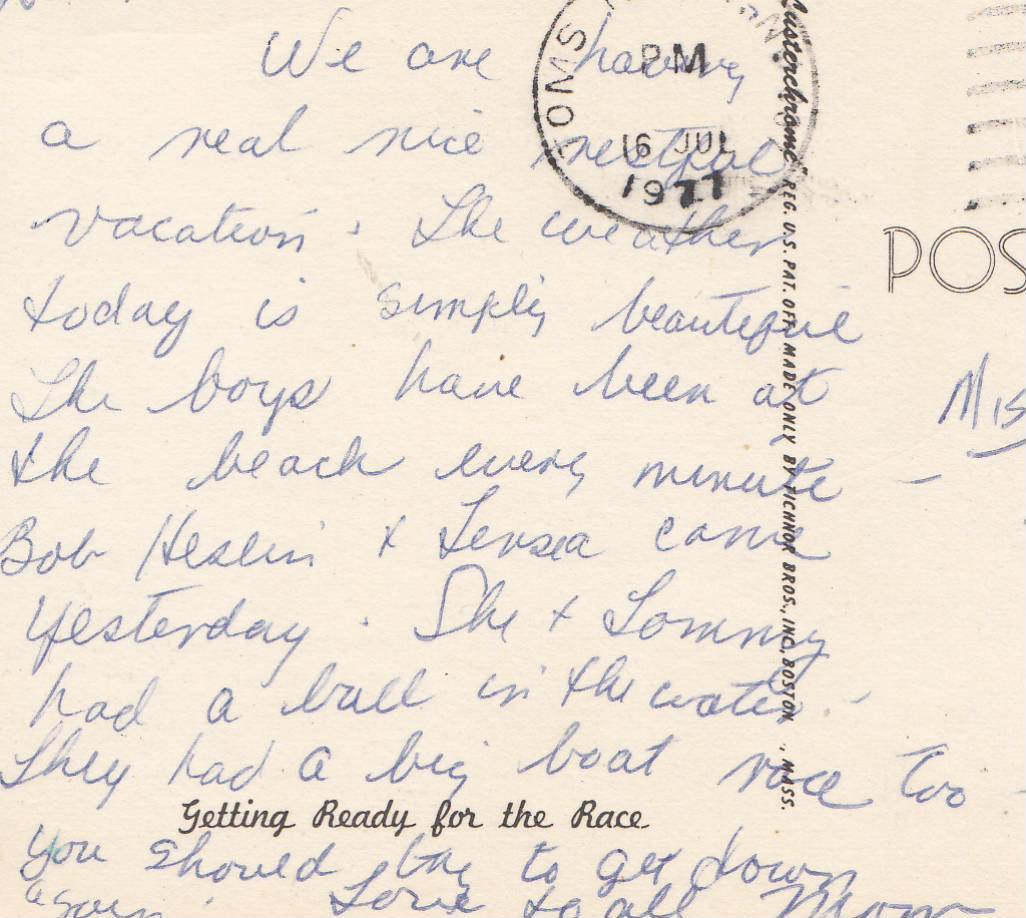
As a boy growing up in the Bronx, the fledgling days of summer—and the longest days of the year—augured many things, including a “vacation” of some sort in the immediate future. Typically, a week or two spent away from the bright lights of the big city. For many years, my family and I vacationed along the Jersey Shore, in towns like Manasquan, Forked River, and Lavallette.

In Manasquan in the early 1970s, we rented a three-bedroom “railroad-car style” cottage for $75/week. It was a couple of short blocks from the ocean and a couple of short blocks from the Manasquan Inlet. We couldn’t ask for more—and we didn’t. From its enclosed front porch, we could even see a sliver of the inlet and a railroad bridge in the distance. At that point in time there was also a sizable ferryboat in view—a working one in its day, but then permanently docked and operating as a restaurant. Although we never dined there—we couldn’t afford to eat in restaurants back then—it was a compelling visual. The streets in the neighborhood where we stayed were named after fish: Salmon, Trout, Pike, Whiting, and Perch. The $75/week rental with—as I recall—garage-sale furniture, threadbare bedspreads, and sandy floors is now a two-story abode worth a million dollars. Hey, it’s a stone’s throw from the Atlantic.

While a very different experience from Manasquan, Forked River was nevertheless an intriguing place to vacation. We rented a family friend’s cozy little bungalow, which was situated in woodsy terrain that was slowly but surely becoming less so. Lagoons were being dug all around the area and small homes were popping up every day. Courtesy of all the constant building and digging, there were reservoirs of standing water everywhere. Now, the mosquito population knew a paradise when they saw one and were a big-time nuisance for two-legged vacationers. A truck periodically passed by spraying some chemical concoction into the air to do away with those airborne, bloodsucking pests. God only knows what it was, but it probably caused cancer in laboratory rats. The mosquitoes, though, were unbowed through it all and we had to wear rubber bands at the bottoms of our pants to co-exist with them. The sound of electric saws taking down pine trees was commonplace, too, while we vacationed there. But as a kid, such incessant noise and the mother lodes of mosquitoes didn’t detract from the wonderland of wildlife and forest of pine trees that I felt I was in. After all, miniature toads hopped around in the back and front yards. Big box turtles luxuriated in the woods next door. And whip-poor-wills called out in the night. It was like we were camping.

Camping indeed. The water that poured out of the Forked River faucets was brown, smelled foul, and needed to be boiled before cooking with it. Nobody would dare drink it straight. The nearest telephone was at an Elks “clubhouse” several blocks away. Both Barnegat Bay and the Forked River itself were in close proximity. I don’t mind telling you that the combination salty sea-pine needle aroma in the air was intoxicating. If I were placed in a similar environment today—forty years later—it would be like I was a contestant on Survivor. And with my luck, I’d probably catch the Zika virus.

Life, though, is all about moments. And nothing could get in the way of a grand time all those years ago. Not dirty bedspreads, armies of mosquitoes, or rust-colored tap water.

(Photos from the personal collection of Nicholas Nigro)

Tuesday, June 14, 2016

Lost Magic

Exactly thirty-six years ago, something magical happened in my life and in the lives of others who shared an affinity for a certain baseball team. Then New York Mets’ left fielder Steve Henderson—we called him "Hendu"—belted a walk-off three-run home run to beat the San Francisco Giants seven to six at Shea Stadium. My favorite team had been down six-to-one in the game, so it was a bona fide comeback win. Magic is a subjective thing, I know. But the Mets had previously experienced three horrific down years as a miserly, patrician stuffed shirt named M. Donald Grant single-handedly destroyed one of the most profitable and respected franchises in the game.

After the disastrous 1979 season the team was mercifully sold. The new ownership promised a return to past glories. While it took a few years of rebuilding, they kept their word. In 1980, however, the first year of the new regime—with inherited manager Joe Torre still at the helm—the Mets hovered close to the .500 mark on June 14th. It doesn’t sound like such a big deal, but it was an accomplishment for a team that had been down-and-out—and with such low expectations—for what seemed like an eternity.

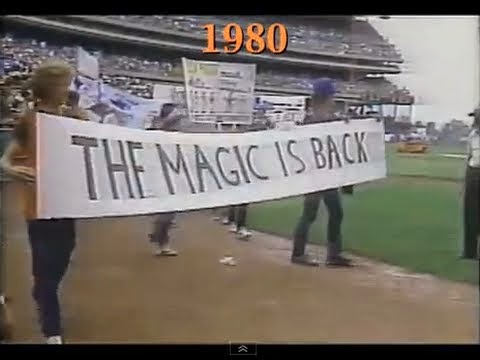
"The Magic Is Back” was the Mets’ advertising slogan during the 1980 season. “Magic Is Back” posters with Mets’ players—Lee Mazzilli, Doug Flynn, Joel Youngblood, et al—inviting fans to return to the ballpark festooned New York City subway cars. “Magic Is Back” bumper stickers were spotted on cars. Some devotees, like me, proudly wore Sanitation Department orange and blue “Magic Is Back” tees. While vacationing on the Jersey Shore that summer, a pizza parlor counter girl asked me what “The Magic Is Back” meant. As I recall, it wasn't a softball question. While this promotional campaign was understandably ridiculed in some quarters, I nonetheless felt that there was something to it—magic as it were. Change was very definitely in the air—a feeling of liberation from the past three years when Shea Stadium had been christened “Grant’s Tomb.” Just knowing that reasonably intelligent people roamed the front office—men who were willing to spend a few bucks to make the team a contender again—was magic enough for me.

Back to this day in history: June 14, 1980. I was watching the game in my bedroom, while my father had it on in the family living room. He was an inveterate Mets’ hater and I, in turn, loathed with a passion his beloved Yankees. If the Yankees were simultaneously playing a televised game, I had nothing to worry about. He’d be watching his team. If, though, there were no competing game, he’d tune in the Mets and revel in their misfortune. When things weren’t going the Mets’ way, I would be visited by him repeatedly and heckled unmercifully. A father-son baseball rivalry is not a pretty sight.

I distinctly remember on this particular night parrying my father’s inevitable taunts as best as I knew how. When Hendu hit that home run, it was extra sweet because he was watching the game along with me, albeit in a different room. I had the last laugh on this almost-summer evening and returned the favor before venturing outside to sit a spell on the front stoop. In the warm darkness of this June night, I enjoyed a natural high. Stoop sitting in our Bronx neighborhood is what we did back then. It’s where we went to unwind and to celebrate, too, like on June 14, 1980. I’m glad I didn’t have an iPhone to stare at or an app to worry about. Lost magic for sure.

Thursday, June 9, 2016

Ivor Meets Ivan

Looking back on my life thus far, something really—really—stands out. I marvel now at the fact that I rarely passed through a hospital door in my first three decades of living. And that was kind of nice—the way life ought to be. I remember as a teenager visiting my grandmother in one after her glaucoma surgery. She spent a whole week in the hospital for that. And since I don't recall being born, that's the long and short of my early hospital memories. The times have certainly changed.

In my last two decades on the planet—in stark contrast with the first three—I’ve logged entirely too many hours in the hospital milieu—as a visitor, patient, and escort, the hat I donned this past week. When all was said and done, I found myself in a waiting room at New York City’s premier cancer hospital. If one needed proof that cancer is an equal opportunity disease, this was the place to be. I’ve long been fascinated at the diversity of mind, body, and soul that I chance upon in this hospital. While family members typically accompany the patients on the scene, there are always some people who go it alone. And this is particularly poignant when these solitary souls are getting up in years. Traipsing around to doctors’ appointments and myriad tests without a shoulder to cry on—or an ear to chew on—is not desirable in the golden years. Unfortunately, it’s just an unavoidable reality for some.

Anyway, this go-round I spied an elderly gentleman—all by himself—in the waiting room. Gingerly pushing his walker around the premises—the kind with a handy seat—a forlorn aura surrounded him. The man was borderline unkempt and had bypassed his morning shave and probably the one before that—a visual snapshot that considerably added to his lonely air. And boy did he ever want to talk—to anyone and everyone in earshot—which, I suppose, is understandable. Still, I was glad he didn’t sit across from me or next to me.

This guy reminded me of someone that I couldn’t quite put my finger on at first. Then it dawned on me. He facially resembled the late great character Ivor Francis. Let's call him Ivor from this point forward. Ivor was very, very interested in the waiting room’s amply-stocked pantry. I watched him in this little alcove carefully considering the various options at his disposal—coffee, tea, or hot chocolate, not to mention the saltine or graham cracker munchie quandary. A burly, grim-looking fellow subsequently joined him in the pantry. He looked like a 1960s sitcom Russian stereotype—picture Stanley Adams as Ila Klarpe in The Addams Family—as he navigated the cramped pantry. Ivor meet Ivan.

Destiny had surely brought these two men together. When Ivor at long last decided what his next move would be, a paper cup was the final piece to the puzzle—to steaming hot bliss and some tasty crackers to nibble on. As fate would have it, Ivan was in close proximity of the coveted paper cups at that very moment. Ivor sheepishly but oh-so-politely asked Ivan if he would hand him one—a simple request if ever there was one. Ivan didn’t think so, however, and glared angrily and suspiciously at Ivor. He then made a grumbling noise and furiously gestured at the stack of cups. Ivan’s message to Ivor was all too clear: Get it yourself!

Ivor meekly muttered a response, “I just asked because you were near the cups.” Well, from the looks of things, the Cold War still raged. If mutual affliction with cancer couldn't thaw things out—what pray tell could? Perhaps Ivan was just having a bad day—he was in a cancer hospital after all—but I still wish he didn’t take it out on lonely and frail Ivor. He could have effortlessly handed him an empty cup and made an old man with cancer happy.

Wednesday, May 18, 2016

Sticker Price

Last month I cast a ballot in the New York State presidential primary. Actually, I filled in a solitary oval on the thing and fed it into a machine, which promptly alerted me my vote had been counted. Except to say my candidate didn’t emerge victorious, I won’t tell you for whom I voted. Despite the thrill of voting being a relic of the past, I performed my civic duty. I remember casting my very first vote at the age of eighteen and how excited I was just to have the opportunity. It didn’t matter to me that the election outcome was a foregone conclusion. It was the 1981 New York City mayoral race. Ed Koch was running for reelection on both the Democratic and Republican lines. He received nearly 75% of the vote. I selected a third party candidate that year. Coronations were never my cup of tea. I have voted for a surfeit of sure losers—in a lot of different parties—because of this aversion. Unfortunately, coronations are the rule around here.

An oddball from my neighborhood—a misshapen, fifty-something fellow whom I’ve known by sight and reputation since our mutual youths—served as the polling place’s big cheese this go-round. His ample derrière comfortably rested on a chair by the entrance. When I arrived to vote he was too preoccupied with his iPhone to even glance my way. But that was okay by me. I didn’t need his assistance. Upon putting my John Hancock in the voting register, I was handed a small round sticker that I was—ideally—supposed to affix to my person. The thinking being it would encourage others to vote. It would serve, too, as a reminder that I had in fact voted, which would stop me dead in my tracks from repeating the process later in the day.

There was some controversy in New York City on primary day—of voters going to their respective polling places and not finding their names on the voting rolls. Some years ago I recall hearing that if we didn’t vote in two consecutive elections, our names would be purged and we would have to re-register. Draconian—yes. However, I have spotted the names of individuals who have long since moved away and even some who are long dead still on the books. And—given time—the former will eventually become the latter.

I just fear that it’s going to be a long slog between now and when I next call upon my polling place in November. A Facebook friend of mine recently shared a meme underscoring the more genteel time in which both she and I grew up. When—generally speaking—kids respected their parents and their elders, too; when common courtesies were commonplace; and when people agreed to disagree civilly. Her candidate in 2016: Donald Trump.

Tuesday, May 17, 2016

Bein' Light Green

While walking past my old alma mater, Manhattan College, today, I couldn’t help but notice the school was festooned in springtime. The campus always looked nice, especially at this time of year, with many of its trees sporting healthy-looking, light green small leaves. Hope springs eternal. I spied some students, who were no doubt taking their final exams, walking to and fro. I noticed, too, a “Cash for Textbooks” tent set up across the street from the school’s main entrance.

I graduated from this esteemed institution of higher learning in 1984. It’s now 2016. If my arithmetic is correct—I wasn't a math major—that’s thirty-two years ago. I vividly recall the waning days of my college experience—early May in my final semester—and gazing out the window of Manhattan Hall onto the Quadrangle, which was alive in that aforementioned light green. I was attending a “Great Issues in European History” class taught by a very interesting and extremely affable man—"any questions, comments, observations"—who has since departed this earth. Thirty-two years will do that sometimes. But on this particular day, I well remember the combination of the seasonable air, spring sounds, and pleasing odors and colors. They reminded me that my days were numbered as a college student, and that there would be no more encores. I felt profoundly melancholy as a stared out that window and realized the adult world—ready or not—beckoned.

A few weeks later, I attended my graduation ceremony. New York City Mayor Ed Koch delivered a totally unmemorable commencement address. In fact, I don’t remember a word he said. It's fair to say he didn't quite inspire me to boldly go. Extemporaneously, the man was often entertaining, but delivering a prepared speech invariably negated his New York guy charm. After the proceedings, we graduates had to navigate our way down to the cafeteria in Thomas Hall to secure our diplomas, which were alphabetically aligned in our particular school of studies—mine was the School of Business. It was a somewhat nerve-wracking interim as I recall, because we didn’t know for certain if we had made the grade and passed everything we needed to pass. Happily, I did, but nevertheless didn’t have a clue what I wanted to do with my diploma or what was next on my agenda as now a certifiable adult. Considering all the money that parents spend—and the debt that contemporary college-aged kids amass—it seems quite a high price to pay for a mother lode of uncertainty four years later. When I began my collegiate journey in 1980, tuition was $1,750 a semester—$3,500 a year. In my final year, it was $5,000. As I recollect, we all thought that was a lot of money—and it was. A student loan of $2,500—the maximum available back then—helped. I had a coupon book to show for my higher education and a $77/month loan repayment for about ten years.

So, that’s what I saw today and that’s what I thought about as I passed by my old school, for which I have mostly fond memories. And that is significant, because I wasn’t sitting around in my last days of high school with anything bordering on melancholy. Being green—light green—has a knack for reminding us of what once was, what could have been, what is, and what may be.

(Photo from the personal collection of Nicholas Nigro)

Saturday, April 30, 2016

Why Nothing Matters…It Really Does

What follows is an essay written for some online concern. As the author of Seinfeld FAQ, I was asked to delve into the subject of nothing...and I did.

It’s been eighteen years since the last episode of Seinfeld—“The Finale”—aired in prime-time. Since then, the iconic sitcom has proven beyond a shadow of a doubt that nothing matters and, too, that nothing lasts forever.

Ironically, Seinfeld’s creators, Larry David and Jerry Seinfeld, never, ever promoted the notion that their trailblazing sitcom was about nothing—on the contrary as a matter of fact. David and Seinfeld admit to having been absolutely flabbergasted that a joke—a line from the mouth of George Costanza—became a mega-hit with the fan base. The “show about nothing” aside in “The Pitch” assumed a life of its own and became ingrained in the popular culture. It also established a remarkable staying power as the simplest way to describe what Seinfeld and the off-the-wall antics of Jerry, George, Elaine, and Kramer were all about.

While the show was very obviously about something—a whole lot of somethingSeinfeld’s distinctive nothing aura is precisely why it has legs. Sure, in the eyes of some, it is hopelessly dated—a ‘90s thing they just can’t get past. After all, Seinfeld was largely of a time before the Internet, smart phones, and GPS technology. It was a pre-Netflix age when individuals actually patronized—in the flesh—brick-and-mortar video stores to rent movies on clumsy VHS tapes. And God help the poor sap who forgot to rewind one before returning it—like the hapless George, who had rented Rochelle, Rochelle in “The Smelly Car.” For the younger generations, videotapes, phone booths, and Rolodexes are the sole province of museums and, of course, nostalgic baby boomers’ Facebook memes.

Time marches on with the inevitable technological advances and changes in everything from sartorial tastes to hairstyles to societal mores. The only constant with the passage of time is nothing. And better than any sitcom before or after it, Seinfeld’s savvy writers understood this. In wading through the daily grind—in engaging in the mundane minutia that is part and parcel of everyday living—human behavior invariably runs true to form and hasn’t really changed all that much over the centuries. Shakespeare is timeless because The Bard of Avon was keenly cognizant of the potent and enduring force of nothingness. He knew that nothing mattered. It really did. Some four centuries later—as a committed observer of the human condition—Jerry Seinfeld followed in the man’s not inconsiderable footsteps.

There were low-talkers and close-talkers in Shakespeare’s day. Neurotic, nihilistic men and women have long been part and parcel of “man’s inhumanity to man.” George once so eloquently described what is undeniably an unenviable task—for anyone, anywhere, and at any point in history. “I hate asking for change,” he said. “They always make a face. It’s like asking them to donate a kidney.” The man who ran the mercantile store in Dodge City, circa 1870, no doubt had a similar reaction when asked to make change. A nothing snapshot in the humdrum moment—perhaps—but something much larger in the grand scheme of things.

Once upon a time in the sixth grade at St. John’s parochial grammar school in the Bronx’s Kingsbridge, classmates and I discoursed on—of all things—the subject of nothing. We were twelve years old and this is what passed for philosophical discussion. We had long been inculcated in our school—and in church—that we came from nothing and would one day return to nothing. So, naturally, some of us couldn’t help but wonder: “What would nothing look like?” Fast forward four decades and I think I know the answer. It would look a lot like Seinfeld because I, for one, think of the show very often as I make my appointed rounds. I experience Seinfeld moments—nothing moments—time and again, so they really must mean something. Nothing matters, I’m certain of that much.