Wednesday, June 30, 2021

The Heat Is On

In the prior reprise—a blast from the past—I recount navigating my way home from high school after a final exam. Perhaps even the final final—a New York State Regents Algebra exam—of my freshman year. I remembered it was a hazy, hot, and humid mid-June afternoon. The air quality was extremely poor and the sky a greenish-yellow overcast. On the last leg of my journey, I spied a flash of heat lightningno thunder accompaniment  lightningon the distant horizon beyond the High Pumping Station off Jerome Avenue. As Bronx architecture goes, this building is rather distinct. Built at the turn of the twentieth century—as an appendage of the Jerome Park Reservoir system—it is listed on, of all places, the National Register of Historic Places. With its red bricks and precipitously steep and slate-covered gable roof, which is not too common in the area, the High Pumping Station has always been an eye-catcher. Anyway, that was a memory blip from a June day forty-four years ago. In that momentary snapshot in time the heat lightning served as a welcome beacon, a portent of better things to come—for a couple of months at least.

Fast forward to the present and the heat is on once more. However, I’m not banking on any of Mother Nature’s natural phenomena—signs from the heavens—lighting the way for the coming summer season. Instead, New York City voters, including yours truly, cast ballots in the first consequential election with ranked-choice voting. I had forgotten that we the people said yay to ranked-choice voting by a margin of three-to-one in 2019. Honestly, I don’t think very many of us considered the potential consequences of this new way of electing office holders. While it makes sense in a lot of ways, leave it to the city’s Board of Elections to royally screw things up. With so many men and women on both the left and right believing our elections are corrupted nowadays, this is awfully bad timing. Apparently, the Board of Elections counted 135,000 test ballots in the first round of ranked-choice tabulations, which skewed the results. The bureaucratic tangle of an agency has since announced a do-over.

Riddle me this: If frontrunner Eric Adams, who was up by ten points in the actual tally on election night, somehow loses this substantial lead in the ranked-choice tabulations, will it be accepted as absolutely aboveboard? Adams got a plurality of votes in four of the city’s five boroughs. Only Manhattan demurred, giving “Defund the Police” Maya Wiley the most votes. Her core support was in the more upscale white neighborhoods. From voters who love to talk the woke talk from their door-manned buildings, their vacation homes in the Hamptons, and while consuming lobster gazpacho, chicken tikka basmati rice, and nori seaweed tots in trendy, hipster restaurants. Just sayin’.

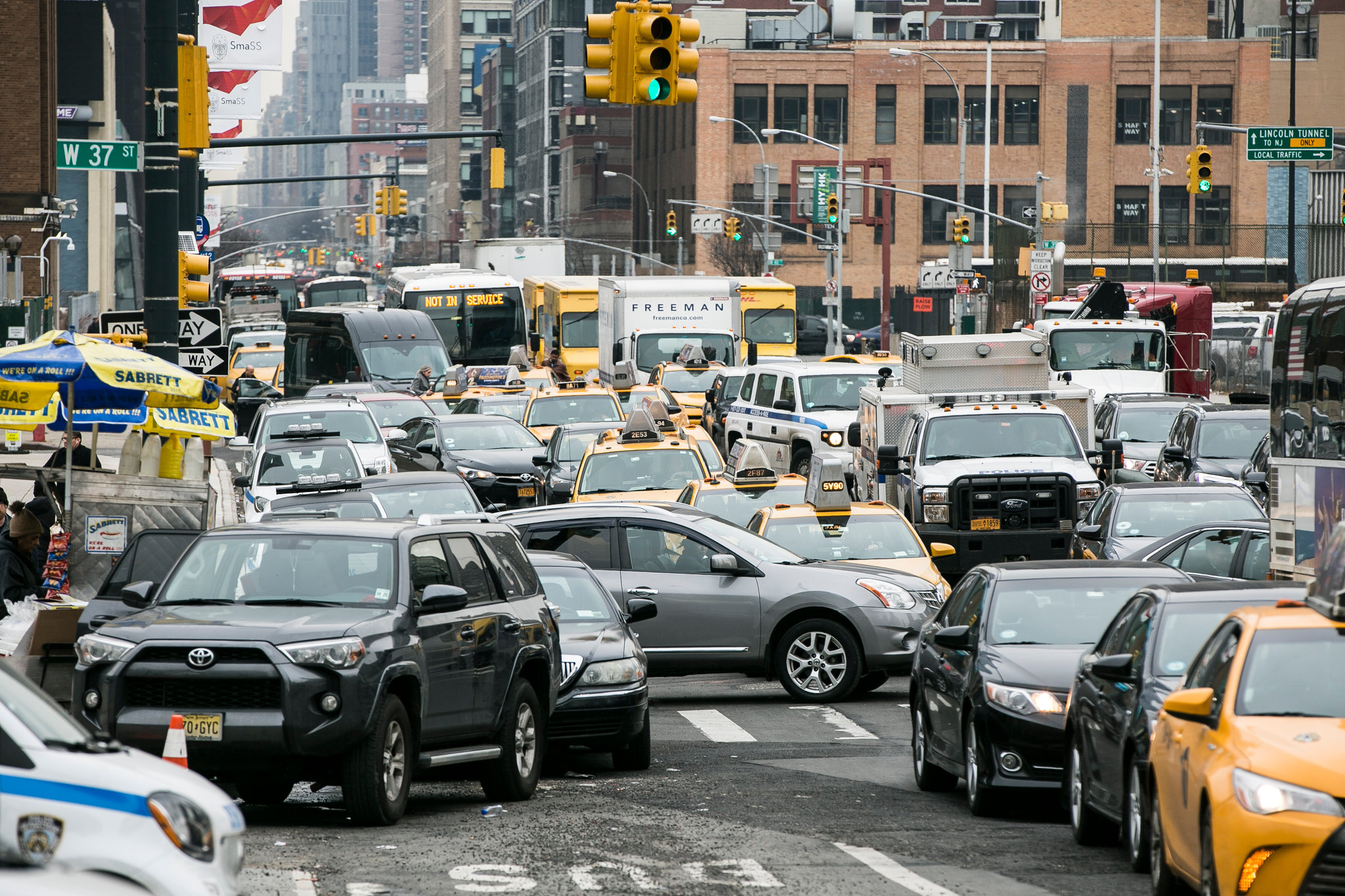
While on the subject of just sayin’: There are more cars on the streets than ever before. Traffic time never takes a holiday. It’s not just the rush hours and the Friday evening exoduses anymore. Add to this mayhem countless variations of motor bikes, mopeds, and illegal ATVs. Traversing the highways and byways is a nightmare night and day. Crime is also spiraling out of control and it’s hot as hell on top of that. Looking on the bright side: It’s not as toasty as in the Pacific Northwest with its heat dome plus climate change one-two punch wreaking havoc on the animate and inanimate alike.

So, yes, while the talk the talkers will throw their full support behind things like the Green New Deal—without fretting over the fine print or even reading the fine print—are they willing to make any personal sacrifices, adjustments to their lifestyles? Sitting amidst an all-too-typical traffic jam—with my taxi driver alerting me that his outdoor thermometer reading is one hundred degrees—I think I know the answer to that question.


Summer Daze

(Originally published on June 23, 2017)

Once upon a time, I relished summer days and nights. The heat and humidity one-two punch didn’t faze me. No temperature or relative clamminess was too high to prevent a stickball game. In fact, playing on searing asphalt during a scorcher—sans water—was par for the course. There was no such thing as individual bottled water in the 1970s! Sure, the gang could have brought along a cooler, thermos, or canteen to games, but it just wasn’t on our radars. Looking back, we sometimes played doubleheaders in ninety-five-degree heat without liquid pick-me-ups. After game two, we were a parched lot in a mad-dash search for a non-contaminated watering hole—tap water from the kitchen sink or powdered iced tea. What American TV western didn’t feature its protagonists short of water and in a do-or-die hunt for it in super-dry desert climes?

Ah, but summer days just aren’t what they once were to me. It's more like summer daze. This week, the calendar officially said that it was summer with the longest days of the year upon us. As a youth in the third week of June, I was uber-active in the great outdoors until the last sliver of daylight disappeared. Now, I spend well-lit summer evenings inside and do all that I can to circumvent the infamous New York City heat and humidity. Air conditioning certainly has its place. For me, there is no more stoop sitting and chewing the fat with neighbors on poor Air Quality Index (AQI) days and nights. I don't recall whether or not the AQI was calculated in the good old days. However, I can say that the air quality in the 1970s was considerably worse than it is today.

Bad air notwithstanding, the summers of my youth found the Good Humor man turning up every night at around the same time. Good Humor’s cola-flavored Italian ice—a favorite of mine—was a rock-solid frozen block. In attempting to sliver off pieces of the ice with the tongue-depressor spoon supplied, its paper cup would get punctured beyond recognition. Actually, the only cola taste—if you could call it that—of their watery Italian ices was found at the bottom of the paper cups, which by then would be sorry casualties of war. But what did we expect for twenty cents? They were worth every penny.

Summertime also meant a vacation on the seashore of New Jersey or Long Island. It meant day trips to the happening hot spots incessantly advertised on the New York City metropolitan area airwaves, like the Brigantine Castle—a haunted fortress on the Atlantic in Brigantine, New Jersey. A three-hour drive trip from the Bronx to the Brigantine Castle was a memorable summertime adventure. The equivalent for my peers’ kids today—on the satisfaction front, I'd say—would be two weeks in the South of France or Swiss Alps.

A final summertime footnote and memory from forty years ago. It’s the solitary snapshot kind not associated with anything monumental. I had completed a high school final exam during my freshman year. It was an afternoon in mid-June 1977. I was alone and on my way home via mass transit—from the East Bronx to the West Bronx. Standing at a bus stop on Jerome Avenue across the street from two of the ugliest-looking buildings in the borough—Tracey Towers—I patiently waited for the BX1, which would take me on the last leg of my journey home. It was overcast, dreadfully humid, and I remember seeing lightning on the distant horizon—heat lightning, I think. This far-away hot flash nonetheless signified so much to me—school’s end, summer, and a couple of months of incredible bliss.

(Photos from the personal collection of Nicholas Nigro)

Monday, June 21, 2021

A Shore Thing

With this being the first full day of summer, I thought I’d revisit the family vacations of my youth. Many of them were spent on the Jersey Shore as it was and is affectionately known. For countless working-class New York City families in those days gone by, this considerable slice of shoreline was heaven. Initially, my family stayed in small cottages in the town of Manasquan on streets named after fish, like Whiting, Pike, and Trout. In the late-1960s and early-1970s, weekly rentals set the folks back $75 to $100, bargains considering they were a few blocks away from both the Atlantic Ocean and the Manasquan Inlet, a busy boating thoroughfare that provided never-ending entertainment for kids, like me. It was a huge deal walking over to the inlet in the morning, where we would watch the fishing fleet from Point Pleasant—on the opposite shore—head out to sea. They would subsequently return with their catches, sometimes showing them off to land-bound spectators, including spellbound boys and girls. The flocks of seagulls inevitably trailing their crafts were likewise mesmerized.

In that colorful snapshot in time, cottages in a particular part of town were occupied by hard-partying hippies. Ever a source of fascination to little me, there was something so summery about the wafting smell of Mary Jane commingling with the ubiquitous sea breeze. Manasquan, too, had an extensive boardwalk, which was mostly asphalt as I recall. The houses along it were out of my folks’ price range, but I always wished we could stay in one of them. In the aftermath of Superstorm Sandy’s destruction in 2012, those very homes’ front porches now have a bird’s-eye view of tall sand dunes, not the mercurial Atlantic.

At some point in the mid-1970s, there were no rentals available in Manasquan for the weeks of my father’s vacation. We ended up venturing a little south to a place called Lavallette, a cozy vacation spot on a barrier island with the ocean to the east and Barnegat Bay to the west. Granted, the Manasquan Inlet was a big loss, but Lavallette’s boardwalk was a boardwalk from beginning to end. There also was this great bakery in town, Kay’s, which supplied us with breakfast donuts galore. Eating four glazed donuts was a piece of cake in those days. Lavallette also had a takeout pizza restaurant, The Oven, which produced a tasty pie. Not too far away was The Pizza Parlor, where the wait for pies at dinnertime was hours. It served superb thin pizza and was worth the wait. On one occasion we had visitors at our summer rental and The Pizza Parlor supplied the fare, including a pie with anchovies—my father’s idea. As expected—by me at least—the plain pies were consumed with alacrity while one too many anchovy slices languished in a box. And I could have eaten another slice or two, I remember. Upon learning this and that I was not a fan of anchovies, a visitor—a burly Italian patriarch—rather curtly told me, “Just take them off!” No can do! Anchovies leave their mark.

In the waning years of vacations on the Jersey Shore, we landed in the town of Ortley Beach, just south of Lavallette, which was totally decimated by Superstorm Sandy, I learned. The house we rented there a couple of times would get flooded during a summer thunderstorm. Ortley Beach also bordered Seaside Heights with its boardwalk of more than just boards. It was a nice place to visit with its amusements, entertainment, and foods, but I wouldn’t want to live there. The one and only time I ever was on a log flume was on the Seaside Heights boardwalk. A relative of mine once sniffed at her time spent on Cape Cod, calling it “boring” compared to the Jersey Shore with its electrifyingly exciting boardwalks. I thought that odd. But maybe not for a person with an Attention Deficit Disorder. Whatever, I remember fondly my time spent on the Jersey Shore with its boardwalks, where no two were the same.

(Photos from the personal collection of Nicholas Nigro)

Saturday, May 29, 2021

An ‘80s Thing

I just finished reading Brat: An ‘80s Story (Grand Central Publishing, 2021) by actor Andrew McCarthy. His absorbingly honest, breezily insightful memoir takes one back to a simpler snapshot in time. The book’s titillating title is a riff on the pejorative label “Brat Pack,” coined by a New York magazine writer who spent a night on the town—at the Hard Rock CafĂ© in Los Angeles—with three of Andrew McCarthy’s co-stars from the movie St. Elmo’s Fire. Despite not being among said brats—Emilio Estevez, Rob Lowe, and Judd Nelson—on the infamous night in question, McCarthy was nonetheless considered a member in good standing of the Brat Pack, which—it should be notedwas not quite as prestigious as the previous generation’s Rat Pack.

McCarthy makes a compelling case that the Brat Pack, as it were, never truly existed. For instance, he hasn’t seen Estevez or Nelson since the making of St. Elmo’s Fire, which was released in 1985, and wasn’t pals with any of the pack that included the likes of Demi Moore, Ally Sheedy, and Anthony Michael Hall, whom he’s never even met. In fact, the only mention of McCarthy in the damning New York magazine cover story was an anonymous diss by one of the brats, likely Lowe, who said: “He plays all his roles with too much of the same intensity. I don’t think he’ll make it.” Now, I ask, is that a nice thing to say about a fellow actor in a movie you are promoting? But, then again, brats will be brats.

Aside from a memorable musical score, what I remember most about St. Elmo’s Fire is how unmemorable it was. The characters were, by and large, a disagreeable lot, some more so than others. I recall one reviewer panning the movie and making reference to its “lone conscience,” Mare Winningham’s character Wendy Beamish. But that’s yesterday’s news. The Brat Pack moniker is no longer viewed as a dismissive put-down of an ensemble of indulged, arrogant young actors. Instead, these many years later, it’s a blast from the past with a decidedly nostalgic feel. I saw The Breakfast Club, St. Elmo’s Fire, and About Last Night—movies starring various Brat Packers—in the waning years of the Dale, a local movie theater in the Kingsbridge section of the Bronx. Shortly thereafter, small neighborhood movie houses, like the Dale, in the outer boroughs of New York City were mere memories. Something lost, nothing gained.

Conscience-deficiency notwithstanding, St. Elmo’s Fire did hit home in one sense. I graduated from college in 1984. The characters in the movie were Georgetown University friends and graduates unceremoniously dumped into pay back student loan time, otherwise known as adulthood. I vividly recollect that moment and the accompanying sinking feeling of what next? Que up the theme from Mahogany, “Do You Know Where You’re Going To”: Do you like the things that life is showin’ you? Where are you going to? Do you know? Hold on, that’s from the 1970s and was played at a slideshow retrospective—get out the handkerchiefs—of my high school years just prior to us parting ways.

And so, with the passage of multiple decades, it’s easy to appreciate why the Brat Pack—even if it wasn’t really a pack at all—is remembered so fondly. If Andrew McCarthy now sees it that way, so can you. Brat is a worthwhile and entertaining read—and a further reminder that time doesn’t stand still.

(Photos from the personal collection of Nicholas Nigro)


Wednesday, May 19, 2021

Hello, Dummy...Goodbye, Dummy

(Originally published 7/16/15)

The year was 1975. The place: Kingsbridge in the Bronx. It was summertime when our Frankenstein monster was born and hit the streets. Actually, it was just a dummy—an old pair of pants and a shirt stuffed with newspapers (the Daily News and New York Post, I suspect). It was all stitched together with multiple safety pins. The dummy’s cranium was a Styrofoam mannequin head. I don’t recall where that came from, but most likely from a neighbor’s or neighboring business’s garbage can.

This Frankenstein dummy was brought to life, specifically, to appear in a five-minute Batman film that a friend, older brother, and I were producing. Our movie camera employed 8-millimeter film sans any sound. The film’s stars were aged sixteen, fifteen, and twelve. I was the twelve-year-old who got to live his dream by playing the Joker in a feature flick. Granted, it was a low-budget independent effort—an indie—that brought in a mere three dollars at the box office. That is, during a screening in one of the star’s basements. Batman, nevertheless, transcended time and place.

The Frankenstein dummy, really, was the true star of this effort. He—if I may humanize it—assumed multiple roles in the film. He played Batman’s stuntman and scaled a three-family brick home in search of the Joker. Ever versatile, he then took on the role of the Joker himself, getting tossed out of an upstairs window. Perhaps more prestigious, he also played the Joker’s kidnapped victim—a man who lived up the street from the cast named Dr. Yellow. This fellow wasn’t a medical doctor, but a Ph. D.—a bona fide egghead, scientist, and university professor—which made him both a celebrity in the neighborhood and someone with whom to have a little fun.

While none of the young, flesh-and-blood thespians went on to bigger and better things in the acting profession, the Frankenstein dummy nonetheless endured. His creators laid him on the sidewalk alongside my family's front stoop, with one of my father’s empty thirty-two-ounce Schaefer Beer bottles beside him. Assuming the Frankenstein dummy was a poor, unfortunate human soul who had entirely too much to drink or, even worse, had drank himself to death, passersby were startled. But nobody said a word until one obviously concerned chap came along. “There’s a man down here. Is he okay?” he asked. We assured him that he was.

The Frankenstein dummy had one last role to perform before calling it quits and riding off into the sunset. He scaled the fence of a man I had previously nicknamed “Mr. Fence,” because of his strange and absolute obsession with his beloved backyard fence. The Fences—Mr. and Mrs.—shrieked wildly at the Frankenstein dummy, telling him in no uncertain terms to get down from there and be on his way, or suffer the consequences

Ah, the life and times of this newspaper-filled dummy were grueling and, thus, very short-lived. But he spent his enduring life in the awkwardly creative and genuinely interactive urban world that existed once upon a time in the Bronx and elsewhere. He was a dummy to remember, who will live on in our hearts for as long as there are dummies in this world.

Sunday, May 16, 2021

To Wear or Not to Wear, That Is the Question

Thirty-eight years ago, several members of my family and I were invited to a neighbor’s sixty-fifth birthday dinner. It was during the month of February, a day or so after a crippling blizzard. But navigating the slippery spots and mounds of shoveled snow were a piece of cake for all concerned in those days of yore—not the case anymore for those of us still among the living. As I vividly recall, the birthday boy suffered from a bad cold that night and was hacking away while he performed the honors of slicing up the roast beef main course.

Long before the cough-a-thon, I was leery about eating there. You see, the dining room hosting the celebration was in a basement, one notorious for its greasy build-up and a cat who made himself home in every nook and cranny, including the dining room table, the feline’s favorite napping spot. Looking back on that night to remember, the Man of the Hour would have done us all a favor by donning a face mask.

Fast forward to the present: Just moments ago, as a matter of fact. I gazed out my front door and spied a passerby. She was double-masked, which is, of course, her divine right. This sighting on a pleasant spring day nonetheless got me thinking. Thinking about masks and the Shakespearean dilemma of the moment: To wear or not to wear, that is the question.

Yesterday, on the busy streets of Manhattan, I observed for the first time in a long time—since COVID-19 first reared its ugly head—that many people were walking the streets without face coverings. Despite the evidence being evident, if you will, for quite a while now, the greenlighting from the powers-that-be apparently greased the skids. The vaccinated minions had a scientific imprimatur of sorts to stroll about unmasked—with their heads held high—the highways and byways of the big city. One, though, could feel the extremists on both sides of the mask issue digging their heels ever deeper.

While I have no evidence to support this opinion—only a gut feeling—I would hazard a guess that the woman who just passed by my front door believes that those who have shed their masks so freely—in the great outdoors mind you—are irresponsible, selfish, potential grandma killers. On the other hand, she could have some underlying health issues that make double mask-wearing in the bright light of day very understandable.

Riding the subway yesterday—where mask-wearing is rightly still mandatory—most passengers were compliant, but there were a few exceptions. In this corner are the mask-wearing extremists, and in that other one, the no-mask-wearing extremists, even in crowded, closed indoor venues like subway cars. For too many folks to count the mask is now a symbol—ridiculous virtue signaling. Are you one of us or one of them? This is completely asinine. The Age of Reason is a distant memory. We get lectured nowadays on a recurring basis by late-night comedians and cable TV talk show hosts, who clearly know right from wrong better than the rest of us.

A final thought on my Manhattan amble. I encountered a couple of public service announcements along the way concerning the upcoming Democratic primary for mayor. There are nine candidates in the race and we have “ranked choice voting” this year. Voters can rank—in order of preference—up to five candidates. Only four merit any kind of rank in my estimation and I haven’t yet figured out the order. The remaining five, I feel, have platforms better suited for CHAZ than New York City.

(Photos from the personal collection of Nicholas Nigro)

Friday, May 14, 2021

Pizza Hut Parable

Forty-four years ago, an older neighbor of mine with both a sense of high adventure and an automobile decided to call on—for the very first time—a Pizza Hut restaurant. Big stuff! It was a newly opened location in the city of New Rochelle, a hop, skip, and a jump from where we called home in the Bronx. For years, we had heard whispers about Pizza Hut and its singular dining experience, but there just wasn’t one in the vicinity—until, that is, the summer of 1977, which was also, coincidentally, the “Summer of Sam.”

So, off we went—four of us—to Pizza Hut. Heartburn notwithstanding, we loved the place and the pan pizza, which was decidedly different from—our bread and butter—traditional New York-style pizza. My paternal grandmother, though, made a uniquely delicious pan pizza, with breadcrumbs sprinkled atop the mozzarella. Yes, the 1970s and 1980s, too, were kind to the Pizza Huts of the world and—I daresay—grandmothers’ home cooking as well. There were chains aplenty back then that were considered must tries, from Beefsteak Charlie’s to Brew Burger to Nedick’s. And while the aforementioned eateries may be in the ash heap of history, Pizza Hut endures.

I patronized Pizza Hut that summer’s eve in 1977 and, if memory serves, one more time, but details of the second visit escape me. The chain—including Pizza Hut Express locations—is still visible in the area. After recently viewing a retrospective Pizza Hut history on You Tube, my curiosity got the best of me. How is it faring all these years later, I wondered? In countless respects, 2021 is the polar opposite of 1977. Pizza Hut, for one, is no longer special. It’s competing with popular chains—with churn-‘em-out pedestrian pizza pie tastes—like Domino’s, Little Caesar’s, and Papa John’s. Once upon a time, the charm of Pizza Hut was sit-down dining—the soup-to-nuts restaurant shebang with pizza as the main course. In the 1970s and 1980s, Pizza Hut dĂ©cor was what one expected—and what one considered an unbeatable ambiance—in that distinctively colorful snapshot in time. Pitchers of soda poured into red pebbled plastic tumblers and pizza served with a smile. It didn’t get any better than that!

Honestly, it came as no surprise to me that Pizza Hut has evolved into a mere shadow of its former itself—if that makes any sense? Nowadays, it emphasizes delivery and pick-up over indoor dining. And from the comments I read on the YouTube video chronicling the chain’s storied history, the quality of the pizza has precipitously declined. So, what else is new? When in Rome do as the Romans do. When waging war against fellow fast-food pizza chains, produce a similarly inferior product. Lamenting the Pizza Hut transformation, one former fan pithily remarked, “2021 sucks!”

Several days ago, I purchased a box of Ellio’s frozen pizza, a brand that I regularly consumed when, in fact, I sampled Pizza Hut for the first time. I liked the pizza back then. It had a defining sauce—that’s Ellio’s—ample cheese, and a doughy crust. Now, it’s three strikes and you’re out—a non-defining sauce, minimal cheese, and a cardboard crust—but it’s still called Ellio’s. For a while there it was known as McCain’s Ellio’s, which marked its transition from memorable to insipid. What more can I say about the 1970s Pizza Hut experience and others just like it? You had to be there to understand.

Tuesday, May 4, 2021

Down the Up Staircase

Some quick takes on things ranging from the important to the unimportant and a few matters in between. For starters: According to their Grubhub online menu, McDonald’s “Crispy Chicken Sandwich Meal” is unavailable after midnight. Ditto the “Filet O Fish Meal” and several others. Why, pray tell? Yesterday, “40-piece McNuggets” were unavailable after midnight, but “10-piece McNuggets” were available. Today, the “40-piece” can be enjoyed in the wee small hours of the morning. Not that I was planning on ordering anything from McDonald’s during the witching hours—and certainly not a heaping helping of McNuggets—but, still, what gives? Perhaps, though, the larger question is: Why is McDonald’s even open after midnight? Five years ago, a manager on the late-night shift was murdered in a McDonald’s near me.

Full disclosure: I ordered a McRib sandwich when the fast-food icon temporarily brought it back several months ago. It’s gone with the wind again, I see. The chain christened it “famous.” While I thought infamous was a more apt description, the McRib sandwich—considering McDonald’s overall menu—wasn’t half bad. I chose, though, not to dwell on its ingredients, bizarre consistency, and—yes—how it came to be a McRib sandwich.

From Grubhub to DoorDash, another online food delivery service. The available restaurants—who will call on my address—continue to multiply. Clicking on the Chinese food option, for example, supplies me with a mother lode of choices, including AA Chinese Restaurant, Great Wall, Pick Up Six, No. 1 Chinese Kitchen, Ten Ten, Best China House Restaurant, Foo Hing Kitchen, Wonderful Chinese Restaurant, Good Taste, and Hong Kong Sushi. From the everything old is new again file:  New King’s Wok Kitchen, New World Chinese Restaurant, Chen’s New China, and New Golden Fountain.

From fare—fine and otherwise—to the subject of mask-wearing. I just read where two Massachusetts towns, Brookline and Plymouth, are—despite the state’s governor removing them—maintaining their outdoor mask-wearing mandates. While the Centers for Disease Control and Prevention (CDC) recently gave the greenlight to vaccinated folks to take to the streets sans face-coverings, the two towns’ powers-that-be cited “an abundance of caution” for not going with the flow of scientific consensus. Is there an expiration date on “an abundance of caution?”

The science has been pretty clear for a while now that outdoor transmission of COVID-19—unless in close quarters in a crowd—is negligible. Ditto in school classrooms. Oh, by the way, New York City spends $26,588 per pupil. I can say without hesitation that we are not getting a bang for our buck here. In truth, I don’t believe we have a “party of science” from which to choose. Republicans and Democrats pick and choose what science they like and what science they don’t like. Their respective narratives trump science every time.

From science to economics and politics: New York City’s budget for fiscal year 2022 is $98.6 billion. Mayor de Blasio has dubbed it the “Recovery Budget,” which is bigger than the state of Florida’s budget. Florida’s population is some 21 million compared with the Big Apple’s 8.3 million. The Sunshine State, in fact, just gained another House seat at New York’s expense. When I played the Parker Brothers game of Landslide as a kid, New York had forty-one electoral votes, trailing only California’s forty-five. A state’s electoral votes reflect its number of House and Senate seats. Texas has since surpassed New York in population and it looks like Florida—after the 2020 census—will, too.

As you might imagine, Governor Andy Boy is not pleased with this development. And what a difference a year makes. Andrew Cuomo has gone from being a plate of sauteed broccoli rabe served in a five-star restaurant to a weight watcher’s steamed broccoli deli takeout. He is still feuding with Mayor de Blasio, however, having recently thrown cold water on the latter’s announcement of a full reopening of New York City by July 1. The mayor’s press secretary, Bill Neidhardt, responded thusly, “Serial sexual assaulter says what?” It warms my heart to know that I am so well represented.

And now for something completely different. Some staff members at publishing behemoth Simon & Schuster submitted a petition to derail the company’s future publishing of former Vice President Mike Pence’s memoirs. I’m happy to report that CEO Jonathan Karp didn’t cave. His response: “We come to work each day to publish, not cancel, which is the most extreme decision a publisher can make.” Pence’s groveling sycophancy was at times embarrassing, but he no doubt has an interesting story to tell. I recall staff at some other publishing house—many years ago—taking exception to the publishing of another former vice president’s memoir. The man who said: “What a waste it is to lose one’s mind. Or not to have a mind is being very wasteful. How true that is.” This dangerous firebrand, Dan Quayle, whose grandmother passed on such profound advice as: “You can be anything you want to be.” I believe—in some critical circles—that would be considered white supremacist counsel now. How I wish I were only joking.

Thursday, April 29, 2021

You Can Call Him Al

For every action there is a reaction. In this instance, a contemporary pizza pie review resurrecting a man from my past. Submitted for your approval: Recently, I chanced upon “Barstool Pizza Reviews” on YouTube and began watching several from the prodigious series. Pizza has long been a fare favorite of mine and informally reviewing pizza shops, restaurants, and the frozen varieties, too, came naturally to me. Why, pray tell, did Celentano’s discontinue its frozen pizza, the best of the lot during my youth? Anyway, among his one thousand entertaining and informative pizza reviews, Dave Portnoy called on Johnny’s Pizza in Mount Vernon, New York, which is a veritable stone’s throw away from the North Bronx. He gave it an extremely high score, 9.1, the best that I have seen to-date in the videos viewed. And, yes, I remember sampling Johnny’s Pizza a quarter of a century ago—it’s a family business still, I’m happy to report, in the family. Suffice it to say, Johnny’s Pizza deserved the accolades then as well as now.

This is where Al comes in. Once upon a time I worked in a place called Pet Nosh on Central Avenue in Yonkers, also a veritable stone’s throw away from the North Bronx. A customer of ours, who regularly shopped in the store, purchased a weekly mother lode of pet supplies for his wife. She not only fed stray cats and dogs, but donated food to area animal shelters. Prior to learning his real name, Al, I had nicknamed him “John Gotti,” a moniker never uttered in his presence. Time and again, Al went home with piles of a bargain dog food—kibbled biscuit—called Quaker City, which he cleverly dubbed “the motor oil.” From my perspective and a few others, Al truly resembled mafia titan du jour, John Gotti, only his coiffure was not the genuine article, and he wasn’t quite as dapper as the Dapper Don.

As a friendly gesture, Al would periodically bring us Johnny’s pizza pies with their super-thin, delectably charred, crunchy crust. A younger employee referred to them as “tampon pizzas,” a peculiar choice of adjectives, I thought at the time. Al was a good guy on that little snippet of stage in which we cohabited all those years ago. I don’t know where we got the notion—or, perhaps, the inside scoop—that Al possibly consorted with some unsavory sorts. Maybe he told us, I don’t recall. After all, looking John Gotti-esque didn’t mean he was in the same line of work. My paternal grandfather resembled Marlon Brando as Don Corleone, and the former was an iceman who despised the underworld thugs who tried to shake him down. Al, in fact, once mentioned that he owned a fruit store nearby at some earlier date, but he wasn’t exactly convincing as a bloke who endeavored to live the American dream by selling broccoli, sleeves of garlic, and cantaloupes.

Well, with no forewarning one day, Al’s wife materialized to do the shopping for herself—Mrs. Columbo unmasked—and informed us that her husband had been arrested. On what charge or charges, we never learned. She said he was very upset that he had to remove his rug for a mug shot and couldn’t wear the thing in the slammer.

Eventually, Al got out on bail and was awaiting trial. He never returned to Pet Nosh, though, and Johnnie’s uber-tasty pizzas became memories from a simpler time. Word eventually got to us that Al wouldn’t have to stand trial after all. He died of a heart attack before it began. All I can say—regardless of his alleged transgression or transgressions—is that he was one of the good ones. Rest in peace and pizza, Al.


Friday, April 23, 2021

Yin and Yang

Walter Mondale died this week. He was a very decent man from a vastly different time—a more sanguine and saner one, I daresay. The politicians were certainly a better breed. The Congress was not then a haven for ambitious Ivy Leaguers with their fingers to the wind. Rather, there were a lot of men like Mondale in Washington, D.C., people from humble origins who lived through a Great Depression, served in the military, and viscerally connected with the common folk. These public servants were true patriots who put their country first, believed in the Constitution, and accepted the results of democratic elections.  

My first vote in a presidential election was cast for the Mondale-Ferraro ticket. Just out of college, I—along with my younger brother—attended a rally for the historic ticket in the New York City Garment District, when it still was literally the Garment District. Congresswoman Geraldine Ferraro from Queens was the first woman on a national ticket. As a collector of political memorabilia, occasions, like rallies, inevitably delivered the goods. I came home that day with a treasure trove of fliers, stickers, and posters. Such large, enthusiastic gatherings, though, often gave attendees a false sense that their candidates were destined to win—despite strong evidence to the contrary—the whole enchilada.

And so it was: On November 2, 1984, Walter Mondale told the assembled: “Polls don’t vote. People vote!” We cheered! The excitement was palpable—maybe, just maybe, a miracle was in the making, I thought. Four days later, the people voted and Mondale-Ferraro lost forty-nine states, including New York, which today is bluer than blue.

I was not a supporter of Walter Mondale during the 1984 primary season. In the waning months of my higher education, I threw in with Gary Hart, a politician tailor-made for the idealistic—not woke nutty—younger generation of that day. Columnist Murray Kempton wrote of 1965 New York City mayoral candidate John Lindsay, “He is fresh and everyone else is tired.” That’s how I felt about the Democratic candidates running for president in 1984: Hart was fresh and everybody else was tired, particularly the front-runner Mondale.

Walter Mondale believed in a big-tent Democratic party. Today the big tent is smaller than a pup tent—think one way and watch what you say. And if you don’t think our way—to the letter—you’re a hater, naturally, who should be cancelled and your life rendered null and void. Sadly, when American political life desperately cries out for a reasonable opposition party to an increasingly batty one, there is none to be found. It’s the worst of all worlds and makes me miss Walter Mondale, his Democratic party, and 1984—the year, not the book—even more.

A footnote on the “He is fresh and everyone else is tired” label. Tech entrepreneur Andrew Yang is currently the frontrunner in the Democratic primary race for New York City mayor. The tired bunch of woke local yokels running against him—and their acolytes—are really gunning for Yang now, which makes him increasingly appealing to me. Time will speak volumes.

Monday, April 12, 2021

A Garden Grew in the Bronx

(Originally published on June 24, 2013)

With another summer officially underway and everything green and in bloom, I am reminded of “The Garden.” That’s what everybody in the neighborhood called it, and it was a rather remarkable piece of earth. In fact, as time marches on this garden in the Kingsbridge section of the Bronx seems more remarkable than ever to me. Like so many things from the past, we took it for granted. It was there and a part of our summers. I consider myself very fortunate that the place somehow endured from 1958 to 1971. After all, this was a period of time when empty lots were slowly but surely vanishing from the local landscape. I was just nine years old when the garden was plowed under to make way for one more building, but old enough to remember its incredible uniqueness and beauty in an otherwise urban landscape.
  
The garden flourished on a sprawling empty lot—multiple empty lots as a matter of fact—on the northwest corner of Tibbett Avenue and W232nd Street. My grandfather and three other men enclosed the space with a makeshift fence comprised of assorted woods and metals. The fence was utilitarian—esthetics weren’t factored into the equation. Built into it, too, were both front and back entrances—doors that opened with actual keys that magically slid pieces of wood over to unlock them. Our Gang couldn’t have devised anything better.

Coincidentally, the garden location was directly across the street from the three-family brick house my grandfather had purchased and, too, the one where I grew up. When he originally moved his family, including my father, into the neighborhood in 1947, he had his heart set on a garden. In stark contrast from where he came from—Manhattan’s Morningside Heights—parts of Kingsbridge were downright bucolic back then. But while my grandfather pined for property with garden space, he needed tenants to help pay the mortgage and settled for a cement backyard and a couple of garages instead.
  
A friend of my grandfather's—already living in the neighborhood—told him not to worry about a garden. There were ample empty lots in the area, he said, in which he could plant one. “Victory gardens”—holdovers from the war—still existed in the environs of Kingsbridge, and my grandfather found a workable plot just up the block between W232nd Street and W231st Street. His garden was one among many garden plots there. When all were evicted so that ground could be broken for buildings that would subsequently be called "Tibbett Towers," it was time to look for another location, even with the pickings slimmer than ever.
  
Before the garden that I came to know was planted, the realtor who had the property on the market gave the gardeners his blessing. His one proviso was that they keep the place clean. It was a different world altogether in the late 1950s. The New York City bureaucracy, for one, wasn’t nearly as intrusive as it is today. Imagine a contemporary realtor—even with the consent of a property owner—permitting strangers to build a makeshift fence around the land for sale. And, too, allowing the construction of tool sheds, an outhouse, a bocce court, and a horseshoe pit with bleachers. Utilizing a fifty-gallon drum, my grandfather even dug a well on the property, which tapped into the formerly aboveground Tibbetts Brook just beneath the surface. This supplied the garden with all the water needed. My grandfather knew there was water to be found there, because just to the south in his former garden space the builders of Tibbett Towers were very literally waterlogged. The tenacious Tibbetts Brook was causing unforeseen and overly expensive problems in laying the foundations, which caused the original builder to go bankrupt. This debacle is possibly why the garden across the street from me survived as long as it did. Prospective buyers of the property were perhaps gun shy—and with good reason.  (The owner of the garden space reportedly hoped that the NYPD would build its new 50th Precinct station house there and, of course, pay his not inconsiderable asking price of $1.2 million. It didn’t happen. They found a more reasonably priced spot a few blocks away.)
  
The garden nonetheless was amazingly fertile. Tomatoes, eggplants, lettuce, peppers, beans, and onions were grown there. The tomato crop was so bountiful that my grandparents would make a year’s worth of tomato sauce with garden tomatoes. My grandfather once planted 148 tomato plants, which he grew from seed in a garden hotbox. The Irish contingent of gardeners grew lots of hearty cabbages because they ate lots of cabbage. Potatoes may have been the only vegetable tried in the place that came up lemons. There was something lacking in the Bronx soil.
  
The garden, too, had fig trees, peach trees, and an apple tree on the premises. Flowers were everywhere. Big, bushy marigolds were scattered about because they repelled bugs worth repelling. Tall sunflowers were bee havens. But what I remember most about the garden were the parties thrown during holidays and on summer weekends. Yes, on someone else’s property there were festive barbecues and, as I recall, lots of adult beverages consumed. Somebody could have gotten hit on the head with a horseshoe, or fallen into the well and drowned. Just looking into the well scared me. But people weren’t conditioned to sue one another back then, so the realtor and the property owner had very little to worry about.

The garden was an oasis in a Bronx neighborhood in a tumultuous time for both New York City and the country at large. When my grandfather passed away in 1965, my father promptly filled his shoes. I always considered it my father’s garden and mine by extension. As a boy, I thought it would always be there, but that was not in the cards. From the perspectives of young and old alike, not only "The Garden" but an entire era was bulldozed on that sad day in October 1971.

(Photos from the personal collection of Nicholas Nigro)

Sunday, April 11, 2021

The Goody's...the Bad...and the Ugly

(Another reprise from ten years ago. Simpler times and fast food, too.)

As a seven- and eight-year-old boy in the old neighborhood, I had the good fortune of patronizing a fast-food joint called Goody’s. Located on Broadway near West 230th Street in the Kingsbridge section of the Bronx, Goody’s, from all that I’ve gleaned, was a small hamburger chain in the New York-New Jersey area in the 1960s, which fast fell by the wayside.

My fond memories of this place have very little to do with the quality, or the taste, of their hamburgers and French fries, which no doubt were mouth-watering delicacies to my immature palate. Rather, it was the giveaway—a hamburger flipper’s mesh hat with a Goody's logo on it—that I recall getting along with a meal, and that I wish I still had today to prop up on my curio shelf right alongside a Bohack’s supermarket set of matches. But, alas, both the freebie hat and the Goody’s chain of stores are in the memory dumpster.

When Burger King took over Goody’s location in the early 1970s sometime, their employees were bedecked in snappy uniforms—the womenfolk wore very cool and very big hats—and one and all were trained in customer service. Times have changed. But in all fairness, a Burger King hourly wage bought more than a Burger King supper forty years ago.

Calling on Goody’s, Burger King, or McDonald’s was considered a special treat for most of us, something akin to a day at the amusement park. There were no families that I knew of who fed at the troughs of these fast-food places for their daily fares. We all just sort of knew that fast foods and health foods didn’t jibe, and we didn’t need calorie charts to put us on the straight and narrow. And, really, many of the so-called “fat kids” in my grammar and high schools would be considered positively svelte in this uber-informed day and age of ours. I just don’t get it. We have so much more health info at our fingertips, but yet we just keep getting fatter and fatter, and more cholesterol laden, and blame Burger King and McDonald's for leading us astray.

I realize that the Goody’s era is considered the dark ages vis-Ă -vis health and wellness—the place could have had a cigarette machine on the premises for heaven's sake. But fast foods just weren’t on our plates three, four, and five times a week in those ignorant times.

The Kid Behind the Counter


(Another reprise...this one from 2010, when a mere thirty years had passed from that fateful summer.)

In the summer of 1980, which bridged high school and college for me, I worked my first real job in a place called Pet Nosh, a mom-and-pop pet food and supply shop located in the Little Neck section of Queens. It was owned and operated by my older brother and a neighbor named Rich. As part of Pet Nosh’s business plan, the first few years encouraged home deliveries from Queens to Manhattan to the Bronx. One boss man ran the retail store while the other was out and about on the highways and byways generating additional cash flow.

When one-half of the aforementioned pair vacationed during their first summer in business, the as-yet-eighteen-year-old me was left in charge of the store. I'll admit the pay wasn’t especially good, because the Pet Nosh boys weren’t quite awash in capital back then. And, besides, the whole thing was pretty exciting. It was a real adventure being part of a family-oriented business attempting to beat the odds and make a go of it. This was the American dream personified.

I'll not soon forget Rich's encouraging words to an anxious and pretty shy kid that summer a long time ago. “You should be paying me for the experience you will be getting,” he said. At the time, I considered his remark a self-serving volley from a notorious miser. But lo and behold, Rich was right after all, although I do believe that even a teenager—and, in this instance, a relative—ought to be paid a fair wage for his respective toils. The man’s larger point was nonetheless on the mark.

Getting thrown into the shark-infested retail-help swimming hole without a life raft, as I was at the time, was an education for sure. I was compelled to do many things I had never done before, and had no place to hide, either. Servicing the sometimes impatient, frequently demanding, and occasionally very weird and even creepy public at large imparts one life lesson after another. It's a dynamic and unpredictable laboratory. For starters, it requires ample doses of patience and understanding.

Life on the retail frontlines can be simultaneously exciting and harrowing. It should be said that most shoppers just show up to satisfy their needs, pay their tabs, and are on their merry way. They seek no attention and desire, above all else, a certain anonymity. However, a distinct minority could best be described as consumer terrorists, the men and women who make retailers' lives a holy hell. Countless times I arrived home from a day at Pet Nosh physically exhausted—we carted around lots of cases of cat food and bags of dog food—and emotionally drained, too. Encounters with certain customers of ours—the bad apples in the barrel—could be at once mind-altering and downright depressing. It seems there are more than a handful of folks walking the streets with troubled lives and tortured psyches who aren’t content to check their psychological baggage at the retailer’s doorstep.

I was merely a kid behind a counter. But I got a crash course in what could best be described as the multi-hued nature of humanity—the good, the bad, and the ugly. While I wouldn’t advocate paying your employer for the privilege, it is an experience money cannot buy.

(Photo from the personal collection of Nicholas Nigro)

Saturday, April 10, 2021

Charting Cars in the Bronx

(A reprise from 2011. Ten years have passed and charting cars would still be a major challenge for anyone game enough to try.)

Once upon a time I charted cars on pieces of construction paper. It was in the mid-1970s that the teenage me plopped down on my front stoop, and sometimes at a front window, and recorded the manufacturers of the automobiles that passed by. What an interesting boy I was. We knew car makes back then—be they Dodge Darts, Chevy Impalas, Buick Centuries, and most everything in between—because they were absolutely unique in appearance.

In the old neighborhood, we not only knew a whole lot more people than city folk know today, but we knew the specific kinds of cars they drove, too. Neighbors distinguished themselves with their choice of vehicles and couldn’t, therefore, come and go unnoticed. Now—with some notable exceptions, of course—what is parked along the streets, and in the area garages, look more or less the same, despite all of the amazing technological advances therein.

The colors of cars in the 1970s were also in sync with the fashions of the day in that groovy snapshot in time. Danny C drove a dark brown Ford LTD; Cathy R, a pale yellow Volkswagen. Jack H had a sky-blue Plymouth Duster and Jimmy S, a bright red AMC Rebel. There were people who drove gas-guzzling “boats,” as we called them back then. Arthur M Sr. parked a metallic gold-colored Oldsmobile Ninety-Eight on the street that was the size of a stretch limousine. Others sought out economy cars that were simultaneously affordable and fuel efficient in an age of increasingly high gas prices and, occasionally, outright shortages, courtesy of an awful cartel that is equally awful today, although happily somewhat more impotent.

My father owned a 1959 Chevrolet Biscayne for fourteen years. It had an interior smell—a car-seat vinyl meets gassy residue kind of thing—that inspired carsickness, particularly without something called air conditioning. One member of the family, in fact, would puke his guts out at the mere notion of getting into the car—yards away from it—before every outing. In 1973, the Biscayne was at last retired and the family rode in style in a second-hand Buick Skylark, purchased from a guy on the next block. We were agog riding in a vehicle with the creature comforts of this modern invention called air-conditioning. In 1983, somebody convinced my father to get with the program and purchase a Chevy Chevette, a car that drove so many “people happy” with its super-duper gas mileage. It had a stick shift, the back windows could only go down half way, and no air conditioning. Sure, it got great gas mileage, but we were a spoiled clan by then.

Oh, by the way, Chevrolet won the day in my car charting. There were some foreign cars around then, but they were foreign to most people. And I can’t help but think that most of us would be better off driving whatever the Chevy Chevette of today is—but with air conditioning—than the ubiquitous gas-guzzling behemoths that take up a lot of space on the street, polluted the air, and make us dependent on countries who don't like us very much.

Wednesday, March 31, 2021

Shops, Stores, and the Family Doctor

My Grubhub restaurant delivery options are multiplying like rabbits. I do, though, find it hard to believe that more than a few of the newly listed eateries would actually deliver to me. Many of them are quite a distance away in the heavily trafficked Bronx and surrounding areas. Why would I order a pizza from a shop that’s closer to where I went to high school—in the East Bronx—than my front door? That’s a recipe for cold pizza! Still, I’m impressed that No. 1 Chinese Restaurant has been added to the Grubhub roster. New on The Block Deli has, too, along with Deli & Food, a winning retail moniker if ever there was one. While distance will probably keep us apart, Freaking Good Pizza and Best Italian Pizza in the South Bronx nevertheless intrigue me.

When I was a boy, pizza establishments were called shops. If we needed to buy fruit, we patronized the fruit store, not the fruit shop. My father was a long-time patron of the local beer store. It had an actual name, I suppose, but I don’t recall ever knowing what it was. Going to the beer store spoke volumes. The old neighborhood had a couple of record shops, not record stores. In those simpler days of funny phone calls, many a store and shop were on the receiving end of them. In response to a bogus telephone survey, Mike, who tirelessly labored at Pat Mitchell’s Irish Food Center, volunteered his occupation as “store clerk.” A neighbor up the street, who made his fortune in retail with a chain of pet food and supply stores, nonetheless disappointed his mother. She ruefully remarked one day that her son was “content on being a shopkeeper.” Mama believed that a suit-and-tie job made the man, not the millions accrued in a cloud of Hartz Mountain cat litter dust.

The passage of time has ushered in a whole host of changes. The funny phone call is largely a relic of the past. Anonymous trolling, I guess, has replaced it, removing the funny part in the process. The old neighborhood beer store is gone, but we can order our preferred brew online if we so desire. Shops selling LPs are a distant memory and so are shops—albeit less distant—selling CDs. I remember the big deal made when cassette tapes replaced records. Will wonders never cease, we thought.

From Grubhub in the here and now to the family doctor back in the day. My family called on a familiar neighborhood GP for decades. His office was on the ground floor of an old walk-up apartment building—grungy but somehow a reassuring presence. Playing outside with my brother on a winter’s eve before suppertime—that’s what we did back then—a wrought iron fence’s spike made acquaintance with the bottom of my chin. I was bloodied all right and a call was placed to the family doctor—not a request for an ambulance—just up the hill from home. Come right over, he said, and Mom and I did just that. Doc stitched me up for another go-round and I still have the scar as a souvenir. He made house calls through the years to my grandfather and grandmother and drove an aunt to the ER. I appreciate that medical science performs miracles nowadays, but I miss the old family doctor and, for that matter, record stores and funny phone calls.

(Photos from the personal collection of Nicholas Nigro)