Tuesday, October 31, 2023
First Prize Relinquished
On the eve of Halloween, I can’t help but hark back to a special memory of the day. The day that I won first prize for the best costume in my fourth-grade class. I wore a clown mask, a red wool hat, and the heavy blue corduroy shirt that my father always wore when he painted the rooms of our apartment and assorted other things. It was a colorful outfit for sure, but the early-1970s were colorful times. I can’t see anyone wearing that heavy corduroy shirt today, but then I can’t see why anyone would have worn it back then, except as a painting shirt to absorb all that splatter, or as part of a Halloween costume.
But here’s the interesting note about this Halloween costume contest in St. John’s grammar school in Kingsbridge. The boy who came in second place to me dressed up as a woman. He went the whole nine yards, too, with a fashionable dress, high heels, and a girdle—not some Woolworth-Woolco $2.47 mature woman costume. His name was Kieran and I'll concede that he really and truly merited first prize. He proudly lifted his dress to show us his girdle. But then, it was a democratic vote—at least that’s what we were all led to believe. In retrospect, considering the time and the school, perhaps there was some chicanery behind the scenes and the ballot box was tampered with in some way. However, I don't think so.
Whatever the real truth is, I would like on this Halloween—some four decades later—to at long last award Kieran first prize, because he so richly deserved it, not only for the costume itself, but for his audacity to wear it in front of his peers. After all, how old were we then? Ten? My only other personal memory of Kieran involves a certain request of his. He asked me if I would be his straight man in an effort to cheer up a classmate of ours named Karen who, for some reason that I don't recall, was bereft and weeping uncontrollably.
Anyway, Kieran, with me at his side—two fourth graders—said to Karen, “Nicholas is ridiculous,” emphasizing the syllabic rhyme. I remember, too, he employed various other rhymes and plays on words to cheer her up, which is laudatory in and of itself, but particularly so considering his young age. While I wouldn't call it a rousing success, I think Kieran’s ten-year-old therapy actually worked. But, if nothing else, it’s testament to his heart and soul, and I am proud to have been his Charlie McCarthy dummy for one brief shining moment a long time ago. I sincerely hope the fifty-something Kieran has put this incredible empathy of his to good use on a much grander scale. And, as for Karen, I hope the “Nicholas is ridiculous” moment made a difference—even if only a small one. Whatever…this Halloween first prize…transferred finally to Kieran is, I know, justice delayed...but at long last served.
Tuesday, October 10, 2023
The Misadventures of Pizza Man
When all was said and done, the pizza served was
pretty good—above average, I'd say—even if the slice size and its mass fluctuated from
one day to the next. My last takeout purchase of a couple of slices—with
pepperoni on them—was practically weightless. It was as if I had bought them on
the moon. Unquestionably, there was a consistency issue. You could get the
freshest, tastiest slice one day and a soggy muddle the next. Refrigerated pizza
from the prior day is a definite no-no in this business. And pizza visuals
matter! The place’s showcase was too often unsightly—practically empty with just
a few petrified-looking options. Nevertheless, I genuinely liked the proprietor
and hoped and prayed he would eventually get his act together. He
never did. His almost two years of misadventures seemed like an eternity to me,
a loyal customer. I can only imagine what it seemed like to him. And if this pizza man tries his luck someplace else—which I believe is very possible—I sincerely hope his pizza slice tips
stay put. I also hope in the next go-round that if he advertises “open for
breakfast” he does, in fact, open for breakfast.(Photos 1 and 2 from the personal collection of Nicholas Nigro)
Saturday, September 30, 2023
Rainy Day Schedule
Under sunny skies—on a more typical school day—I would venture
home for lunch and return to school for the afternoon session. But not every
kid did that. A fair sampling of my peers enjoyed “hot lunch,” as it was known, in the school’s cafeteria. The wafting aroma of a Chef Boyardee-esque
tomato sauce was quite commonplace around lunchtime, but not when the “Rainy
Day Schedule” was operational. Presumably, this policy saved some bucks on
meals not served. What other reason could there have been for it? Being at the
mercy of the weather must have truly inconvenienced some parents, who were now
responsible for their young’uns arriving home an hour earlier than usual and,
of course, serving them lunch. And what about the lunch ladies?
If memory serves, Sister Estelle’s invoking of the “Rainy Day Schedule” was more popular than not. It, though, often seemed arbitrary—a close call, as it were—whether or not we’d dash out into the rain or drizzle an hour before our standard dismissal time. Looking back on the whole affair, it likely generated more problems than benefits. If saving on the Chef Boyardee-esque tomato sauce bill was the wind beneath the wings of this policy, I don’t remember it ever being explained one way or the other. And this was 1974-75, the heyday of Catholic schools in New York City, when their cups runneth over with cash and student fannies in every desk available. My classmates and I represented the tail end of the baby boom. Just a few years later, in fact, St. John’s Middle School, which housed seventh and eighth grades, shuttered its doors, and all eight grades fit into the grammar school on Godwin Terrace, a hop, skip, and a jump away. Once upon a time, this building served kindergarten through the sixth grade only. And several years after that consolidation, the middle school was back in business, hosting the whole shebang. The Archdiocese of New York leased the empty buildings—first the middle school then the larger grammar school—to the New York City Board of Education.
As fate would have it, the noble experiment that was the “Rainy Day Schedule” vanished the following year, never to be seen or heard from again. It was an experimental time for sure. Also in my seventh grade, A, B, C, and D grades were jettisoned in favor of 1, 2, 3, and 4 grades. Our education was thorough enough, however, that we weren’t fooled by this sleight of hand. Getting a mess of 4s in lieu of Ds offered the recipient little solace. Being a straight 1 student was still preferable.
In tandem with the “Rainy Day Schedule,” the 1, 2, 3,
4 grading system was retired as well, a folly soon forgotten. The
eighth grade for me was weatherproof with the venerable A, B, and C
thing back in business. Blame it on the rain, if you want, but it was most assuredly a simpler time.
(Photos from the personal collection of Nicholas
Nigro)
Tuesday, September 12, 2023
If I Could Save a Time in a Bottle
Saturday, August 19, 2023
Bummer Summer Ramblings
Once upon a time, I loved summer, I really did. What, after all, wasn’t to like? Oh, sure, it could get ghastly hot and humid in the Bronx. And, too, I grew up on the top floor of a three-family house with seven residents sharing one bathroom, no air conditioning, and intermittent brown outs courtesy of our local utility Con Edison. That’s the way it was when I was a young and callow fellow. But, come on, summer was about a vacation by the sea—the New Jersey shore or Long Island—baseball, the Good Humor man, and incessant stoop chatter by young and old alike. School was also out, which counted for an awful lot. That fact alone made sleeping with a wet washcloth peachy keen.
Those bygone summers are distant memories. Nowadays, I see more pesky lantern flies than lightning bugs, which were ubiquitous in my neighborhood when I was a boy. Most of their former habitats have been built upon and their mating modus operandi has been simultaneously stymied by omnipresent lighting sources from home security cameras, streetlamps, and automobiles galore. I fondly recall sitting on the concrete grounds of the alleyway adjoining my home and enjoying a Good Humor cola-flavored Italian ice with a little wooden spoon. The ice and spoon cost twenty cents. It was, if memory serves, a solid ice ball, but I relished the thing on those warm, quiet, dark summer nights replete with lightning bugs and a reassuring calm. It didn’t matter to me that the spoon inevitably passed through the paper cup multiple times during the ice shaving. The sticky struggle to reach the bottom was well worth it. That’s where most of the cola coalesced, infusing the finishing bites with an incredible summer taste sensation. Of course, there were better brands of Italian ices around, like Marinos, but they, sadly, were not peddled by the Good Humor man.
Time waits for no Good Humor man. Oops, that sentence, I fear, violates many of today’s college and university speech codes. Nevertheless, I’ll soldier on and, when needed, use the phrase, “Kill two birds with one stone,” and not as Stanford University suggests, “Feeding two birds with one scone.” Also flagged as a violent turn of phrase: “Bury the hatchet.” But I digress, the streets of my youth are presently overrun with Grubhub and other delivery drivers on fast scooters and electric bikes, revving cars with tinted windows, and the occasional "dune buggies" that look like something the Joker rode around in on the Batman TV series. No more Good Humor trucks pass by—the fleet has long been retired. The ringing of the bells heralding their arrival are no longer heard. Mister Softee, though, still haunts the back streets with the familiar jingle playing ad nauseum and further disturbing the peace. I checked out the price of a Mister Softee milk shake: six dollars for a rather small cup in my opinion. I remember when it was served in a monster cup that had to contain at least a quart. The shakes cost around sixty cents sometime in the mid-1970s, which the inflation calculator puts at some four dollars in contemporary dollars, which doesn’t sound too out of whack, except that the shakes are half the size.
Contrast that with the tuition of my high school years (1976-80), which I recall as being around $800 for the year. Without fail, in the middle of the summer, a packet arrived with all kinds of depressing back-to-school information, including an apology from the principal for raising tuition by eight or ten dollars. That price tag seemed steep back then and it was for my parents, who sent multiple kids to Catholic grammar and high schools. Plugging in the inflation calculator again: $800 equals $3800 in 2023 dollars. My alma mater’s current tuition: $10,000. When I graduated college in 1984, my tuition for two semesters totaled $5,000. Today that money could buy me about $15,000 worth of goods and services. Manhattan College’s tuition for the coming year: approximately $50,000. What gives? All I can say is “Don’t do the crime if you can’t do the time.” Also, don’t take out the loan if you can’t repay the lender. I always thought that some of my college courses were a ridiculous waste of time, especially when considering the enormity of the tuition bill. Today, with higher education crazy expensive and increasingly Orwellian, that waste of time and money assumes a whole new meaning.
So, I look around at what has become an urban dystopia. A passing Grubhub guy is doing a wheelie while on his scooter. Hope he’s not delivering a pizza. All I can say is: This is now and that was then.
Tuesday, August 8, 2023
The Cough Drop Kid
When it was time to graduate from said grammar school in 1976, graduates one and all were asked to share a fond, funny, or noteworthy remembrance—from their first-grade to eighth-grade educational experiences—for possible inclusion in the class yearbook. You know, for the montage page of fond, funny, and noteworthy remembrances—like the time the bee flew up Suzy Q’s uniform dress during recess, or the time Frankie McGuirk got bus sick—and lost his cookies—on a class field trip to an amusement park in Lake Hopatcong, New Jersey. I submitted the memory of the Cough Drop Kid, who was renowned for both loving a particular brand of cough drops and John Wayne. My special memory didn’t make it into the yearbook—the school censors, I guess, didn’t think it appropriate or interesting enough. And the memories competition was pretty stiff in my esteemed graduating class.
Fast forward almost thirty-seven years since grammar school graduation day—and forty years plus since the Cough Drop Kid indulged in his favorite candy. It’s 2013 and, as fate would have it, I spoke with the Cough Drop Kid today. He’s still alive and kicking. We chewed over his peculiar childhood addiction to a certain cough drop. Funny, but in middle age, we both couldn’t remember the brand name. It definitely wasn’t Smith Brothers—we were certain of that much.
Courtesy of the vast wealth of accessible information now at our fingertips, I Googled the phrase “soft cough drops.” I remembered the Cough Drop Kid’s preferred product was different from the competition. They were not rock-hard lozenges, but chewy. And, lo and behold, there they were: Pine Brothers. I recalled immediately their familiar 1970s box and the drops special shape and texture. While they were reasonably soft as a rule, sometimes they could be quite hard and they always stuck to your teeth. The Cough Drop Kid harked back to a lost love. I refreshed his memory, too, that a classmate, who had him as a “Kris Kringle” at Christmastime, bought him a box of cherry-flavored—his personal favorite—Pine Brothers cough drops.
The Cough Drop Kid and I were now left to wonder if Pine Brothers cough drops were still around. Neither of us had seen them for some time, but then we weren’t looking for them. Happily, we can report, they live on, although these unique cough drops evidently went on a hiatus for a spell. They are being pedaled in the new millennium as “Softish Throat Drops”—and oddish description. Perhaps the Cough Drop Kid will revisit the Pine Brothers cough drop—this “softish throat drop”—in the near future and report back as to whether or not the magic is still there.
Friday, July 28, 2023
Red Light...Green Light
So, yes, I got a spiked that night—beneath my chin—and the blood flowed. Without delay, Mom brought me to our family doctor up the hill on Kingsbridge Avenue, a mere block away from the notorious red light. The old sawbones stitched me up—I have the scar to prove it—and informed my mother and me that a half-inch or so to the left and I might have been impaled. The following day, my best friend in grammar school at the time—a kid named Mark—mockingly pointed out to my peers that I was wearing “one bandage over another” on my chin. What are friends for? This, in fact, is how I can remember how I old I was when the near-impaling incident occurred. I’ve got a signed report card envelope to prove it.
Postscript: I've noticed that modern-day fences of the kind that nearly impaled me are sans spiked tops. They're flat. And this flatness is a good thing. I’m glad, though, that I was permitted to go outside and play a game—for lack of a better word—that I conceived in the moment. I’m happy, too, that there was a family doctor still in his office to patch me up—one bandage over another—without any fanfare. Kids with their smartphones just don’t know what they’re missing.
(Photos from the personal collection of Nicholas Nigro)
Tuesday, July 18, 2023
The Steaks Are High
As we embark on yet another presidential primary season—God help us—it’s worth noting how absurd and pathetic our politics have become. And it’s not just politics, sad to say, but seemingly everything else in the culture at-large. A few notes on the omnipresent madness: The price of beef is off the charts—the steaks are high, really. Two orders of hamburgers and fries at my favorite diner tallies up to $30 before the tip. Inflation may be leveling off from its peak, but I’m not seeing the prices of orange juice, coffee, and cereal trending south. The state of the economy should be the defining issue in 2024. In the good old days, it was the economy, stupid—always. However, now the two major parties appear more interested in raving on and on and on about cultural issues, which matter, of course, but not at the expense of the bread-and-butter issues. The sky is forever falling, and democracy is ever hanging in the balance, but recently a bag of Frito’s corn chips cost me over $5—“Ay, ay, ay!”
Honestly, the mere thought of a Joe Biden versus Donald Trump rematch is profoundly depressing. What, pray tell, has happened to us? Old Joe is one slip and fall away from crumbling into dust. And The Donald is under indictment for retaining classified documents, making false statements, and obstructing justice—let me count the ways—not to mention that January 6th thing. Serious business, folks. I’m all for the return of selecting candidates in smoke-filled backrooms. The end-results were typically better than what the primary process regurgitates nowadays. Smoking, though, is outlawed in all rooms in 2023, and the party bosses just ain’t what they used to be. So, I won’t hold my breath awaiting vape-filled backrooms restoring some sanity to the body politic.
On another front closer to home: Life in the big city
has taken a very wide turn for the worse. Mayor Adams blames the media for obsessing
on crime stories. Maybe it’s because there are so many of them! What I see with
my own two eyes in my little snippet of the world is an obvious decline in the
quality of life. Speed Racers are ubiquitous on the residential backstreets
where I call home. With their revved up, popping engines, they shake, rattle,
and roll residents morning, noon, and night—accidents waiting to happen. Oh,
and then there’s the countless scooters and electric bicycles traversing the
roads—stop signs and red lights be damned—and the sidewalks, too. The demoralized
police turn a blind eye, and I can’t really blame them in this depraved age
where up is down and down is up.
I’ve also noticed an uptick of individuals discarding their lunch remains and spent lottery ticket stubs and scratch-offs outside their vehicles. Exiting their cars and walking several yards to a garbage can is too much to ask, I guess. Often, I’m called upon to clean up dozens of “Win 4” stubs blowing in the wind—not an enviable task and dispiriting as well.
And another thing: The multiple pot and smoke shops—most
of them unlicensed and unregulated—plying their trades on the main thoroughfare
and throughout the city. In April, it was estimated that there were 1,500 shops
in town and only seven were legal operations. It just seems odd that the city
fathers and mothers, who would shutter a place that was selling alcohol without
a license, or cigarettes for that matter, in a heartbeat, permit so many illegal
businesses in this field to go on their merry way.
To add one further quality of life issue, accompany me
to my local drugstore chains, where most merchandise is under lock and key.
Patrons must ring a buzzer to get everything from Werther’s Original candies to
Preparation H to Tide Pods laundry detergent. Once upon a time, I regularly shopped
at a local Rite-Aid, but buzzer shopping just isn’t for me. Amazon is a
lifesaver. Still, I’d like to believe that there is light at the end of the
tunnel, but I fear that it is Bud Light.
(Photos from the personal collection of Nicholas
Nigro)
Tuesday, July 4, 2023
Fourth of July Numerology
In addition to it being Independence Day, yesterday was also the thirtieth anniversary of Yankees’ pitcher Dave Righetti’s no-hitter against the reviled Boston Red Sox. Admittedly, for Yankee fans, that must have been a moment to savor. But since I passionately loathed that haughty franchise from the South Bronx with its bombastic, egotistical owner, I hardly appreciated Righetti’s accomplishment. I did my best to give the feat short shrift.
Monday, July 3, 2023
Swinging the Bat
(Photo from the personal collection of Nicholas Nigro)
Sunday, June 18, 2023
Father's Day Words...
A few days ago, I picked up a book I had purchased upon its publication in 1982. It was Norman Mailer by Hilary Mills, a biography of the prolific novelist and mercurial man about town. For reasons unknown, I just never got around to reading it over the past quarter of a century. However, I did lend it to my father—as I did hundreds of my books through the years—and he both read and enjoyed it. In fact, he read it twice because I would occasionally repeat lend some of my books to him. He often read books faster than I could add new titles to my personal library.
The paradox here is that my father was not remotely known as a lover of books or a reader of anything but the local dailies—the New York Post and Daily News—which he devoured each day. The man labored for thirty years in the James A. Farley Post Office located on 34th Street and Eighth Avenue in Manhattan. He took the Number 1 subway line to and from this sprawling edifice every single weekday, working the four to midnight shift—inhospitable times to be a straphanger. (This, by the way, is the post office with these famous words engraved on its facade: "Neither snow, nor rain, nor heat, nor gloom of night stays these couriers from swift completion of their appointed rounds.")
(Photos from the personal collection of Nicholas Nigro)
Tuesday, May 30, 2023
Kojak Revisited
Sunday, May 21, 2023
The 1916 Project
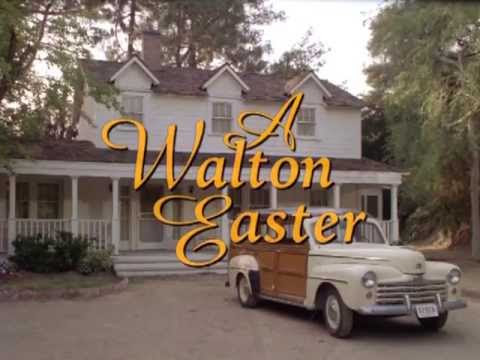
Count me as a fan of Judy Norton’s “Behind the Scenes of The Waltons” YouTube channel. She played Mary Ellen in the award-winning series that lives on in syndication perpetuity. Her myriad videos supply unique insight into the inner workings of a weekly television show from that very colorful snapshot in time, the 1970s. A recent installment revisited “A Walton Easter,” a 1997 reunion movie—the fifth and mercifully the last of them—that found the Walton family in 1969 and assembling for Ma and Pa’s “fortieth wedding anniversary.”
That would mean, of course, that the couple tied the knot in 1929, but when The Waltons debuted in 1972, the family was “in the middle of the Depression,” 1933, and John-Boy was sixteen. In The Homecoming, the TV movie that inspired The Waltons, Olivia—Mama—revealed that her blossoming Christmas cactus took root "before the world war"—World War I—the year of her marriage to John. “1916, I recollect,” replied Grandpa. So, got it, Olivia and John Walton should have been celebrating their fifty-third anniversary in 1969, which, by the way, was when the latter passed away. That is, if we accept creator Earl Hamner Jr.’s closing narration in The Homecoming, where he intones, “For we lost my father in 1969.”
What’s the point of all this? It’s a television show after all. Still, we do appreciate a certain consistency and continuity on the small screen and in life in general. Fans remember details. In The Walton’s reunion movies, key people were no shows—like husbands, wives, and children—and went unmentioned. Budgetary savings, I guess. John-Boy was a New York City TV news anchor in 1969, covering the moon landing, which did occur that year, but in July, not at Eastertime. Why couldn’t the reunion movie take place on Olivia and John’s fiftieth anniversary in 1966. John-Boy could have been covering some important news event from that year—and there were many to report. Nowadays, I believe, series are more faithful to all that came before. But in the good old days, it didn’t seem to matter that much.
There are indeed life lessons to be had from The
Waltons. And I’m not talking about the storylines and positive messaging. Rather,
I’m looking at the broader picture. For one, the show went on much too long.
After “John-Boy” Richard Thomas left the series, and “Grandma” Ellen Corby had a
stroke, and “Grandpa” Will Geer died, it was probably time to call it a night
and exit on top and still in the depression. Dianne Feinstein would have
benefited from this life lesson. The later episodes had a stiff, almost soap
opera feel to them. Also, you don’t cast a new actor in the role of a character
so identified with another actor. Richard Thomas was John-Boy.
Finally, leave the classics alone. The 2021 remake of The Homecoming, which aired on the Hallmark Channel, was ghastly. The original captured the spirit of the Great Depression and hard times with edgy, unsanitized characters. Earl Hamner, Jr., the film’s director, Fielder Cook, and the older actors lived through the depression years. The movie looked the part in studio and on location. The modern version—well—didn’t from the neatly pressed, L.L Bean wardrobe to the all-too smart furniture to the banal Hollywood outdoor settings. You can’t go home again.
Wednesday, May 17, 2023
Hare Today, Rabbit Tomorrow
Recently, I overheard a neighborhood eccentric inform his companion that he at long last learned the difference between a hare and a rabbit. This local oddball, a former college professor, has been around since time immemorial, living in an increasingly dilapidated house and, sadly, body as well. Like us all, he is aging and aging fast.
For years that turn into decades, there are countless
individuals in our lives—on the periphery—that we know very little
about. Men and women who cross our paths too many times to count that we barely
acknowledge or don’t acknowledge at all. The nutty professor looks the part,
acts the part, and keeps pretty much to himself. That is and always has been
his modus operandi. Once upon a time, he was regularly spotted walking a
strange looking, hairless little dog and—before that—pushing around his wheelchair-bound
wife. The man nodded to me a time or two when our eyes met. But I got the
impression that even such minimalist greetings made the professor extremely
uncomfortable, so—when sharing the same sidewalk—I thereafter avoided any and
all eye contact.
As time marches on and neighbors die and move away, life’s fleeting nature becomes impossible to ignore. Suddenly, these obscure folks in my tiny earthly orbit loom larger in my eyes. There’s this peculiar, misshapen fellow about my age who is frequently seen chiding his pooch to behave or—heaven forbid—suffer the consequences. I know his name and remember him from way back when—as a teen—thumbing through the dirty magazines in the back of—what was colloquially known as—“Optimo” or the "cigar store." This guy is pushing sixty now and looks worse for the wear, but I’ve known of him for more than forty years.
These days when people leave town who have been around forever, I feel on occasion as if I’ve missed something by not getting to know them better. After all, living in an ever-changing neighborhood for—in some instances—a half century or more, we shared much in common. And the clock is ticking. If I so desire, I could—the next time I encounter him—engage the nutty professor in conversation and discover what exactly he taught and where he taught it. I could, too, try to break down the wall of the man who—all those years ago—thumbed through Playboy magazine but never once purchased a copy, much to the disgust of the shop’s proprietor. Oh, truth be told, I can’t say for certain whether he did or didn’t, but I’m pretty confident it was the latter.
On second thought, I’ll leave these two cases in point alone, because that’s how they have long wanted it. And one day in the not-too-distant future they will be only memories. The professor will go to his grave at least knowing how to distinguish a hare from a rabbit, which is something, I suppose.
(Photos from the personal collection of Nicholas
Nigro)
Saturday, April 29, 2023
Morning Calls Remembered
Some forty years ago, it was not unusual to find me in a neighboring alleyway at around seven o’clock in the morning and calling on my best friend “Johnny Boy.” Considering all the advances in technology and the colossal cultural shift, it seems kind of strange to envision a youngster arising so bright and early, before anybody else in the household, and venturing out onto the mean streets of the Bronx without first alerting Ma and Pa. After all, local crime statistics were even more cause for concern back then, and the nine- and ten-year-old me didn’t even have a cell phone to communicate with the home office.
But it’s just the way it was. Roaring at the top of my lungs, “Johnny Boy!” when most everybody in earshot was asleep on a weekend, or on an early summer’s morning, was commonplace. My friend would often respond to my bellow with the logical rejoinder, “What?” I would then say, “You coming out?” Occasionally, one of his sisters would answer for him and shout, “He’s sleeping!” Looking back these many years later, I can understand why some others might not have appreciated this morning call—not too long after the sunrise—of “Johnny Boy!” It was, however, a different and, I daresay, simpler time—completely uninhibited and not remotely technologically driven. It was also more annoying to those who didn’t get up with the roosters.
While I rue all that has been lost to the youth of today transfixed with their latest electronic gadgets and, above all else, impatience with everything and anything that doesn’t move at the speed of light, I take great solace in the contemporary quietude. There are no little people anymore waking up at daybreak, going out to play, and disturbing formerly young persons like myself. Nowadays, when the legions of youth arise from their slumbers, they reach, foremost, for their iPads and iPhones. Venturing out into the great outdoors—the urban jungle—and calling on their best buds is unheard of. When a text message or tweet will suffice, why wake up the wider world anyway? And now, too, I can read the The Morning Call online.
Memories of Class Warfare
On this lazy summer afternoon, a woman came to counter with a basketful of cat food cans. She told me how many she had in there, and then went off to gather a few more things. I began bagging her cans and—as was my routine—counted them. I always placed a certain number in each bag—and no more—that was my bag, if you will. She evidently told me she had three cases worth, or some such thing. I counted a couple of cans fewer than her tally. I didn’t tell her and, admittedly, I was remiss in not informing her that her count was off. Still, when all was said and done, I charged her the correct amount, which would have been more had I accepted her erroneous calculation as the gospel truth.
Anyway, several days later, the store received a letter from this woman. She was peeved. Her home address was somewhere on Manhattan’s Central Park West. Apparently, this lady had means. In her missive, she bitterly complained about the cashier who charged her the correct amount, and not more based on her faulty arithmetic. She wrote, “He certainly would have told me if I had more cans in my basket, instead of fewer cans.”
Rich, the headcheese, posted the letter on his back office bulletin board. It was his policy to answer every missive he received from aggrieved clientele (generally speaking a good policy). Even though he had gotten all the pertinent details from me, he was nonetheless going to respond to this lady’s letter.
What particularly irked me about this whole affair was that this evidently well-off woman with a premium view of Central Park was, in essence, attempting to get a cashier—whom she presumed was making minimum wage or close to it—chastised or, better yet, terminated. She was making trouble for the little guy. For what reason: charging her the right amount, and not more money based on her addition gaffe.
As the days turned into a week and then a couple, I noticed the letter still pinned to Rich’s bulletin board. I had had enough and yanked it off. It is in my archives somewhere now, and that Upper West Side denizen never did get a response, nor did she get that cashier fired. Now that was class warfare.
(Photo from the personal collection of Nicholas Nigro)