Tuesday, May 30, 2023
Kojak Revisited
Sunday, May 21, 2023
The 1916 Project
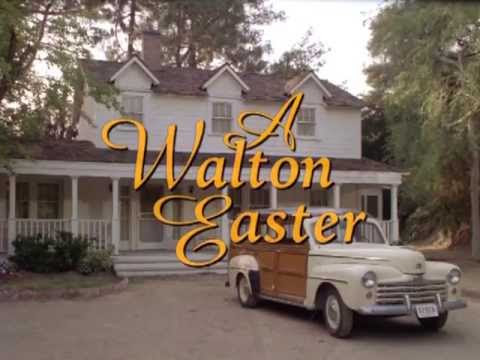
Count me as a fan of Judy Norton’s “Behind the Scenes of The Waltons” YouTube channel. She played Mary Ellen in the award-winning series that lives on in syndication perpetuity. Her myriad videos supply unique insight into the inner workings of a weekly television show from that very colorful snapshot in time, the 1970s. A recent installment revisited “A Walton Easter,” a 1997 reunion movie—the fifth and mercifully the last of them—that found the Walton family in 1969 and assembling for Ma and Pa’s “fortieth wedding anniversary.”
That would mean, of course, that the couple tied the knot in 1929, but when The Waltons debuted in 1972, the family was “in the middle of the Depression,” 1933, and John-Boy was sixteen. In The Homecoming, the TV movie that inspired The Waltons, Olivia—Mama—revealed that her blossoming Christmas cactus took root "before the world war"—World War I—the year of her marriage to John. “1916, I recollect,” replied Grandpa. So, got it, Olivia and John Walton should have been celebrating their fifty-third anniversary in 1969, which, by the way, was when the latter passed away. That is, if we accept creator Earl Hamner Jr.’s closing narration in The Homecoming, where he intones, “For we lost my father in 1969.”
What’s the point of all this? It’s a television show after all. Still, we do appreciate a certain consistency and continuity on the small screen and in life in general. Fans remember details. In The Walton’s reunion movies, key people were no shows—like husbands, wives, and children—and went unmentioned. Budgetary savings, I guess. John-Boy was a New York City TV news anchor in 1969, covering the moon landing, which did occur that year, but in July, not at Eastertime. Why couldn’t the reunion movie take place on Olivia and John’s fiftieth anniversary in 1966. John-Boy could have been covering some important news event from that year—and there were many to report. Nowadays, I believe, series are more faithful to all that came before. But in the good old days, it didn’t seem to matter that much.
There are indeed life lessons to be had from The
Waltons. And I’m not talking about the storylines and positive messaging. Rather,
I’m looking at the broader picture. For one, the show went on much too long.
After “John-Boy” Richard Thomas left the series, and “Grandma” Ellen Corby had a
stroke, and “Grandpa” Will Geer died, it was probably time to call it a night
and exit on top and still in the depression. Dianne Feinstein would have
benefited from this life lesson. The later episodes had a stiff, almost soap
opera feel to them. Also, you don’t cast a new actor in the role of a character
so identified with another actor. Richard Thomas was John-Boy.
Finally, leave the classics alone. The 2021 remake of The Homecoming, which aired on the Hallmark Channel, was ghastly. The original captured the spirit of the Great Depression and hard times with edgy, unsanitized characters. Earl Hamner, Jr., the film’s director, Fielder Cook, and the older actors lived through the depression years. The movie looked the part in studio and on location. The modern version—well—didn’t from the neatly pressed, L.L Bean wardrobe to the all-too smart furniture to the banal Hollywood outdoor settings. You can’t go home again.
Wednesday, May 17, 2023
Hare Today, Rabbit Tomorrow
Recently, I overheard a neighborhood eccentric inform his companion that he at long last learned the difference between a hare and a rabbit. This local oddball, a former college professor, has been around since time immemorial, living in an increasingly dilapidated house and, sadly, body as well. Like us all, he is aging and aging fast.
For years that turn into decades, there are countless
individuals in our lives—on the periphery—that we know very little
about. Men and women who cross our paths too many times to count that we barely
acknowledge or don’t acknowledge at all. The nutty professor looks the part,
acts the part, and keeps pretty much to himself. That is and always has been
his modus operandi. Once upon a time, he was regularly spotted walking a
strange looking, hairless little dog and—before that—pushing around his wheelchair-bound
wife. The man nodded to me a time or two when our eyes met. But I got the
impression that even such minimalist greetings made the professor extremely
uncomfortable, so—when sharing the same sidewalk—I thereafter avoided any and
all eye contact.
As time marches on and neighbors die and move away, life’s fleeting nature becomes impossible to ignore. Suddenly, these obscure folks in my tiny earthly orbit loom larger in my eyes. There’s this peculiar, misshapen fellow about my age who is frequently seen chiding his pooch to behave or—heaven forbid—suffer the consequences. I know his name and remember him from way back when—as a teen—thumbing through the dirty magazines in the back of—what was colloquially known as—“Optimo” or the "cigar store." This guy is pushing sixty now and looks worse for the wear, but I’ve known of him for more than forty years.
These days when people leave town who have been around forever, I feel on occasion as if I’ve missed something by not getting to know them better. After all, living in an ever-changing neighborhood for—in some instances—a half century or more, we shared much in common. And the clock is ticking. If I so desire, I could—the next time I encounter him—engage the nutty professor in conversation and discover what exactly he taught and where he taught it. I could, too, try to break down the wall of the man who—all those years ago—thumbed through Playboy magazine but never once purchased a copy, much to the disgust of the shop’s proprietor. Oh, truth be told, I can’t say for certain whether he did or didn’t, but I’m pretty confident it was the latter.
On second thought, I’ll leave these two cases in point alone, because that’s how they have long wanted it. And one day in the not-too-distant future they will be only memories. The professor will go to his grave at least knowing how to distinguish a hare from a rabbit, which is something, I suppose.
(Photos from the personal collection of Nicholas
Nigro)
Saturday, April 29, 2023
Morning Calls Remembered
Some forty years ago, it was not unusual to find me in a neighboring alleyway at around seven o’clock in the morning and calling on my best friend “Johnny Boy.” Considering all the advances in technology and the colossal cultural shift, it seems kind of strange to envision a youngster arising so bright and early, before anybody else in the household, and venturing out onto the mean streets of the Bronx without first alerting Ma and Pa. After all, local crime statistics were even more cause for concern back then, and the nine- and ten-year-old me didn’t even have a cell phone to communicate with the home office.
But it’s just the way it was. Roaring at the top of my lungs, “Johnny Boy!” when most everybody in earshot was asleep on a weekend, or on an early summer’s morning, was commonplace. My friend would often respond to my bellow with the logical rejoinder, “What?” I would then say, “You coming out?” Occasionally, one of his sisters would answer for him and shout, “He’s sleeping!” Looking back these many years later, I can understand why some others might not have appreciated this morning call—not too long after the sunrise—of “Johnny Boy!” It was, however, a different and, I daresay, simpler time—completely uninhibited and not remotely technologically driven. It was also more annoying to those who didn’t get up with the roosters.
While I rue all that has been lost to the youth of today transfixed with their latest electronic gadgets and, above all else, impatience with everything and anything that doesn’t move at the speed of light, I take great solace in the contemporary quietude. There are no little people anymore waking up at daybreak, going out to play, and disturbing formerly young persons like myself. Nowadays, when the legions of youth arise from their slumbers, they reach, foremost, for their iPads and iPhones. Venturing out into the great outdoors—the urban jungle—and calling on their best buds is unheard of. When a text message or tweet will suffice, why wake up the wider world anyway? And now, too, I can read the The Morning Call online.
Memories of Class Warfare
On this lazy summer afternoon, a woman came to counter with a basketful of cat food cans. She told me how many she had in there, and then went off to gather a few more things. I began bagging her cans and—as was my routine—counted them. I always placed a certain number in each bag—and no more—that was my bag, if you will. She evidently told me she had three cases worth, or some such thing. I counted a couple of cans fewer than her tally. I didn’t tell her and, admittedly, I was remiss in not informing her that her count was off. Still, when all was said and done, I charged her the correct amount, which would have been more had I accepted her erroneous calculation as the gospel truth.
Anyway, several days later, the store received a letter from this woman. She was peeved. Her home address was somewhere on Manhattan’s Central Park West. Apparently, this lady had means. In her missive, she bitterly complained about the cashier who charged her the correct amount, and not more based on her faulty arithmetic. She wrote, “He certainly would have told me if I had more cans in my basket, instead of fewer cans.”
Rich, the headcheese, posted the letter on his back office bulletin board. It was his policy to answer every missive he received from aggrieved clientele (generally speaking a good policy). Even though he had gotten all the pertinent details from me, he was nonetheless going to respond to this lady’s letter.
What particularly irked me about this whole affair was that this evidently well-off woman with a premium view of Central Park was, in essence, attempting to get a cashier—whom she presumed was making minimum wage or close to it—chastised or, better yet, terminated. She was making trouble for the little guy. For what reason: charging her the right amount, and not more money based on her addition gaffe.
As the days turned into a week and then a couple, I noticed the letter still pinned to Rich’s bulletin board. I had had enough and yanked it off. It is in my archives somewhere now, and that Upper West Side denizen never did get a response, nor did she get that cashier fired. Now that was class warfare.
(Photo from the personal collection of Nicholas Nigro)
Saturday, March 25, 2023
Thoughts of Barbicide
Friday, March 24, 2023
Horse Feathers
Recently, I learned that one of my favorite college professors passed away. He taught history, including a course called “Great Issues in American History.” It was one of only a handful of classes that I looked forward to attending during my four years of higher education. While the professor was modestly left leaning, he welcomed free and open discussion. That’s what men and women of the left encouraged once upon a time. They championed free speech and rigorous give-and-take. No one felt muzzled in his class or any other that I can remember. For what it’s worth: Microsoft Word editor underlined in blue “men and women” and suggested, “A gender neutral term would be more inclusive” like “people.”
American
history—warts and all—was laid out to us in vivid living color without editorializing.
Our professor, too, maintained a curious aura, like he somehow stepped out of
the past. He was that authentic and right for the job. When the man sported a
considerable beard, he could have effortlessly blended in among General Grant’s
staff at Vicksburg.
In those bygone days—the early 1980s—college students weren’t easily offended, identity obsessed, and walking-and-talking victims, nor did they try historical figures in contemporary courts and find their lives and times irredeemable and unworthy of examination. I recall one classroom discussion revolving around the Civil War and slavery. I don’t remember the context of what inspired a Caucasian fellow to proclaim that one couldn’t compare the horrors of the Holocaust to what slaves endured in bondage. Not surprisingly, his viewpoint didn’t sit well with an African American peer who visibly seethed and offered a rebuttal. Our unflappable professor calmly listened to both sides and the class and life went on unimpeded. Nobody had a meltdown and made a beeline to a safe space in the Campus Ministry a flight below. The brother who ran that place always seemed strange and a bit scary to me. Nobody was reported. The school newspaper didn’t publish a story about the back and forth and demand heads on a platter and groveling apologies.
Another favorite professor of mine—also deceased as most of them sadly are—taught economics. I enjoyed her classes because she was at once provocative and approachable. She didn’t appreciate being labeled a “socialist” and preferred “humanist” instead. This prof was a bona fide feminist, too, who, I suspect, might be branded a “TERF” in the here and now.
I distinctly recollect taking an elective with her in my major. There were only a dozen students in the class. One day, the discussion involved women in the workplace. A male student from Nigeria interjected at some point, saying—in so many words—that a women’s place was in the home. The reaction from the professor and just about everybody else was prompt and dismissive but meted out good naturedly with no lingering hard feelings. Obviously, this chap came from a vastly different culture. He received, though, a well-earned earful from Americans in a quintessential bastion of free expression back then—the college campus. Nobody was triggered and that was the end of that.
(Photos
from the personal collection of Nicholas Nigro)
Wednesday, March 22, 2023
Spring-a-ling
When I was a boy in the Bronx during the 1960s and 1970s, there were “candy stores”—often more than one—on the main thoroughfares. Places that sold all kinds of candy—yes—but also newspapers, magazines, and fountain drinks like egg creams, malts, and milkshakes. Through the years, I purchased a fair share of confectionaries in them. The variety was incredible, and the price was right. My favorites varied from moment to moment and included—at one time or another—Banana Splits, Good & Fruity, Dots, Neccos, Starburst, and Jaw Breakers.
For a spell, I was hooked on Skittles. While I have
long since kicked that habit, I thought of these multi-hued delights today when
I read a news account of a bill under consideration in the California Assembly,
which would outlaw—among multiple candies and food products—Skittles, Mike
& Ike Hot Tamales, Nerds, and Double Bubble Twist Gum. The pols sponsoring
the bill cite the “dangerous chemicals” used in their manufacturing, including Red
Dye no. 3, titanium dioxide, and propyl paraben.
Despite having the imprimatur of the Food and Drug Administration (FDA), various venerable candies are on the firing line. Yes, I accept that the FDA’s track record in these matters is less than perfect. And I’ll readily concede that consuming the candies of my youth—in the quantities that I did—wasn’t particularly good for my teeth, nor a net plus in my overall health and wellness. The ingredients listed on the packaging spoke and continue to speak volumes. But I lived to tell.
Permit me now to go out on a limb here and say that
eating Skittles, Sour Patch Kids, and Pez are unlikely to inspire a rash of premature
deaths. Anyway, we take chances in life all the time. Roll the dice, pop up the
Pez head, and go for it then. Remember: You only live once! I want the kids of today
to enjoy them—like I once did—while they can. Recalling the candies of
my bygone boyhood has been a nostalgic tour de force, for sure, but the notion of
consuming them in 2023 is remarkably unappealing and, indeed, stomach churning.
Now, should the aforementioned bill see the light of day, I can just imagine the black market that will spring to life. Picture this: Dealers in California back alleys prying open their briefcases full of sugary and colorful contraband. What’ll you have? Got any Milk Duds in there?
A footnote here: In strolling down memory lane and
revisiting so many of the candies of my past, I encountered several that I never liked,
even when I sported a cast iron stomach. They include Choward’s Violet Mints,
Fun Dip, Turkish Taffy, Mallo Cup, Raisinets, Bit-o-Honey, Mary Jane, Junior
Mints, York Peppermint Patties, Mounds, Almond Joy, Red Hots, and Butterfingers. The candy dots stuck to paper were pretty gross, too.
Tuesday, March 21, 2023
Broccoli Insecurity
So many things in life have taken a sharp turn for the worse—politics, professional sports, and general civility for starters. I recently encountered a quote from a longtime restauranteur. He lamented the fact that nowadays all too many of his customers are impatient, rude, and even nasty. It appears that people aren’t just crude, loathsome, and inane behind the veil of anonymity on platforms like Twitter, TikTok, and Facebook. It’s spilling over into real life—the bright light of day—which was inevitable, I suppose.
Another thing that has gone south is broccoli. Once upon a time it was my favorite vegetable. In my youth, my paternal grandmother—a chef extraordinaire—prepared a dish that was other-worldly: broccoli and spaghetti. It always looked and tasted as expected—delicious. Without fail, the cooked broccoli sported an alluring light-green hue. The black pepper added to the repast tenaciously clung to the florets, which were smothered in aromatic garlic and olive oil. Reach for the slices of Italian bread to sop up the oily remains. Napkins—more than one—were required. I could have eaten Grandma’s broccoli and spaghetti every day back in the day. Pray tell, what happened to the broccoli?
Admittedly, try as I might, I could never duplicate my grandmother’s broccoli and spaghetti. Occasionally, I would taste a hint of what came before me and be pleased with my efforts. Now, it just doesn’t happen—ever. I add more and more garlic with each college try, but even that doesn't enhance what has truly become a tasteless vegetable. As a boy, I would choose as my birthday meal: liver, broccoli, and mashed potatoes. It was a peculiar request for a kid, I know, especially from one who was known to be quite finicky vis-Ã -vis eating habits. Today, save perhaps the mashed potatoes, I’d pass on that childhood meal.
I presume that broccoli is somehow grown differently in the here and now. The stalks appear thinner and a darker green than the ones with which my grandmother worked her magic. So, I must accept this broccoli insecurity of mine and move on to greener pastures. Nevertheless, I can’t help myself. Hoping for a miracle find one day—a needle in a haystack— I still buy the veggie on occasion.
A footnote here: I’ve noticed in the current media vernacular
and beyond the phrase “food insecurity” has taken root. It’s used to describe
folks who don’t have the financial wherewithal to sufficiently feed themselves
and their families. It just seems like an odd term to describe what it is intended
to describe. But these are odd times, aren't they?
(Photos from the personal collection of Nicholas
Nigro)
Saturday, February 25, 2023
Goodbye, Mr. Chips
Wednesday, February 22, 2023
The Ice Cream Man Cometh
In New York City and much of the northeast, residents like me are experiencing the winter that wasn’t and apparently won’t be. It’s been so mild and virtually snowless that the ice cream man, Mister Softee, is already making his appointed rounds. This is unheard of for this time of year, akin to the swallows of San Juan Capistrano returning on St. Lucy’s Day rather than St. Joseph’s Day. Rounds, by the way, that include the venerable Mister Softee jingle polluting the air. As a youth, I welcomed the ditty playing over and over and over on a repetitive loop—and why not? Now, however, it’s intrusive and maddening! With ample history on my side, I reasoned that I was safe in wintertime from this very grating sound of summer. To employ a favorite media tag: It is truly “historic.”
These are, in fact, times that try men’s souls on a whole host of fronts. For instance, the latest ignominy perpetuated on the written word: the bowdlerizing of children’s author Roald Dahl’s works. I never read any of his stuff as a boy, but the late author had and has a considerable following. Over three million copies of Dahl’s books have sold. His characters are peculiar and colorful: “fat,” “ugly,” and “crazy” for starters.
In Dahl’s original James and the Giant Peach, published
in 1961, the Centipede character sings: “Aunt Sponge was terrifically fat…and tremendously
flabby at that” and “Aunt Spiker was thin as a wire…and dry as a bone, only
drier.” Here are the edits made sixty-two years later that the publisher,
Puffin, says are “small and carefully considered”: “Aunt Sponge was a nasty
old brute…and deserved to be squashed by the fruit” and “Aunt Spiker was much
of the same…and deserves half of the blame.” That’s small and carefully
considered!
In Dahl’s 1983 book “The Witches,” he writes at some point, “Even if she is working as a cashier in a supermarket or typing letters for a businessman…” This is changed in 2023 to “Even if she is working as a top scientist or running a business…” I believe young and old alike can ascertain how books from the past—some written eons ago—reflect their time and don’t require alterations to avoid offending someone somewhere in the here and now. By the way, what’s the issue with working as a cashier? Elite censors?
When I imagine who these censors are—predominantly young flunkies in publishing taking their marching orders from consultants—I cringe. This offended class—non-writers educated in the art of offense—willy nilly rewriting the books of a renowned and deceased author—with a large fan base that transcends generations—is at once out of line and nauseating. Sure, Dahl was a strange man and “not an angel” to quote Salman Rushdie, harsh critic of this farce. But Dahl—and Dahl alone—created the surreal world with the likes of Augustus Gloop, Matilda Wormwood,, and George Kranky inhabiting it. It’s not the job of present-day puerile blue-pencil pushers and wacky activists to obliterate it. Here’s an idea: Why not cultivate new writers instead? Folks who will envision characters who aren’t fat, ugly, and crazy, but non-binary, neurodiverse, and intersectional instead. The more the merrier! And while you’re at it: Fear not all that came before, it won’t bite you.
I’ve dealt with many fine editors through the years. More than a few copyeditors, though. remained anonymous and I had no say at the changes made to my manuscript. I never got to pore over the final draft. Work-for-hire jobs. Favorite edit from Knack: Night Sky: I referred to the “near side of the Moon.” A mystery editor, who evidently didn’t know that there are—in the common parlance—a “near side” and “far side” of the Moon, changed “near side” to “near the side.” It’s not quite the same thing, is it?
Tuesday, February 21, 2023
Boom Goes the Dynamints
Sunday, February 19, 2023
The Midwinter Recess Lives
Wednesday, February 15, 2023
Sunbeam Energy
Recently, old family slides were made into pictures. Since slide shows were a thing of the past, these images had rarely been seen for decades. Our family slide taking occurred in the mid-1970s through the early 1980s—and then that was the end of that. In the slide mix were some visuals of visits to my maternal grandparents, who lived in a town called Bangor, on a street called Miller, in the Keystone state of Pennsylvania. For kids from the Bronx, visiting Bangor and Miller Street was akin to entering The Twilight Zone. It was another world altogether and—after Route 80 was completed—only an hour and a half drive due west from New York City.
I was taken with one particular, not-especially-clear slide from Bangor—on Miller Street during our bicentennial year—that featured a certain truck in the backdrop. Miller Street was a very steep hill, with my grandparents sandwiched somewhere in the middle of it, and on the block below them was a frequently parked Sunbeam Bread truck. My grandmother used the product all the time and, as I recall, Sunbeam was pretty tasty as bland sliced white breads went. But only now—all these years later—have I given this image its proper due.
Somebody on Miller Street obviously owned a Sunbeam Bread truck route, because the truck was usually there during the day. I suspect he delivered the bread in the wee hours of the morning to area stores, and was back on Miller Street by early afternoon. I believe Sunbeam Bread was available everywhere, including the Bronx, but I don’t ever remember having it at home, and so I always associate it with my grandmother, Bangor, Miller Street, and that mysterious blue and yellow truck parked on the hill. I’m happy to report, too, that Sunbeam Bread lives on in grocery stores everywhere.
(Photo from the personal collection of Nicholas Nigro)
Jimmy's Roller Skates
Anyway, one thing led to another and I Googled “old roller skates,” or some such thing, and cast my eyes upon an image of an old pair of roller skates, the utilitarian metal kind that were, once upon a time, the rage. They sported leather straps that secured them to roller skaters’ feet. As I recall, the straps were sometimes spray-painted red, yellow, or black. The cheap paint jobs, though, invariably chipped away, revealing both the age of the roller skates and the amount of mileage on them. I would be remiss here if I didn't mention these vintage roller skates' keys—indispensable keys—that tightened adjustable clamps. Tightened them— flush at the soles of feet—to roller skaters’ footwear. They weren't one-size-fits-all, but more like one size fits several size shoes.
While these old-time roller skates were still around when I was a very young boy, more modern and stylish boot-like renditions were fast casting asunder these relics—keys and all—from the past. Nevertheless, when I spied a photo of these charming metallic dinosaurs with wheels, I remembered the only pair I ever owned. I didn’t do much roller skating in my youth. (While hockey on roller skates was popular on the area’s ample asphalt and concrete, it just wasn’t my thing.) Originally, my roller skates belonged to an older kid named Jimmy, who lived just around the block from me. When Jimmy outgrew them, his mother gave them to my mother to give to one of her boys, which turned out to be me. I was six or seven, and Jimmy might very well have been five, seven, or even ten years older than me, when the roller skates changed hands. Actually, I have no personal memories of Jimmy at all. I only recall that he was “mentally retarded,” which was the commonly used and accepted term back in the 1960s and 1970s. It wasn’t pejorative, although it sometimes became so depending on the circumstances. In fact, the term was then medically sanctioned, considered largely benign, and a vast improvement over prior callous monikers.
I remember I was hesitant to even put the roller skates on because they once belonged to Jimmy. I thought he had some sort of communicable disease, I guess. As I warily surveyed the raggedy, peeling yellow leather straps on this very old pair of roller skates, I figured I might enter the Twilight Zone, or some such thing, if I put them on—that I would become a “mentally retarded” person like Jimmy.
Funny, but while I recall Jimmy’s roller skates becoming my own for one brief shining moment in the late 1960s, I don’t—as I previously noted—ever remember encountering him, although I must have. I don't recall anybody saying anything negative about him to frighten me into avoiding his skates like the plague. That was just it—the long and short of it. Very few people back then spoke openly about people like Jimmy and what could be done to truly help the “mentally retarded.” We kids were thus left to fill in the blanks and imagine all sorts of things—like catching “mental retardation” from a pair of skates.
Wednesday, February 8, 2023
What's My Line?
When life gives you the coronavirus, get on the Wendy's drive-thru line. Some things transcend all.
Get it while you can.