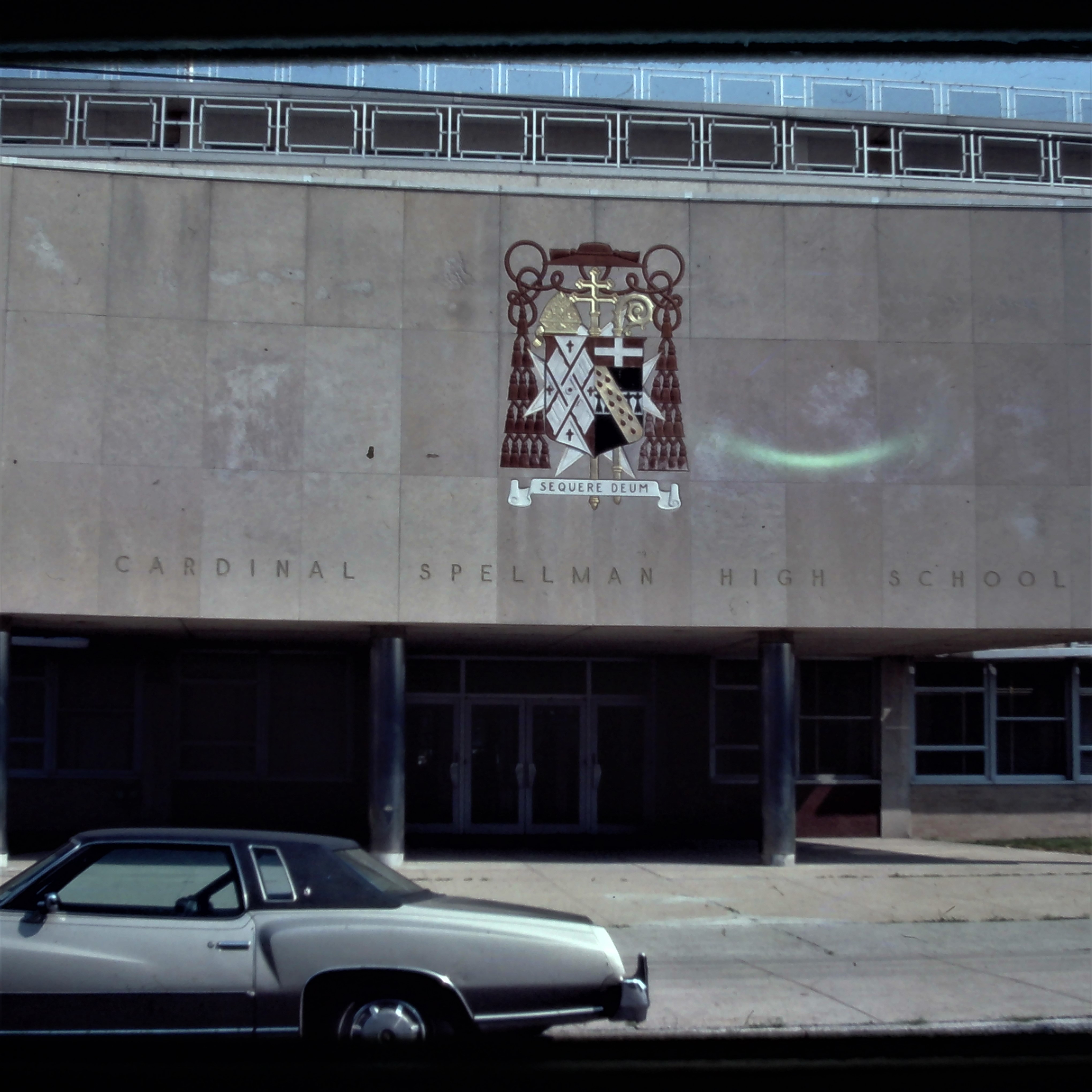
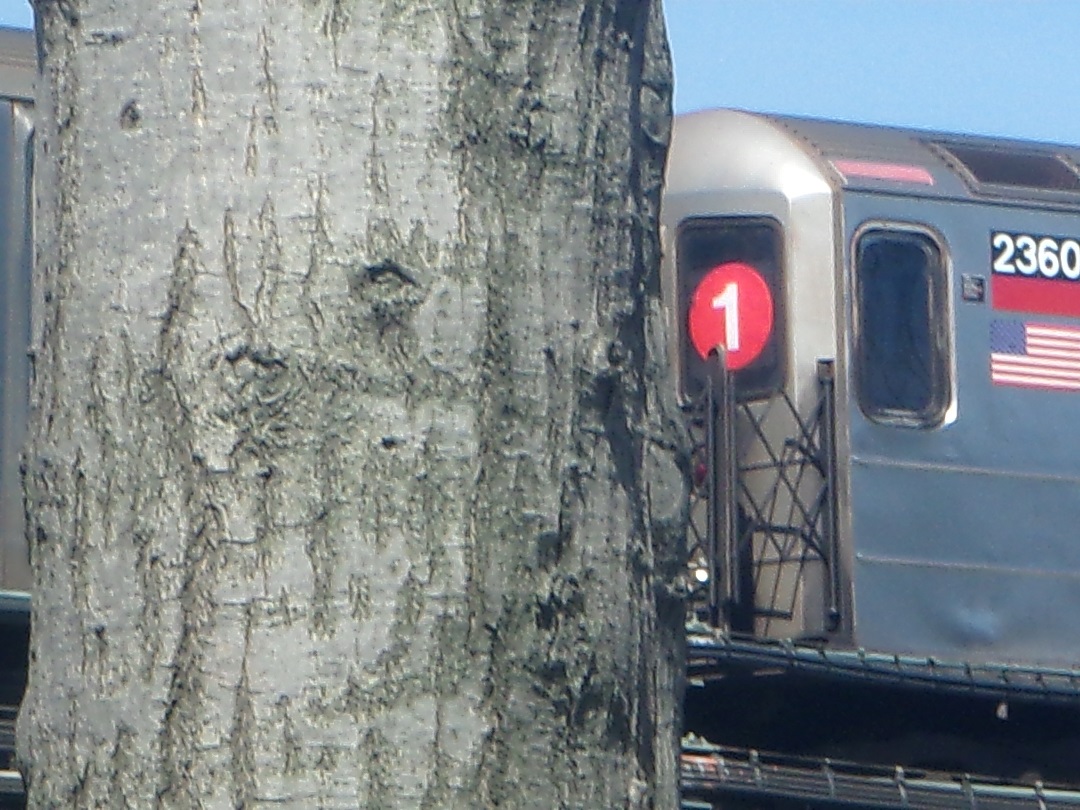
(Photographs from the personal collection of Nicholas Nigro)
Monday, July 25, 2022
Fifty-Six Years of Summer
(Photographs from the personal collection of Nicholas Nigro)
Sunday, June 5, 2022
Catching the June Bug
Once upon a time, the month of June stood out from the pack. It embodied so much: long days, the school year's end, backyard barbecues, baseball in its many incarnations, and imminent summer vacations in exotic locales like the Jersey Shore and the North Fork of Long Island. Thirty years ago in June, I regularly attended a poetry open mic at a now defunct establishment called Sidekicks CafĂ©. A poet named Ron—who was especially good and the exception to the rule—recited his original verse in a soothing Southern accent, a muted cadence not typically heard in the Bronx. One poem of his repeatedly referenced the “June bug.” It was quite evocative as I recall. Brought to life was this awkward insect wandering the night, careening its way toward a light source, while rowdily crashing into countless windows and screen doors in the process.
In the beetle family, the June bug was not a sight for sore eyes. Contrarily, its nighttime companion, the lightning bug, was a welcome summer visitor. Flashing on and off as the fledgling summer days of June turned dark, few insects could compete with that light show. Meanwhile, the June bug might just as easily bump into your head as a window or screen door. I don’t imagine the creature was dangerous—not a carrier of malaria or sporting a lethal stinger—but it was gross nonetheless. Come to think of it: While the lightning bugs were impressive visuals on warm summer nights, human contact was not recommended. Their inevitable calling cards: a nasty, lingering odor not easily scrubbed away. And, too, in the bright light of day, they were rather unsightly.
June was the ultimate anticipatory month, a time to get the summer ball rolling. We had the June bug, as it were, and it impacted all ages—from those of us who waited patiently for the Good Humor man to make his daily evening rounds to the adult set who commenced with their nightly stoop sitting. Stoop sitting was an urban art form for generations. It’s still practiced to some degree, but not as extensively as when I was a boy. It supplied the ideal setting for neighborhood gossip, the perfect stopover for passersby, and furnished a ringside seat for the unexpected. Like the time a new neighbor and homeowner was seen chasing his sister down the street while uttering an extended string of profanities. I wonder what that was all about. Footnote: The man lived in the same house for fifty years before passing away last year. I don’t know whatever became of his sister, if she inherited his property, or if she's even among the living.
Just as Good Humor retired its fleet of trucks and became exclusively a supermarket brand, so many of those who caught the June bug along with me have gone the way of a funeral parlor’s laminated prayer card. It’s fair to say that I’m not quite as enamored with June as I once was. Still, the June bug lives on in nature and in many memories as well. I’ll have a grape-lemon-flavored Bon Joy Swirl please.
(Photos from the personal collection of Nicholas
Nigro)
Thursday, May 26, 2022
Good Humor and Bad Humor in the Summertime
Thursday, May 12, 2022
Freddie McFlicker
There’s this little patch of land that’s considered part of Van Cortlandt Park. In fact, it’s called “Van Cortlandt’s Tail” because it’s at the park’s far end—or beginning from where I sit. And speaking of sitting, this tail section of the park is a circle—or a horseshoe might be more apt—of benches. That’s pretty much it. Sure, it’s got a tall evergreen in its center, which is decorated every Christmas. And right now it’s festooned with tulips and past-their-prime daffodils.
Tuesday, May 10, 2022
A Spring in My Step
Sunday, April 24, 2022
The Scent of a Postman
Saturday, April 9, 2022
Getting to Second Base
I just had a neighbor pretend not to see me and cross a street he wouldn’t otherwise cross to avoid an encounter. Sometimes the man likes to gab; sometimes he doesn’t. I kind of felt dissed, but then I do the same thing from time to time and have done it to him on more than one occasion. I also witnessed New York’s Finest flag down a GrubHub delivery guy on a motorized scooter. I overheard two officers asking him if he had the vehicle’s title. The answer was no, apparently, and his wheels were confiscated on the spot. One copper hopped on the thing and made a beeline to the precinct just down the block. The obvious loser here: the GrubHub customer awaiting his breakfast.
It’s rather insane in these parts with all the
electric bicycles and scooter variations buzzing—entirely too fast—in the
streets and on the sidewalks. It’s common knowledge that many of these contraptions
are unregistered and illegal. Part and parcel of the times we live in, I guess.
While on the subject of the not especially uplifting here and now: Major League Baseball inaugurated another season this past week. Does anybody really care anymore? Once upon a time on opening day, April 6, 1973, the New York Mets and Tom Seaver bested the Philadelphia Phillies and Steve Carlton at Shea Stadium. Tug McGraw got the save in a 3-0 victory. I recall watching the game on WOR-TV, Channel 9. Left fielder Cleon Jones hit two home runs that day and went three for three, collecting sixty percent of the team’s hits. On the must-watch post-game show, Kiner’s Korner, venerable broadcaster Ralph Kiner asked the man of the hour if he ever recalled hitting two home runs on opening day. Cleon wasn’t a prolific home run hitter, never hitting more than fourteen in a season, so I thought the question silly—and I was only ten years old. The opening day hero nonetheless answered, “I don’t remember hitting two home runs in any game!” Questionable questions and malaprops were all part of Hall of Famer Ralph Kiner’s charm. And, by the way, the game was played in under two hours. Imagine that!
So, here I am almost fifty years later. I could never have envisioned then what the game would be like now—it’s decidedly worse on countless fronts. Putting a man on second base to commence extra innings is beyond absurd. It’s not baseball. The Academy Awards is likewise a mere shadow of its former self. The Will Smith slap heard round the world was the icing on the cake, the nail in the coffin, as it were, of what once was something to behold—an event with star quality and winners based on merit, not some cockamamie identity-equity algorithm.
Recently, I read where a college professor was suspended for saying that people get offended too easily nowadays. Point made there. A poll found that sixty-five percent of college students are afraid to speak their minds on campus. Just sayin’: You might want to consider investing your money in something other than a higher education. There are protests in universities of symposiums on the First Amendment! Freedom of speech is controversial on campuses and a lot of other places as well—scary stuff. Staff at publishing houses are throwing in with censors, too. Former Vice President Mike Pence’s prospective memoir even generated controversy with Simon & Schuster employees petitioning to quash its publication, claiming that it made them feel unsafe or some such baloney. Pence was branded a bigot—how original. Personally, I would give the groveling sycophant the benefit of the doubt on that charge and just not buy his book. As for the all-too-common unsafe clamoring, it’s an over-used cudgel that the woke wield to suppress opinions with which they disagree. Honestly, I can’t believe that the mere notion of publishing Mike Pence’s book would make any rational adult shiver in his or her boots.
Then again, I wasn’t being taught substitute pronouns “ze” and “tree” for “him” and “her” in Mrs. Rothman’s kindergarten class. When I chance upon lists of alternative pronouns, I think of—for some strange reason—mortal Darrin Stephens’ unsuccessful attempt to cast a spell on his witch mother-in-law Endora: “Yaga Zuzi, Yaga Zuzi, Yagi Zuzi Zim.” But thank heavens it’s April and the snowperson in the yard is no longer frozen hard. Thus, I am free to dream of Cleon and zis two home runs in that simpler snapshot in time.
Thursday, April 7, 2022
The Salamander Lot
The Case of the Missing Mud Whopper
Thursday, March 24, 2022
Success and the Shopkeeper...
(Originally published on 7/9/2011)It was the middle child, Robbie, who didn’t quite live up to his mother’s expectations of the way things ought to be, despite having added to her ample brood of grandchildren. Robbie made more money than his two siblings combined—a lot more—but this didn’t earn him any extra credit as far as old mama was concerned, which was kind of strange. Money equals success from the perspectives of an awful lot of people, and Catherine was fixated on dollars and cents, even though her senior citizen savings were closing in on seven figures. Her husband had been both a good provider and a good investor, yet she still watered down the Hawaiian Punch in grave fear that she might one day end up in the poor house.
Robbie, in fact, made more dough than anybody on the family tree, which could be traced back to hardworking fishermen on the southern coast of Italy. In his mother’s worldview, Robbie’s unpardonable sin was that he made all of his moolah—millions—in a rather grungy retail environment. In other words, he didn’t wear a suit and tie to work every day, and didn’t have a benefits package bestowed on him by some benevolent corporate benefactor like GE, the Bank of America, or Proctor & Gamble. Catherine relished passing on up-to-the-minute employment reports on her relations—once, twice, and thrice removed, it didn’t matter. From where she sat, there was nothing that commanded more awe and respect than working for a “big company,” wearing neatly pressed dress clothes, and, of course, putting in very long hours for a familiar corporate master.
That her son founded a business on his own that eventually employed hundreds of people didn’t impress her in the least. Looking back on all that was, she wistfully remarked, “Robbie is content to be a shopkeeper.” And then added as a parenthetical aside: “He had a really good job, too, at Gimbel's when he got out of college. He could have gone places there had he stayed with them.” Upon graduation, Robbie had managed this Manhattan department store’s kitchen appliance section. He wore a suit and tie to work and—the icing on the cake from mama’s catbird seat—schlepped on the subway to the job day after day after day. It doesn’t get any better than that. “He could have gotten three weeks vacation had he stayed there for five years,” Catherine recalled almost four decades later. True, multi-millionaire Robbie could have one day become the CEO of Gimbel's—all things are possible, I suppose—just in time for the department store chain to declare bankruptcy and take all their generous employee benefit packages with them.
Sunday, March 13, 2022
The Very Strange Family and Joe Mullins, Too
It’s hard to do justice with mere words to the Very Strange Family, who enjoyed repasts alongside me in the diner for several years. You really had to see them live and in color to appreciate their unique brand of weirdness. The Very Strange Family consisted of a husband and wife with a son, Peter, who could have been an older teenager, or maybe a young man in his twenties. His greasy demeanor and darting eyes, however, made establishing an approximate age problematic.
At some point in time, the Very Strange Family entered the diner with a bundle of joy—an infant and fledgling member of the brood. Perhaps the toddler’s mother was not Peter's. But, really, none of this minutia really mattered, because what bound the family together was their strangeness. Ma, Pa, and Peter seemed perpetually on edge. Their eyes were always flitting—up and down, back and forth—and they immediately sensed when foreign eyes were looking their way. The Very Strange Family jumped the shark for me when the woman of the house decided to change her newborn’s dirty diaper on a table a couple of booths away. Eventually, the amateur detective in me came to the conclusion they were either members of organized crime—low-level weaselly types operating on the fringes—or in a witness protection program and fearing members of the mob. It had to be one or the other.
Conversely, Joe Mullins was easy enough to figure out. He worked in some nine-to-five bureaucratic job. His credentials—the identification pass hanging around his neck—told us as much. And, each night, when he stepped off the Number 7 bus on his way home, he’d patronize the liquor store that was conveniently a stone’s throw away from the bus stop. Carrying that familiar black liquor store plastic bag, with the latticework insignia on it, Mullins would then cross the street and enter the diner.
A friend of mine is responsible for christening him “Joe Mullins”—that wasn’t his real name—because he just seemed like a “Joe Mullins” to him. From our vantage point, Mullins came across as a harmless sort. But as a rule, he was ill at ease as he laid down his bag full of spirits and ordered his supper, which always consisted of the most boring and basic kind of sandwiches. His whiskey bottles invariably made audible clanking sounds, prompting meaningful glances all around from staff to customers and from customers to staff. The hapless Mullins once ordered “a ham and white on a Swiss.” For some reason, the diner brass just didn’t warm to the man, even though he was a repeat customer—you could see it in their faces and sense it in their body language. In the best diner milieus—like in life itself—everything is visceral. While Joe Mullins was always unfailingly polite, even meek, instinctively he just never was accepted into the diner fraternity.
Friday, March 11, 2022
Love Versus Hate: Mets Versus Yankees
(Originally published 10/25/2010)While I’ve long ceased following professional baseball, I nonetheless concede to deriving a fair measure of pleasure when the Mighty Yankees go down, as they did this past week. Is there some sort of abiding life lesson here? Perhaps hate is a far more powerful and enduring emotion than love—at least in the arena of irrational sports fanaticism.
Raised in a Bronx household with a rabid Yankee fan as its patriarch, I declared my independence from all that as a mere seven-year-old. I don’t quite know why I broke ranks at such a tender age, and why I started rooting for the Mets, but I did with a vengeance. And I quickly realized that it was one or the other—no namby-pamby straddling and allegiance to both New York teams was allowed. The very first games I attended were actually in the original House that Ruth Built—the one with the uncomfortable wooden seats painted blue and the view-obstructing, concrete poles holding the old stadium together. I recall being at a Bat Day giveaway against the expansion Seattle Pilots during their first and only season as a franchise. (The team moved to Milwaukee in 1970, but, very historically, supplied the colorful and immensely entertaining backdrop for pitcher Jim Bouton’s Ball Four, which is a great book by the way. Believe it or not, this tome of his was considered sacrilege for its time, steeped in controversy for violating the locker room’s longstanding omerta.)
I suspect it was my wide-eyed innocence that coaxed the very impressionable me to the Mets, a team in the midst of an ethereal glow. You know, the Miracle of 1969, which had nothing to do with the Blessed Mother appearing on a slice of burnt toast or any such thing. It was all about perennial losers winning the whole enchilada in crazy, unsettled times against the heavily favored Baltimore Orioles—amazing, amazing, amazing! David slays Goliath! And the fact that the Mets were televised a great deal more than the Yankees in those days of yore—on free TV, too, which was the only game in town—no doubt played a contributing and solidifying role in my declared allegiance. The battle lines were promptly drawn in the family, and with countless friends and neighbors as well—all fans of the corporate, highfalutin Yankees, despite the fact that they sucked lemons big time when I began my quarter of a century romance with their cross-town rivals.
But to get back to the love-versus-hate matter, and which of the two emotions emerge victorious in the end. I more or less lost interest in the game, and the team I loved with a passion since a boy, in the mid-1990s after a strike cancelled a World Series for the first time ever, and was still ongoing at the start of the next season. Along the way, ticket prices skyrocketed, and the players overtly, and rather dramatically and unapologetically, made greed and sheer disloyalty the hottest tickets in town. Then, of course, there were steroids, seventy-five home run seasons, and Barry Bonds breaking the great Hank Aaron’s record with both a literal head and ego the size of planet Jupiter.
I never consciously made the decision to turn in my fan card for all time. It occurred very gradually, with my fierce fan devotion waning with the passing years as the American pastime slowly but surely imploded. From my perspective, baseball once upon a time showcased a wholly unique ambiance with its slow and unfolding pace, strategy, and unpredictability. It was a game not held hostage by ticking clocks, flags, and annoying whistles—not to mention that there were many, many games on the schedule (162), with most of them played during the dog days of summertime, the best season of all for a kid.
Friday, March 4, 2022
Elegy for Alouishes...
I can think of one man, though, whom I didn’t know very well, whose untimely passing has diminished me in some nebulous but nonetheless profound way. I learned of his demise just a few days ago. He was a ubiquitous and reassuring presence in my favorite diner for more than a decade. Initially, I thought diner personnel were calling him “Al,” and then it sounded to me like “Louie.” So, I compromised and dubbed the man “Alouishes"—not to be confused with "Aloysius." Alouishes worked his way up from busboy to counterman to waiter. His former boss lavished the ultimate praise on him when he said, “He was one of us,” meaning Alouishes ultimately did it all in the bustling diner milieu—a considerable accomplishment—and was as loyal and dependable as they come.
I was told that Alouishes never missed a scheduled workday in his fourteen years on the job, which didn’t surprise me. He was a comforting constant when I patronized this very special diner—almost always there. While the man was not especially proficient in English, he rarely erred and effortlessly communicated in the fast and furious diner universe. He had a certain knack—a sixth sense—for zeroing in on his customers from great distances. Alouishes would often times have coffee on the table before my diner companions and I even entered the place. That’s the kind of guy he was. He kept a vigilant eye on our cups, too, making sure they were never empty.
Alouishes became a welcome part of my life for a spell, and when my diner—the last of its kind— shut its doors a year ago, it was an end of an era for sure. However, I never imagined it would be end of a very good man. I learned this past week that Alousishes was approximately my age—too young to die just like that of a heart attack and stroke. Perhaps there’s a cautionary tale in all of this. Working seven days a week, long hours, and not attending to one’s health—and all those warning signs—is, maybe, not the best life course. Why not find that happy medium instead? R.I.P., Alouishes. Your death diminishes me…and so many others.
Thursday, March 3, 2022
The Revenge of the Uncola
Almost a half century ago, a sixty-four-ounce glass bottle of 7up, the uncola, left its mark. It was Christmas 1973, when soda pop came in glass, not plastic, bottles and were measured in ounces, not liters. Anyway, if memory serves, my brothers and I were playing a game of Skittle-Bowl, a Christmas gift that year, and about to partake in a little holiday bubbly.
Before opening the 7up bottle, I recall, it accidentally
dropped to the floor. For every action there is a reaction. Retrieved, the
now agitated uncola erupted, ejecting its bottle cap with such force that it
passed through a plastic hanging lamp shade above. It left a jagged hole in it
on its way to the ceiling.
It was one of those what could have been moments
in the family history. One of us could have lost an eye or suffered some other
serious injury from the unleashed uncola. But no physical harm came to any
human on the scene. And the hanging lamp endures to this day as a reminder of what
once was.
I miss 1973. The family car was a used 1968 Buick Skylark. The Mets were the National League champions. Local Sam’s Pizza served up a greasy delight back then when only whole pies were put in boxes, which were tied with string. Four oozing slices in a small paper bag was a sight to behold. My father called the place the “grease shop,” but the grease was—depending on the age of the pizza—a maker or breaker. There was good grease and bad grease, let’s put it that way.
There was a great bakery in the neighborhood, too:
Shelvyn’s. Standout standalone bakeries are hard to come by nowadays in these
parts. Supermarkets with their own bakery departments and changing tastes and
times have seen to that. Once upon a time this otherworldly bakery on the main
thoroughfare served up a cream donut the likes of which will never be sampled
again. It was deep-fried, dense, and delicious. Not unlike the grease factor
with pizza, the dense factor with donuts can either be a good thing or a bad
thing.
I haven’t had 7up in quite a while. I wonder if it still tastes the way it did when Geoffrey Holder was the product’s TV pitchman and bottle caps passed through lampshades at warp speed. Probably not. For it was a simpler time when the Skylark, with my father behind the wheel, slid off an icy road into a ditch in the environs of Bangor, Pennsylvania, home of my maternal grandparents. A good Samaritan—a farmer in his tractor—got us back on course. That also was Christmastime 1973. A lot happened that week. It’s fair to say that then I wasn’t mulling over what life would be like in 2022.
(Photos from the personal collection of Nicholas
Nigro)