Monday, August 28, 2017

It’s Not Michael V. Gazzo’s Parking Lot Anymore

I was on a mission this past Saturday, endeavoring to pinpoint the precise location of a parking lot—a very special one that existed, once upon a time, in lower Manhattan. The parking lot is no more, but has been forever immortalized—from my perspective at least—in a 1975 episode of Kojak called “A Question of Answers.”

In this season-three opener, the incomparable Michael V. Gazzo played Kojak’s chief antagonist, a super-bad seed named Joel Adrian, who owned and operated the parking lot in question. Actually, it was the ideal front business for a cutthroat loan shark. After The Godfather made such a splash, television mobsters—for some early politically correct reason—were often given generic-sounding, non-Italian surnames. But we the viewers knew better. For the year before his guest appearance on Kojak, Gazzo played Frankie Pantangeli in The Godfather: Part II and won a Best Supporting Actor Oscar.

It’s strange how things sometimes play out in life. Apparently, “Leave the gun; take the cannoli” Richard Castellano got too big for his already big britches and wanted complete control over his dialogue in the sequel movie. For the record: Castellano’s widow disputed this account, claiming that her husband didn’t feel his character would betray the Corleone family. Whatever was stuck in Castellano’s craw, the powers-that-be didn’t think Peter “Fat” Clemenza was worth it, so they killed him off and brought in Gazzo as Pantangeli. Castellano got to star in a 1975 sitcom, Joe and Sons, which I remember watching. The series lasted fourteen episodes. Had Castellano played “Fat” Clemenza in The Godfather: Part II, it’s unlikely Gazzo would have appeared in the Kojak episode. And it remains to be seen if I would have gone in search of an old parking lot, which wouldn't have been Michael V. Gazzo’s parking lot.
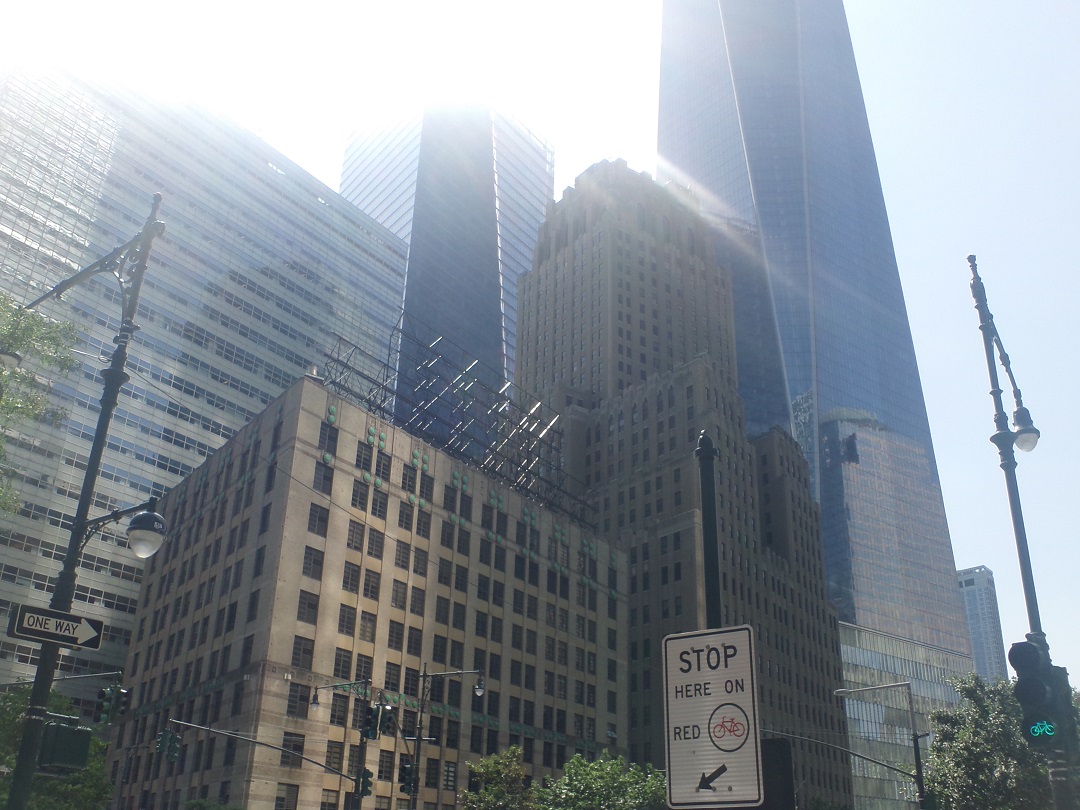
With that backstory properly digested, Kojak’s “A Question of Answers” was filmed entirely on location in New York City, when the metropolis was at its gritty and grimy best—picture perfect. The fiscal crisis was in full bloom then, impacting everything from the subways, which were graffiti laden and prone to breakdowns, and the various parks, which were barely maintained. Emblematic of the times, Michael V. Gazzo’s parking lot was the genuine article. It stood due north of the Twin Towers, which had opened only two years earlier, and the thirty-two story New York Telephone Company building, also known as the Barclay-Vesey building. Built in 1927, this latter edifice was badly damaged on 9/11, but soldiers on today as the Verizon headquarters on West Street. It served, too, as my mission’s vital landmark.

I had, in fact, passed by the Verizon building on West Street many times, but didn’t connect the dots vis-à-vis Michael V. Gazzo’s parking lot until recently. For that area of Manhattan, Tribeca, bares little resemblance to its former self. When Kojak filmed there, the old elevated West Side Highway was visible to the west, although it had been previously closed to traffic after an eighty-foot section collapsed and sent an asphalt truck—repairing the deteriorating highway—and automobile to the street below.

The dilapidated and increasingly obsolete elevated highway in lower Manhattan was not rebuilt and was gradually torn down. The West Side Highway is now on the street level—West Street—and zigzags through a rather hip, expensive part of town. When Michael V. Gazzo’s parking lot existed, virtually everything to its west was rundown and destined for the ash heap of history. There’s a new Department of Sanitation building in the vicinity now and still some factory remnants of what was. But the exact locale of the parking lot and the surrounding area is currently home to expensive high-rise buildings, residential and commercial, and a school.

Here’s what New York magazine had to say about the neighborhood that Michael V. Gazzo’s parking lot once called home: "By many criteria, Tribeca could be considered the best place to live in the city. It enjoys minuscule crime levels, great schools, tons of transit, well-planned waterfront access, and light-filled loft-type apartments in painstakingly rehabbed industrial buildings. But having already overtaken the Upper East Side as the city’s richest precinct, it is prohibitively expensive, and any traces of racial and income diversity are long gone.”

It’s not Michael V. Gazzo’s parking lot anymore—not by a long shot. Mission accomplished.

(Photos from the personal collection of Nicholas Nigro)

Thursday, August 24, 2017

New Bin on the Block

Big brown recycling bins were delivered to every single address in my part of the Bronx today. Beginning next month, New York City residents will be expected—or at least encouraged—to recycle food scraps, food-soiled paper, and yard waste. That is, unless we are guinea pigs in an experiment, which is possible. These organic materials will be picked up on our regular recycling day, a weekly occurrence. Recycling of any kind is a plus for the environment and worth giving the old college try. However, considering the number of self-absorbed, materialistic slobs that populate the five boroughs, I suspect this noble endeavor will be—at best—only mildly successful. One small step for man, though, and I will do my part.

If nothing else, the sight of Ryder delivery trucks in the neighborhood crammed with hundreds of New York City Department of Sanitation issue bins will at least give us residents something novel to talk about. When it comes to chance encounters with familiar faces—where a little small talk is in order—I like to keep things light and lean. That means: no politics. Let’s just say I find it difficult to listen to people defend the indefensible. So, we chat about the guy with the six-foot tomato plants. Some local yokels actually gripe that he has them in the front of his house and not out back. The fact that his backyard consists of concrete and a garage is not factored into the equation. And while I don’t consume any of them in their original incarnations, I happen to think tall tomato, pepper, and eggplant plants are a sight for sore eyes. Other timely topics of discussion include the awning that a neighbor recently erected over his front stoop: a Plexiglas monstrosity befitting the entrance of a hotel. It’s the sort of thing that might have worked at the Milford Plaza—“the lullaby of old Broadway”—but not in a row of attached houses on a tree-lined street.

But now we can discourse about the spectacle of every hearth and home receiving a fair-sized plastic bin with little plastic tubs inside of them for the interior gathering of organic wastes. I can’t help but wonder how much this thing will cost the city. After all, there are a lot of people in New York. This sort of government largesse—door-to-door freebies—is unprecedented and has to be an expensive undertaking. But why look a gift horse in the mouth?

Meanwhile, the city mothers and fathers are reviewing statues for potential removal. The statue of Christopher Columbus at Columbus Circle is foremost on the hit list. Leave it to pandering politicians to jump on the bandwagon and shoot themselves in the foot. Mixed metaphors, perhaps, but fighting this inane “culture war” is counterproductive. I fear that the Ralph Kramden statue at the Port of Authority bus terminal is on the list. Let’s face it: Ralph intimated violence against his wife on a regular basis, physically and verbally abused his best friend, and cruelly bullied a pipsqueak named George. What kind of message is that sending to weary travelers coming and going to the Big Apple?

(Photos from the personal collection of Nicholas Nigro)

Tuesday, August 15, 2017

August Thoughts

I will begin with some mundane but nevertheless august thoughts. I was on the shores of New York Harbor this past Saturday. Never forget that the Bronx is up but the Battery’s down. It was the ideal August day to be there: overcast, breezy, and no-jacket-required cool. There were tourists aplenty in the vicinity. Spanning the entire age spectrum, many of them appeared fixated on capturing every single moment of their New York experience on their smartphones. They weren’t quite living in the moment, I thought, but were instead captive to these ubiquitous hand-held devices. But what’s the point of pointing that out? Yada…yada…yada.

Once upon a time, I enjoyed riding the Staten Island Ferry, which departs from the Battery, the lower tip of Manhattan. The ferry has always been a bargain—it’s free to ride now. But for me it was never about traveling to Staten Island, which is one of the city’s five boroughs. I took the ferry for the ride—period and end of story. With the exception of the ferry terminal on Staten Island, I’ve never actually set foot in the borough. It’s hard to get around the place without a car and hard to get there—and expensive—with one. The short ferry trips supplied vivid panoramas, especially the return trips to Manhattan. The last time I was on the ferry, the Twin Towers were what loomed like colossi on the approach.

In the environs of Battery Park City, I saw people boarding boats to the Statue of Liberty. I was on Liberty Island once, but that was a long time ago—when Richard Nixon was the president. I watched the passengers getting on and disembarking the boats—navigating the unsteady gangplank, or whatever it’s called—and concluded my seafaring days are over.

I began this journey into Manhattan at the Van Cortlandt Park station—the first and last stop of the Number 1 train. I am always assured a seat and opt to sit in the lead car going downtown, which is typically the least crowded on southbound trains. Moments before take-off, I was alone in the car. But just before the buzzer sounded—and one actually does before the doors close—a fellow passenger materialized and chose a seat not too far from me. He had his breakfast with him—a sandwich—and proceeded to consume his morning repast. Its aroma wafted my way. I’ve smelled worse in the subway—a lot worse. Recently, I read where the Metropolitan Transportation Authority (MTA) was considering banning eating on the trains. I don’t see how that edict could be enforced, but—it cannot be denied—malodorous fare in cramped and closed quarters can be awfully nauseating. I won’t hold my breath on that one.

Permit me to switch gears now and offer one last august thought. Nowadays, there are all-too-many ridiculous memes floating around Facebook and elsewhere in the virtual ether. This week’s winner, in my opinion, declares: “President Trump says he’ll be encouraging stores to say ‘Merry Christmas’ instead of ‘Happy Holiday’ this Christmas. Do you support that?” The ridiculousness of this…well…let me count the ways. For starters, it’s the middle of August. And, too, there are certainly more pressing concerns on the president’s plate at the moment. Finally, my mother had a “Happy Holiday” banner on our front door in the early 1960s.

Composer Irving Berlin was the wind beneath the wings of “Happy Holiday,” which was first sung by crooner Bing Crosby in the 1942 film Holiday Inn. Since Christmas music is now played on the radio the day after Halloween, I would wager that an awful lot of men, women, and children have heard Perry Como’s version of the song. Don’t get me wrong: I’m all for saying, “Merry Christmas” when you feel like saying, “Merry Christmas.” However, I’m more concerned in the dog days of summer of a possible nuclear winter.

(Photos from the personal collection of Nicholas Nigro)

Thursday, August 10, 2017

The Code of Broccoli Rabe

When I was a boy, my paternal grandmother made broccoli and spaghetti that was otherworldly. When it was in season, she substituted with broccoli rabe, which was equally delightful. Often utilizing the most basic ingredients, my grandmother had a knack for turning out taste sensations. And her dishes always turned out as expected. She was nothing if not consistent. When broccoli rabe and spaghetti was served, I knew what it was going to taste like. For some inexplicable reason, spaghetti was only used with the garlic and oil fare: broccoli, broccoli rabe, and Christmas Eve’s Aglio E Olio. Her pasta dinners—likewise singular and unmatched—were typically of the homemade variety, but never what you would classify as spaghetti.

As with so many things in life, broccoli and broccoli rabe don’t seem to be packed with the same flavor punch as I recall from my youth. I prepare the aforementioned spaghetti dishes from time to time, but the end-results vary greatly. Sometimes the broccoli and broccoli rabe are practically flavorless, even when utilizing half a bulb of garlic. I remember when broccoli rabe was a seasonal vegetable, available during certain times of the year only. Now, just like countless other fruits and vegetables, it’s a year-round food. Does this contemporary growing fact have anything to do with the flavor drain? Only Andy Boy knows for sure. Of course, my grandmother isn’t around anymore. She would have managed, I’m certain, to extract the maximum flavors out of today’s unpredictable broccoli and broccoli rabe.

Shifting gears somewhat, but in keeping with this essay’s title, I was riding the subway recently when I had the misfortune to be in the same car with three generations of boors: grandmother, mother, and daughter, I surmised. Of course, the family elder in this instance was probably in her late thirties or early forties at the oldest. Anyway, they were misbehaving on public transit, which is very annoying indeed. Outrageously loud and vulgar, the threesome was getting on everyone’s nerves. One man sitting very near them—too close for comfort, as it were—got up from his seat and went into an adjoining car. This move angered the family. I mean—really angered them. Why? Because they lived by a code, you see, and felt dissed by this fellow passenger. The trio could actually see the man sitting in the next car. While contemplating whether or not they should confront him, the three generations made threatening faces. There are codes and there are codes. My grandmother, who grew up in genuine poverty in a rocky mountain town in Southern Italy called Castelmezzano, lived by a strong code of right and wrong. She literally counted her blessings, too.

I would be remiss if I didn’t recount a warped code story that is a personal favorite of mine. After a shopping spree at the Cross County Mall in Yonkers, New York, my elderly neighbor—pushing eighty at the time—returned to her car for the drive home. As she opened the driver’s side door, a complete stranger sidled up on the passenger side and demanded to be driven several miles to an address in the city of Mount Vernon. Justifiably fearing for her well-being, my neighbor reached for her pocketbook, which was on the front seat. The woman hijacker was indignant. She no doubt felt she was being profiled and said: “What are you reaching for that for? I ain’t gonna steal your bag!” And let me just say for the politically correct record: Warped codes recognize no race, creed, or ethnicity. They are at once bizarre and infuriating to behold.

(Photos from the personal collection of Nicholas Nigro)

Saturday, August 5, 2017

The Almighty Doesn’t Live Here Anymore

While in Manhattan yesterday, I spied something unusual sticking out of a sidewalk garbage can. It was a pair of crutches. The receptacle was located on the southeast corner of Seventh Avenue and 14th Street, a mile or so from 34th Street. The close proximity to where a celebrated miracle once occurred—with the real Santa Claus coming through as he did—made me wonder if another one had come to pass. Perhaps I just missed the miracle of somebody lame being made to walk. Timing, after all, is everything in life. I would have been more than happy to place my foldable cane in that container and hop on the subway sans an assistive device. Better luck next time.

While on the subject of matters ethereal, a local church is in the news. I just read where the Archdiocese of New York officially “deconsecrated” the Church of the Visitation of the Blessed Virgin Mary—Visitation, for short—a neighborhood institution for as long as I’ve been alive and then some. While growing up in Kingsbridge and Riverdale, Catholics one and all belonged to a parish. It was part of our DNAs—American, New Yorker, Bronx resident, and—in my case—member of St. John’s parish.

When I was a boy in the 1960s and 1970s, the Catholic Church was thriving. However, its days of wine and roses were numbered. The priests were still largely respected. St. John’s men of the cloth were on the benign side of the ledger, with one notable exception, the monsignor. While the church elders revered the guy—they loved the unbeatable combination of businessman and disciplinarian—the younger set, including me, saw something else. The monsignor was a self-righteous, petulant scold, certainly not what I perceived as a humble servant of God. But those were the days when priests aplenty received their “calling” from on high. Something happened on the way to the sacristy room. Nowadays, few are called and even less are chosen. Apparently, the Almighty is back at the drawing board with respect to His calling formula. The red flag: an all-too-high percentage of molesters getting accepted into that special fraternity.

I was educated in Catholic schools from the first grade through college. It was a solid, predominantly secular education in which students were thought to think for themselves and to reason. God as one entity was hard enough to conceptualize. But God in three persons—blessed trinity—was an even tougher pill to swallow. A good education teaches one not to accept things purely on faith and to follow the truth wherever it may lead. That’s the Catholic Church’s present-day dilemma.

The Church of the Visitation of the Blessed Virgin Mary was originally located to the east of its present location. It was compelled to move a short distance to the west during the building of the Major Deegan Expressway, I-87. Visitation’s current property is considerable and worth a whole lot as a piece of real estate. I suppose the Almighty Dollar trumps the Almighty in this instance. But far be it for me to believe the Catholic Church hierarchy would have anything but the best interests of their parishioners at heart. And if you believe that, I have a church to sell you in the Bronx.

(Photos from the personal collection of Nicholas Nigro)

Friday, July 28, 2017

Homeless Is Where the Heart Isn’t

This past week the old neighborhood learned that a recently constructed building on Broadway, whose eventual residents will be able to reach out and touch a passing subway train, is slated to become the residence of eighty-three homeless families. Market-rate apartments is what locals had been told the building would contain. But somewhere in the dark of night, the city fathers and mothers struck a deal with the structure’s developer. They obviously figured it would be best to report the bait-and-switch when it was a fait accompli and nothing could be done to stop it.

Yes, something has to be done about the homeless problem, which is worse than ever. The city mouthpieces proclaim, “Every neighborhood has to share in solving the problem.” Now, that’s fair enough in theory, but—let’s face it—homeless shelters aren’t popping up in every neighborhood in the city. The well-to-do addresses have nothing to fear but, maybe, fear itself.

Naturally, many area residents were up in arms at this sudden turn of events. On Facebook, men and women vented their spleens, including many who haven’t lived in the neighborhood for decades. A few people reported their personal experiences in working with homeless families in what is described as “transitional housing.” Two of them portrayed it as total chaos with a sorry cast of drug-addled adults, deadbeat dads, and neglected children. Another fellow painted a completely different picture. The majority of the homeless families he worked with were more like the Waltons in the throes of a temporary rough patch. While I am more inclined to believe the chaos model, perhaps the truth is somewhere in the middle. For all concerned, we can only hope for the best. Only time will tell, but if the city’s track record in these matters is any indicator, the “best” bar will have to be lowered.

Yesterday morning, I passed by the building and encountered a truck delivering spanking-new stainless steel refrigerators and stoves. They were all over the sidewalk as Exhibit A that this project was a done deal. A community board meeting held last night concerning it would amount to too little, too late. Any resident complaints, no doubt, fell on deaf ears. A day earlier, I found a flier in my door alerting me of the meeting. Unfortunately, it listed the wrong tomorrow. While the date, 27th, and year, 2017, were correct, the month, June, had come and gone, just as any hope at locals having a say had come and gone.

It’s pathetic that politicians and developers are so often in bed together and broker these backroom deals for their mutual benefit. It’s been reported that the landlord is poised to get $1,800 per apartment from the city’s coffers. In the big picture, it doesn’t seem to make a whole lot of sense to place eighty-three homeless families in one building in a densely populated area with over-crowded schools. But then when is sense ever factored into these equations?

(Photos from the personal collection of Nicholas Nigro)

Tuesday, July 25, 2017

Never Going to Be the Same

I was in the environs of One World Trade Center on Saturday. Several relations of mine wanted to experience the building’s observation deck, which is 1,368 feet in the air. An antennae’s further reach puts the building’s height at the historically significant 1,776 feet. I briefly considered joining them, but a lengthy line of ticket-holding tourists patiently waiting to walk on high made the decision for me.

Instead of the ascent into the heavens, I walked a few blocks west to the harbor. It was a hot, humid, and hazy afternoon, but there was a cool breeze coming off the water—an authentic sea breeze. I’m old enough to remember when the scents wafting in the ether alongside the Hudson River and New York Harbor were less than pleasant. Now, the same waters are considered clean enough to swim in—some of the time, anyway. Lady Liberty has been there in good odors and bad. I visited Liberty Island once—possibly twice—as a youth and climbed the statue to its torch. Did the Empire State Building thing as a boy, too, but recall very little about it. And unless you count shopping in a Borders bookstore on one of the tower’s ground floor, I was never inside either of the Twin Towers.

It’s hard to believe that the sixteenth anniversary of 9/11 is less than two months away. In the immediate aftermath of the attacks, a common refrain was heard: “We will never be the same.” After all, how could we be? For a short period of time that sentiment didn’t seem so far-fetched. We Americans had come together as never before—or so it appeared. Well, that was then and this is now. While it’s true that we aren’t the same as we were on 9/10/2001, I don’t think the nature of our different perspectives is what we had in mind sixteen years ago. We were supposed to be less partisan and more cognizant of life’s fragility. We were supposed to behave as if we were all in this thing together and appreciate what we have in common. We weren’t going to sweat the small things anymore. Needless to say, we haven’t quite evolved that much. But then we were probably foolish to think we could. In fact, we’ve devolved. Exhibit A: Donald Trump’s address to the 2017 National Scout Jamboree. “Who the hell wants to speak about politics when I’m in front of the Boy Scouts?” the man began. And it was downhill after that.

Social media didn’t exist in 2001. Thank god for that! I can’t imagine what the Facebook posts and Twitter tweets would have been like in the days, weeks, and months after 9/11. Actually, I can. It’s no stretch to say that social media forums are contributing mightily to our ongoing decline as an intelligent life form. Exhibit B: a video uploaded to Facebook of teenagers watching a drowning man and laughing at the spectacle. They didn’t report the incident to the local police, who learned of the video's existence days later. The dead man had been reported missing. This sort of thing is an everyday occurrence now. And then there are the ubiquitous trolls. They are omnipresent online, a constant reminder of society’s growing crassness, ignorance, and indifference. I no longer wonder who these people are in the bright light of day. After all, I have an account on Facebook. I know some of the trolls by name and by reputation. Go to the bank on it: We will never be the same.

(Photos from the personal collection of Nicholas Nigro)

Monday, July 17, 2017

Suspended Animation in the Bronx

The New York City subway system is quite antiquated. Suffice it to say, it has neither kept up with the times nor the technology. There’s been a spate of incidents recently—electrical failures, derailments, etc.—that underscore this reality. Yesterday morning, I ascended the steep flight of stairs at the Van Cortlandt Park station at W242nd Street. I knew there was ongoing track replacement work downwind, which was causing assorted delays and screw ups on the Number 1 line, but was willing to chance it.

When I arrived on the platform, I entered the sole train in the terminal. It was being held up due to signal issues in the vicinity of the track work. Announcements were periodically made concerning the delay along with an unenthusiastic "thank you for your patience" wrap-up. Ten minutes passed, then twenty, and finally a whole half hour. That was my wait. How long the train had been idle before I showed up, I can’t say. 

Now it was big announcement time: “There will be no train service between W242nd Street and Dyckman Street!” Say what? Bedecked in their fluorescent vests, a couple of Metropolitan Transit Authority (MTA) employees ambled up and down the platform shouting, “No service! All suspended!” Not surprisingly, some of the passengers were infuriated. They had been waiting for a half hour or more on the train, expecting it to eventually move. One young fellow was on the verge of assaulting an MTA employee, which is a felony punishable by up to seven years in the big house. At least that’s what the signs say in the subway cars. He took exception to the attitude of a couple of the men in fluorescent vests. “You act like it’s our fault!” he bellowed before storming away. Still, a lot of people remained on the train. I’ve seen this happen before. I don’t know if it’s a language problem, a listening one, or both. They don’t move and appear unmoved by instructions.

For those who had a place to be—like a job for instance—the best bet was to promptly descend to the street level and hop on a bus or two to Dyckman Street. And that’s what many people did. After all, we were told in no uncertain terms that service was suspended. Why hang around? However, the MTA world is full of surprises. As I reached the sidewalk after this unexpected and unwelcome development, I had canceled my morning plans. Hopping on a bus to a train didn’t appeal to me on what was a hot and humid morning. 

I began venturing down Broadway in the same direction that I had anticipated traveling via the subway. About six or seven minutes had passed since I had been informed that train service was suspended. Were my eyes deceiving me? The train that I was sitting in less than ten minutes earlier was pulling out of the station above me—with passengers in it!

I did an about-face and contemplated what had just occurred. Service had been suspended that sent countless men, women, and children scrambling for alternative routes to their destinations. And several minutes later it was restored. Now, I don’t blame the employees who are powerless regarding these snafus. They have a tough job dealing with an often arrogant and unforgiving public. But somebody somewhere is responsible for canceling all service, which seems to me to be a big decision, and then restoring it seven or eight minutes later. That's a big, bad decision. Somebody goofed. And the winners: the folks who don’t hear, listen to, or understand instructions.

(Photos from the personal collection of Nicholas Nigro)

Thursday, July 13, 2017

Close Encounters with a Close-Talker

It was already ninety degrees—with the heat index approaching one hundred—at ten o’clock this morning. Scorcher of a day or not, I, just like the postman, had to make my appointed rounds. In fact, I was headed to a post office, but not the one closest to me. This trivial tidbit of information would be of monumental interest to a man I bumped into en route.

On a stifling hot and humid morn, the last thing I wanted was an encounter with a close-talker—a person who gets in your face during ordinary conversation. (Seinfeld brought the close-talker phenomenon to light in “The Raincoats” episode.) To compound my misfortune, I not only found myself chatting with a close-talker, but one with halitosis as well. I should mention that he is likewise a long-talker. The man in question is fond of holding court and supplying listeners with lengthy back stories—laborious minutia—to events with punchlines that aren’t all that interesting. My close-talker has a habit, too, of punctuating his conversations with the word “anyway.” It’s his way of alerting you: “Are you ready for the big finish?” Fashion your seat belts, there is always another “anyway” and another one after that.

Anyway, this close-talker ambushed me as I walked past his building earlier this morning. He informed me that a friend of his was supposed to pick him up at 9:30. But it was closer to 10:30 when we met. He’s a man in his seventies and not a cell phone user, so he might still be waiting there now. Maybe he got the day wrong. Don’t get me wrong: The close-talker is a well-meaning fellow. He’s been a friend of the family—of an aunt actually—since the dawn of time. However, he can be a very irritating individual, especially when you meet him in a chance encounter. I feel obligated to talk with him when fate intervenes. But I believe that I have earned the right to avoid him if I can. Typically, I reconnoiter while in his neck of the woods and, if I see him coming, take the necessary steps—sometimes retreating entirely or even walking into traffic—to make a clean getaway. 

The close-talker and I chatted for a while. He was absolutely fascinated that I walked to the tiny post office several blocks from his building entrance, when a larger facility was nearer my front door. I explained to him the simple reason: There’s usually no waiting in the little post office during the morning hours, while the bigger place is invariably a zoo. Although I can’t explain why, my reasoning was of supreme interest to the close-talker. He, nevertheless, did most of the talking. As I kept backing away from his too-close-for-comfort-conversing, we physically moved in something of a large circle—like Earth’s revolution around the Sun, only in a smaller space and shorter time frame. Everything you wanted to know about Type 2 diabetes but were afraid to ask. Well, I learned it today from the close-talker, who has been diagnosed with it.

(Photos from the personal collection of Nicholas Nigro)

Wednesday, July 12, 2017

Gross Notions and Polka Dots

The garbage piling up takes on a higher meaning during summertime. In keeping with the season, it’s almost a year since I penned “Midsummer Musings,” an essay that critiqued the theatrics of the 2016 Republican National Convention and—among others—Charles “Chachi” Arcola’s appearance there—wah wah wah. In contemplating such theater in the here and now, I must say that I am relieved that the president will soon be back on American soil. When that man travels overseas, I am reminded—for some strange reason—of a familiar Hollywood plot device. You know the one where more-or-less sophisticated folks attempt to civilize the boorish in their midst. An overbearing, affluent snob endeavored, without success, to refine Moe, Larry, and Curly. Sheriff Andy Taylor gave it his best in transforming hillbilly Ernest T. Bass into a gentleman. But his best wasn’t good enough. I suspect that a well-intentioned Andy-type teaching simple etiquette to The Donald would likewise be a fool’s errand.

On to happier thoughts: Forty years ago tomorrow is the anniversary of a historic New York City blackout, one that underscored the metropolis’s descent into the darkness. That is, if you consider a fiscal crisis, high crime, and dirty parks the be-all and end-all. It was—in many respects—the city’s low point, but that decade is the most memorable and eventful for me. New York City in the 1970s still had character. No block-long Duane Reade drug stores or Chase banks in those days.

Sadly, I missed that seminal moment in New York City history. I received the first inkling that something wasn’t kosher when the lights went out at Shea Stadium. On vacation with the family in Chadwick Beach, New Jersey, I was listening to the Mets on the WNEW radio, which I was wont to do back then. Simultaneous with an excited gasp from the crowd, legendary slugger and broadcaster Ralph Kiner proclaimed, “And the lights have just gone off here at Shea Stadium!” As things turned out, it was a lot more than that.

It was hot as hell that night in the city and, for that matter, along the Jersey Shore. Hapless Mayor Beame was fit to be tied and blasted utility Con Edison for their “gross negligence.” I remember that phrase amusing me. I was only fourteen years old. Maybe it was because I had neighbors named “Gross” or some who were just plain gross, I don’t know. But it was nonetheless a sweltering snapshot in time with areas of widespread looting. With respect to New Yorkers, no one will ever say, “This was their finest hour.”

So it goes—from “gross negligence” to “if you see something, say something.” We’ve come along way…to nowhere in particular. I came upon a stray bag with polka dots on a subway platform this week. It was resting on a locked bin of some sort. I saw something but didn’t say something. Perhaps I was remiss. It was my ticket to having my picture plastered on a New York City bus or in a subway car. But polka-dotted bags, as far as I'm concerned, don't pass the suspicious test.

One final thought on the passage of time—1977 to 2017—and the changes it has wrought. I recall this strip of stores on Manhattan's lower east side. I forget exactly where, but there was a shuttered eatery among them called “Sticky Fingers.” In the front window was a griddle with a lonely bacon press on top of it. Abandoned all. Presently, that same strip is gentrified beyond recognition. The historic bacon press a memory of only one person—me. I don’t suspect too many people living in the neighborhood now dined at Sticky Fingers. I sometimes wonder, though, how the place would have fared with the contemporary Yelp review crowd? I suspect some might have found it gross and said so.

(Photos from the personal collection of Nicholas Nigro)

Friday, July 7, 2017

Extra…Extra…Read All About It

On Independence Day 2017, I found myself on a subway jaunt into Manhattan and back. Passing the 181st Street—George Washington Bridge—station on my downtown ride on the Number 1 train, I remembered a bizarre rumor that persisted during my boyhood in the early 1970s. It was that the Fuhrer did not, as widely reported, commit suicide in his bunker in April 1945. And the urban myth of local interest took it from there. Somebody somewhere spread the word that the octogenarian monster—who would have been in his eighties in the seventies—had miraculously managed to escape Germany and was very much alive. More specifically, he was peddling newspapers for a measly living in the subterranean recesses of the 181st Street station. I don’t recall what, if any, newspaper—Daily News, New York Post, etc.—figured in this remarkable account.

I do recollect as boy of eight, nine, and ten years old passing by the station—as I did a few days ago—and getting the creeps. That's a phrase we used a lot as kids. We lent credence to stuff as children, I know, that didn’t pass the smell test, including that the 181st Street station was simultaneously under the Hudson River and the George Washington Bridge. Entering and exiting it required a ride on a ferryboat, I guess. A friend and I were once absolutely convinced that the clouds in the sky were stationary. The Earth’s rotation—not wind—was the sole wind beneath their wings. I take some solace in the fact that we were only eight years old at the time with a lot to learn and not making government policy.

Now that I’m on the subject of the extraordinary rumors that permeated yesteryear’s ether, I remember a “doomsday” prediction that got some play. My first thought—all these years later—was that it was one of Jean Dixon’s many prophecies. She was, after all, the psychic du jour in the 1970s. But from what I gleaned in my virtual research, Dixon didn’t forecast the apocalypse in that singular snapshot in time. She had several years earlier—the year I was born—forecast world destruction, but not in my grammar school days. So, I’m betting that what gave me a few anxious moments as a nine year old was evangelist Herbert W. Armstrong’s 1972 prediction of the third rock from the sun’s absolute obliteration. That sounds about right. For I had my whole life ahead of me at the time, which, I suppose, is why the world ending so prematurely mattered. Think of all the pizza slices I would never have tasted. Now, forty-five years later, I say: Let Dixon and Armstrong’s snake-oil successors foretell away—and see if I care.

(Photos from the personal collection of Nicholas Nigro)   

Thursday, July 6, 2017

Fifteen Dollars Richer

I found fifteen dollars on the sidewalk this morning. After grocery shopping at a local Key Food supermarket, I was on my way home when I spotted what appeared to be bona fide American currency—not Monopoly money—in the distance. If memory serves me correctly, I found an orphan five-dollar bill once. But that was the height of my good fortune while wandering to and fro in the great outdoors—until today. I stumbled upon a few stray singles in my fifty-plus years of living, too, but lady luck has been pretty sparing in the lost cash-on-the-ground department. Considering that I’ve lived my entire life in New York City, it would have been nice to unexpectedly find a Ben Franklin, or at the very least an Andrew Jackson a time or two. Why, though, question the fickleness of fate? I’ll happily settle for the Hamilton and Lincoln that came my way today. It is, after all, a free pizza.

Still, I felt kind of guilty when I picked up the money. I nervously looked around to see if anyone was nearby. Had I had spied a bewildered individual frantically searching for something lost, I would have, naturally, approached him or her. But there was nobody in the vicinity who matched that description. And so it was: finders, keepers.

Before my unexpected good fortune on this cloudy and humid morn, I snapped a picture of what in the old neighborhood were known as “Umbrella trees.” They are actually Northern Catalpa trees, I believe. In the 1930s and 1940s, this unique-looking tree with its big leaves, string-bean-like hanging pods, and twisting trunks were, apparently, a favorite with certain builders of homes. The trees were omnipresent in my youth and attracted ladybugs. We youngsters called them “Ladybug trees” and collected the orange-and-black colored insects, which left a foul scent on our hands. I sincerely hope ladybugs are still around and not the victim of over-building or some mysterious toxin. I just haven’t been collecting them for a while, or examining the remaining Ladybug trees to see if they are still there. Call them what you want: Umbrella trees, Ladybug trees, or Northern Catalpa trees. There are still a fair share of the trees around, but I remember them being on the fragile side and not the best big city trees, particularly by the sidewalk’s edge.

I distinctly recall a homemade sign that a neighbor on the next block had painted green on a piece of aluminum, which he affixed to a Ladybug tree on his property. It read: “No dogs allowed here.” In the 1960s and 1970s, most people walked their dogs in the street. They curbed their dogs, if you will. Nowadays, everyone walks their canine companions on the sidewalk and they do what they have to do in the very terra firma where the “No dogs allowed here” was once posted. As the years passed and the tree matured, the bark grew around—above and below—the sign. Soon, it was embedded in the tree—part of the sign and part of a time as well.

Homemade signs are not as common in the here and now. Custom-made or store bought ones with threatening rules are, in fact, the rule. The streets that I grew up on are so much more congested. It would be unwise and pretty much impossible to walk dogs in them as I did a long time ago. You know: when no dogs were allowed by the Umbrella tree, the Ladybug tree, or the Northern Catalpa tree—call it what you will.

(Photos from the personal collection of Nicholas Nigro)

Friday, June 30, 2017

Many Forms Indeed

When my subway car’s doors opened at 79th Street in Manhattan the other day, an advertisement on the platform caught my eyes. It featured a deer and the words: “City dwellers take many forms.” Further, it importuned residents to learn to live alongside them. Personally, I have not as yet laid eyes on any deer in the Bronx or elsewhere in town. But it doesn’t surprise me that they exist in some of the city’s larger parks and open spaces—like Van Cortlandt Park, which is within walking distance for me. It’s a sprawling piece of property that spans more than a thousand acres. The park’s off-the-beaten trails are pretty woodsy, which is where I suspect the deer and the antelope roam.

I am quite willing to live harmoniously alongside these nimble four-legged creatures. It’s some of the two-legged that give me pause. The city’s many bodega owners, for instance, have to put up with a lot of crap in their interactions with a cross-section of humankind, including the bottom of the barrel. Exhibit A: Ali’s, where I regularly purchase pints of Hershey’s “Creamy Vanilla” ice cream, Linden’s chocolate chip cookies, and rolls of Bounty paper towels, which I can actually reach. Apparently, the general rule of thumb in these establishments is to stock paper towels as close to the ceiling as physically possible.

Anyway, as I entered Ali’s recently, Ali in the flesh was being lectured. A patron with a cup of coffee in hand excoriated him for not saying “thank you” upon the conclusion of their transaction. “It’s proper to say ‘thank you’” the customer complained. “It’s basic human decency!” For the record: This exchange was somewhat atypical for the cozy confines of Ali’s deli. Now, I will attest that Ali sometimes says “thank you,” but not always or even most of the time. More often than not he’s engrossed in some tête-à-tête via his earphone. I’m so accustomed to that sort of thing. And chastising Ali for his dubious decorum is not my job. He’s got a lot on his plate after all.

Don’t believe me. Moments after witnessing Ali’s dressing down, a young fellow entered the place. He was engaged in an animated conversation—if you could call it that—on his cell phone. The man effortlessly unloaded F-bombs and B-bombs, too. Further, he spoke of setting his girlfriend—I guess—straight with brutal acts of aggression. It was a surreal experience. A young woman, who had ordered a bacon, egg, and cheese sandwich, was, like me, privy to this spectacle. She muttered aloud, “He should just be taken out and shot!” Meanwhile, Ali’s eyes flitted nervously, not knowing what this raving lunatic had in mind. He probably just wanted a Red Bull. However, I happily missed the final act. The woman, by the way, was of the same ethnicity as the frothing-at-the-mouth young man. So, too, was the man who scolded Ali on his deficient etiquette.

What lessons did I learn in the bright light of day? For one, Ali doesn’t have it so easy. And feral is feral—it knows no race or ethnicity and greatly troubles the non-feral. A footnote to this tale: While I’m against capital punishment in theory, I couldn’t help but heartily agree—quietly and for a brief ugly moment—with the sentiment expressed by the woman patiently awaiting her breakfast sandwich.

(Photos from the personal collection of Nicholas Nigro)

Thursday, June 29, 2017

A-Treat Summers

Lydia Maria Child’s Thanksgiving poem begins like this: “Over the river, and through the wood/To Grandfather’s house we go.” But I recall singing, “Over the river and through the woods to Grandmother’s house we go,” while en route to Bangor, Pennsylvania, home of my maternal grandparents. From my family’s Bronx point of origin, the first river we crossed was the then pretty grimy Hudson; the second and last, the muddy Delaware.

Before Interstate 80’s tentacles reached Teaneck, New Jersey— in close proximity of the George Washington Bridge and New York City—our Bangor adventures found us on Route 46 for a spell. While the trips took a whole lot longer on such meandering back roads, they were much more interesting—for kids anyway. We passed through many small towns, including Hackettstown, New Jersey with a hamburger joint called Leo’s on its main thoroughfare. Suffice it to say, my father didn’t have the fascination that his offspring had for mysterious fast-food establishments—i.e., the ones we spied only through a moving car’s windows in places that we had never set foot.

It should come as no surprise then that I vividly remember when my dad consented to stop at Leo’s for lunch. It was the summer of 1976—the United States Bicentennial year—a simpler and more civil time to exist. It was of an era before presidential tweets and daily Twitter outrage. We were on our way back to the Bronx when this memorable moment in history occurred. At long last, my younger brother and I sampled Leo’s burgers and French fries, which we knew for certain wouldn’t disappoint—and they didn’t.

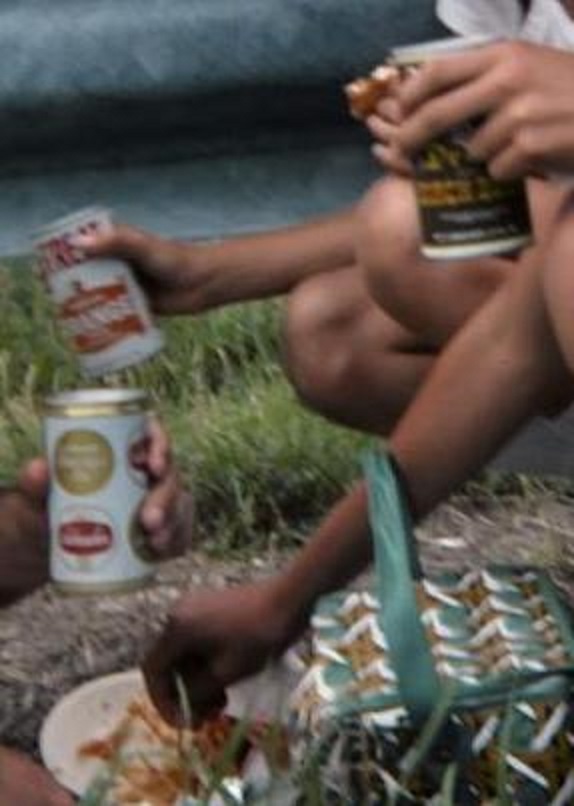
Actually, we brought our take-out fare from Leo’s to nearby Budd Lake and briefly picnicked on the side of the road. My father had packed his preferred brew, Schaefer Beer, in a cooler bag, so he needed no liquid refreshment from Leo’s. On the other hand, my brother and I washed down our tasty repasts with A-Treat brand sodas: orange and birch beer, respectively. I was intrigued back then—as youth are wont to be—by enticing products unfamiliar to me, like A-Treat Beverages, whose hanging signs were ubiquitous outside of country grocery stores. We didn’t have A-Treat sodas on grocery store shelves in New York. A-Treat was a local outfit. So, naturally, the opportunity to sample them in such faraway places as Northwest New Jersey and East Central Pennsylvania was heavenly.

After ninety-seven years in operation, I learned, A-Treat shuttered its plant in Allentown Pennsylvania in early 2015. However, the collective voice of a thirsty and nostalgic people clamored for its return. I can fully appreciate why—to those served by this regional institution—life just couldn’t go on without A-Treat. I’m happy to report that an entrepreneur brought the soda line—with original recipes—back to life.

Forty-one years ago while sitting on the banks of Budd Lake with an A-Treat soda pop in hand, I couldn’t in my wildest imagination portend the future. Calling attention to the A-Treat soda cans, I recently posted a picture on Facebook from that historic day in 1976.  And lo and behold, advertisements for A-Treat appeared in my Facebook feed shortly thereafter. Such is the insidious new world we now call home—but at least A-Treat is still in it.

(Photo one from the personal collection of Nicholas Nigro)

Monday, June 19, 2017

Sneaky Pete’s Dragon

A few days ago, I spied “No Parking” signs covering a several block radius in my neighborhood. Beginning at ten o’clock last night, remaining vehicles would be towed away. Upon closer inspection, the signs revealed the reason behind this local upheaval: location filming of Sneaky Pete, an Amazon original series. While the show has been recommended to me, I have thus far not seen it.

I recently wrote about a certain stroll down memory lane. That is, watching episodes of Kojak, my favorite TV detective of all-time. As previously noted, my contemporary complaint of this 1970s production is the cheesiness—the unevenness—of the filming. As a kid, the tough but compassionate New York City cop on the streets of New York, which more often than not were the streets of Los Angeles, didn’t faze me in the least. As I recall, it was quite costly in those days to film in New York versus Tinseltown. It still must cost a fair chunk of change, but today’s politicians clearly have the welcome mat out for such endeavors. Many more TV shows and movies are filmed here than in Kojak’s day. Blue Bloods, starring Tom Selleck, is exclusively shot on the streets of New York, including the outer boroughs of Brooklyn and Queens. While it looks really good—and real—I found the show somewhat heavy-handed and self-conscious. In other words, looks can be deceiving. So what if Kojak makes reference to a restaurant parking lot in midtown Manhattan, or that countless scenes include a stationary crowd of curious onlookers. 

While TV shows and movies are typically enhanced when filmed on location, the process is disruptive. In densely populated neighborhoods with limited parking spaces, residents are impacted. I can attest to the fact that road rage and parking rage, too, are not uncommon on the mean streets of the Bronx. It’s dog-eat-dog out there. Remove a couple of hundred spots and the competition—the cat fighting—gets taken to another level.

When I ventured out this dreadfully humid morning into the Sneaky Pete universe of trailers, lighting, and cameras, I saw that film preparations were underway at Tibbett Diner, an iconic neighborhood eatery that has lent its singular ambiance to filmmakers before. It was closed today for the shooting, which I’m sure caught a lot of loyal and hungry patrons by surprise. But sometimes sacrifices have to be made for the greater good. Immortalized on Sneaky Pete, Tibbett Diner—and the neighborhood it serves—will endure forever.

(Photos from the personal collection of Nicholas Nigro)