Wednesday, March 31, 2021

Shops, Stores, and the Family Doctor

My Grubhub restaurant delivery options are multiplying like rabbits. I do, though, find it hard to believe that more than a few of the newly listed eateries would actually deliver to me. Many of them are quite a distance away in the heavily trafficked Bronx and surrounding areas. Why would I order a pizza from a shop that’s closer to where I went to high school—in the East Bronx—than my front door? That’s a recipe for cold pizza! Still, I’m impressed that No. 1 Chinese Restaurant has been added to the Grubhub roster. New on The Block Deli has, too, along with Deli & Food, a winning retail moniker if ever there was one. While distance will probably keep us apart, Freaking Good Pizza and Best Italian Pizza in the South Bronx nevertheless intrigue me.

When I was a boy, pizza establishments were called shops. If we needed to buy fruit, we patronized the fruit store, not the fruit shop. My father was a long-time patron of the local beer store. It had an actual name, I suppose, but I don’t recall ever knowing what it was. Going to the beer store spoke volumes. The old neighborhood had a couple of record shops, not record stores. In those simpler days of funny phone calls, many a store and shop were on the receiving end of them. In response to a bogus telephone survey, Mike, who tirelessly labored at Pat Mitchell’s Irish Food Center, volunteered his occupation as “store clerk.” A neighbor up the street, who made his fortune in retail with a chain of pet food and supply stores, nonetheless disappointed his mother. She ruefully remarked one day that her son was “content on being a shopkeeper.” Mama believed that a suit-and-tie job made the man, not the millions accrued in a cloud of Hartz Mountain cat litter dust.

The passage of time has ushered in a whole host of changes. The funny phone call is largely a relic of the past. Anonymous trolling, I guess, has replaced it, removing the funny part in the process. The old neighborhood beer store is gone, but we can order our preferred brew online if we so desire. Shops selling LPs are a distant memory and so are shops—albeit less distant—selling CDs. I remember the big deal made when cassette tapes replaced records. Will wonders never cease, we thought.

From Grubhub in the here and now to the family doctor back in the day. My family called on a familiar neighborhood GP for decades. His office was on the ground floor of an old walk-up apartment building—grungy but somehow a reassuring presence. Playing outside with my brother on a winter’s eve before suppertime—that’s what we did back then—a wrought iron fence’s spike made acquaintance with the bottom of my chin. I was bloodied all right and a call was placed to the family doctor—not a request for an ambulance—just up the hill from home. Come right over, he said, and Mom and I did just that. Doc stitched me up for another go-round and I still have the scar as a souvenir. He made house calls through the years to my grandfather and grandmother and drove an aunt to the ER. I appreciate that medical science performs miracles nowadays, but I miss the old family doctor and, for that matter, record stores and funny phone calls.

(Photos from the personal collection of Nicholas Nigro)

Saturday, March 27, 2021

1984 and 1984

In the spring of 1984—the actual 1984, not George Orwell’s 1984, which is 2021—I was enrolled in a course called “Economics of Peace” at Manhattan College in the Bronx.  It was taught by one of my favorite professors, who referred to the course as “Economics for Peace” and preferred to be called a “humanist” rather than a “socialist.” Anyway, at some point in this rather intimate class setting of a dozen or so students, the subject of women’s increasing role in the workforce was up for discussion. I don’t recall the specifics of the back and forth, but a classmate—a Nigerian man named Leonard—offered his two cents on the matter at hand. He uttered something to the effect that women belong at home doing women’s work, not working alongside him at the office.

Now, you can imagine the reaction from the females in attendance, including our feminist professor, to Leonard’s offhand remark. They pounced on the poor fellow, informing him in no uncertain terms that he was in a college classroom, in America, in the year 1984. Essentially, the ladies laughed off Leonard’s antiquated thinking, which was probably quite commonplace in his native country. And guess what? Nobody on the scene required a safe space in which to suffer a life-altering meltdown—the Campus Ministry was nearby—or cried crocodile tears about how they now felt unsafe on campus. Nor was there any clamoring to cancel Leonard and ruin his life from that moment forward. And there was no Twitter mob outrage back then because there was no Twitter—the good old days.

I’m genuinely happy that I attended college in that simpler, saner, and more sanguine snapshot in time. When students of all backgrounds weren’t in intellectual straightjackets and didn’t live in fear of expressing a contradictory or even controversial opinion. Leonard expressed his opinion and was met with a forceful rebuttal. That’s the nature of free speech. And what better place to debate ideas—even unpopular ones—and to discover that not everybody thinks the same than in an institution of higher learning? Well, that was then and this is now.

It absolutely astounds me that the college-aged woke have no regard for free speech. In fact—like all good totalitarians in training—they see it as dangerous and desire muzzling one and all who don’t walk the woke. They feel empowered in the here and now because they’ve gotten people fired from their jobs and ruined innumerable reputations. They’ve extracted countless craven apologies from folks who have committed no sin other than deviating—even slightly—from woke orthodoxy. And the woke wear their destruction like a badge of honor. Pretty sad, isn’t it? I think so.

These men and women who purport to be on higher moral ground than the rest of us mere mortals are bad apples. This is still the Land of the Free—if only barely—and we must be ever vigilant in protecting what remains of our basic freedoms. Standing up to the woke mob and the march to madness is job one. So, I ask: Are we better off today because a classic sitcom like Seinfeld couldn’t get picked up by a network? Are we better off today because the Indian maiden is no longer on tubs of Land O’Lakes butter? Are we better off today because the movie classic Dumbo now comes with a didactic disclaimer from some pompous oaf? Are we better off today because Steinbeck’s Of Mice and Men is no longer must-read for high school students? And, finally, are we better off today because a comedian like Don Rickles, who insulted my father at the Cape Cod Melody Tent in 1996, couldn’t exist? I don’t think we are.


Wednesday, March 17, 2021

Finger-licking Good Times

(A reprise from 2010: Another Pat Mitchell's Story.)

I sometimes feel the New York City Department of Health, via its eagle-eyed restaurant and food-related inspections and recent letter grading, is a wee bit excessive and punitive to beleaguered small businesses. Once upon a time, in a decidedly less regulated era, there was Pat Mitchell's Irish Food Center. The place: Kingsbridge in the Bronx.

Every Sunday morning after Mass at St. John’s Church, it was the tradition of an awful lot of us to call on Pat Mitchell’s near the northwest corner of Kingsbridge Avenue and West 231st Street. After offering one another the sign of peace, the race was on to the place with the fresh donuts delivered from Willow Sunny Bakery in various trays, including repurposed beer-box trays and an especially large one—like a tub you would mix cement in—resting on the unwashed floor. The latter accommodated the heavily powdered-sugared mini-jelly donuts, crullers, and crumb buns, while the former contained the young fan favorite: frosted chocolate donut.

Now, I'd bet dollars to donuts that the contemporary health department bureaucracy would find fault with this retail arrangement. For starters, the donuts were completely exposed to the shop's hustle and bustle and—it should be noted for the historical record—the establishment wasn't renowned for its cleanliness. Post-Mass crowds cramming into cramped Pat Mitchell's to purchase donuts and rolls no doubt contaminated the whole lot of them with their wagging tongues, competing body odors, and general disorderliness.

One particular Sunday morn, I recall handing several frosted chocolate donuts from an aforementioned beer-box tray to a local kid working behind the counter. He grabbed hold of them with his two bare hands. From mine, which weren’t likely the cleanest, to his—the same hands that had been conducting numerous transactions that morning, including taking customers' money and making change. Evidently, there were no disposable plastic gloves around back then.

The icing on the cake, if you will, to this stroll down memory lane: When dropping the donuts into a paper bag, this teenage employee left his fingerprints in the frosting. He then did something that many people would have considered beyond the pale—even by Pat Mitchell's rather liberal standards. Just before Johnny on the spot took my cash, he vigorously licked chocolate frosting off his fingers. While they were finger-licking good times, for sure, this parting salvo took an unhealthy bite out of a one Sunday morning's breakfast a long time ago.

(Photo from the personal collection of Nicholas Nigro)

Tuesday, March 16, 2021

Operation Pig's Foot

(A reprise from 2011: A Pat Mitchell's Story.) 

When I learned the news this week concerning the consumption of black licorice and a certain drug therein called glycyrrhizin—which the FDA says lowers potassium levels that in turn can cause abnormal heart rhythms, high blood pressure, edema, and congestive heart failure—I heaved a huge sigh of relief. I don’t like black licorice. But interestingly enough, when I have consumed black licorice in the past, it always gave me a headache. I didn’t, though, realize I was a couple of pieces away from a coronary thrombosis.

Happily, from where I sit, red licorice was not included in this indictment. For it was red licorice that I used to buy as a penny candy in Pat Mitchell’s Irish Food Center in the old neighborhood during that simpler snapshot in time known as the 1970s. I recall Pat’s brother, Mike, thumbing through and pulling apart individual pieces from a super-sized pack of Twizzler’s red licorice. Ten red licorice strips cost a dime—a bargain if ever there was one. And it didn’t matter to we wide-eyed youths that Mike had been both making sandwiches and change all day long without washing his hands. I can’t ever recall getting sick from a piece of Pat Mitchell’s red licorice.

Funny, though, how this contemporary black licorice story resurrected memories of a little man named Mike from Pat Mitchell’s. He was a pleasant enough leprechaun. My friends and I had nicknamed him “Eh,” because, you see, he calculated customer tabs in his head with lots of expressed “ums” and “ehs” before arriving at a sum total. When the math became a little too involved, Mike—and all the Pat Mitchell employees for that matter—added up figures on paper bags. Plastic grocery bags didn’t yet exist.

In fact, my brother and I used to imitate Mike in his thick but agreeable Irish brogue saying this line: “Three papers…um…eh…dollar-five.” Ah...those were the days...when the Sunday New York Daily News cost thirty-five cents. Store clerk “Eh” even became part of a comic strip I created as a teen. I dubbed him “Eugene Herbert Mitchell,” turning his ubiquitous “eh” mutterings into initials. And, finally, while remembering “Eh,” I would be remiss if I didn’t recount “Operation Pig’s Foot.”

On the countertop at Pat Mitchell’s were jars containing pigs’ feet, which I always found supremely revolting for a variety of reasons. My father used to eat them—or whatever it is one did with them. Perhaps "gnaw on them" is a more apt description. Anyway, I had never witnessed a single person through the years purchase a single pig’s foot…and wondered what a transaction would look like. And so “Operation Pig’s Foot” was hatched. A friend and I went into Pat Mitchell’s with a tape recorder concealed in a paper bag and ordered a pig’s foot. This was the technology of the time—no Flip cams or iPhones. Mike, aka “Eh,” placed a piece of wax paper down on the counter, opened the jar, and reached into the cloudy brine with his bare hand. He plucked a healthy sized pig’s foot out and, dripping brine all over the place, laid it on the wax paper and wrapped it up tight. The recording for posterity of “Operation Pigs Foot” sounded mostly like a crinkling paper bag. But I had at long last witnessed the incredible: a pig’s foot purchase. And pity the poor boy or girl who came in after me to buy red licorice strips.

Monday, March 8, 2021

Sonny Weather Lover

Recently, YouTube recommended to me an interview of the late Sonny Fox, a television host and broadcaster. In the several-minute clip, the man discusses being a POW in Nazi Germany and how it dramatically altered his life outlook. Once upon a time, Sonny Fox hosted a local Sunday morning show for kids called Wonderama. I vividly remember the show with Bob McAllister, Sonny’s successor, as the host.

Anyway, I learned that he was drafted into the army as a teenager and captured in the Battle of the Bulge a year later. Having grown up in the more sanitized and sheltered 1970s, the notion of being shipped overseas and fighting a war was inconceivable to me and so many others of my generation. Compared to the World War II generation, we were a cosseted lot, but nothing quite like the current college-aged youth with their safe spaces, trigger meltdowns, and desire to destroy people who don’t tow the woke line hook, line, and sinker.    

As we near a complete year of COVID-19 disruptions, restrictions, and assorted mania, there is finally some light at the end of the tunnel. Multiple vaccines have come to the rescue! It’s been quite a roller-coaster ride from last March to this one—not especially uplifting but very enlightening on a whole host of fronts. The extremes on both sides of the political spectrum have been unmasked and it’s not a reassuring picture. The scary thing is that the extremists—right and left—appear to be pulling the strings of the two major parties. Wouldn’t it be nice to return to the good old days—pre-social media—when loony conspiracy theories, manufactured and misplaced outrage, and daily calls for censorship didn’t travel at the speed of light? When the loons among us were identified as loons and not in important positions of authority and pulling the levers of power?

Speaking of loons—or Looney Tunes in this instance—a New York Times op-ed columnist, Charles W. Blow, believes that the amorphous animated Pepe Le Pew “added to rape culture” by his aggressive behavior towards the opposite sex. Honestly, I thought the whole point of Pepe Le Pew was that he was a skunknot a role model for the impressionable. In fact, Looney Tunes characters were, by and large, of very poor character, as it were, and always got their comeuppances. So, this is how far we’ve sunk. The Onion, the premier satirical source of all the news that’s fit to print, is nowadays competing against a reality, which increasingly feels like a lampoon of one.

And there’s no such thing as Dr. Seuss or Disneyland and Mother Goose. I just discovered that a nephew of mine’s favorite book as a child was And to Think That I Saw It on Mulberry Street. I don’t remember reading that one, but shame on eBay for outlawing sales of the book and others on its auction site. It’s especially absurd considering the stuff that is permitted on eBay. I won’t bother reciting the litany. Thirteen minutes ago, Michelle Obama and the preponderance of the wider world didn’t have a problem with the books.

A much bigger corporate concern is Google’s algorithmic behavior. John Adams once said, “Facts are stubborn things.” Google now asks, “If a representation is factually accurate, can it still be algorithmic unfairness?” Apparently, yes, when “it may be desirable to consider how we might help society reach a more fair and equitable state, via either product intervention or broader corporate social responsibility efforts.” If this doesn’t worry you, it should! Coming to a Google search near you—only the facts approved by the woke shirts and skirts. Sonny weather…stormy weather: Sergeant Joe Friday, where are you?


Tuesday, March 2, 2021

Irish Curses, Blessings, and Toasts

(A reprise from 2018, but as relevant as ever.)

When Piels came to the legendary Jimmy Breslin to do a commercial for its beer, he said, “I’m not Bert or Harry…I’m 
Jimmy Breslin, a writer.” Actually, that was part of the advertisement script, which Breslin delivered with urban aplomb. In the 1950s, Bert and Harry Piel were animated television pitchmen for what was then a very popular beer. Jimmy Breslin spieled for Piels more than two decades later. The ad aired repeatedly on local New York City stations in the late 1970s and it remains a classic all these years later. The gifted wordsmith initially described Piels as “a good beer” then "better than good" and finally as "a good drinking beer!" In other words: a bargain for those who valued quantity above quality.

This intro is my roundabout way of pitching a most recent publishing credit: Irish Curses, Blessings, and Toasts. The subtitle says it all: A Little Book of Wit, Wisdom, and Whimsy. What, you ask, does a comprehensive compilation of Celtic sayings and such have to do with a Jimmy Breslin beer commercial from 1978? Except for the fact that it danced like visions of sugarplums in my head, not much at all. You see, when I was initially offered the opportunity to amass and edit this wide-ranging pithy volume, I said to myself: I’m not Colm or Eamon…I’m Nicholas Nigro with a vowel at the end of my name. Ah, but in the writing biz: “Ours not to reason why, ours but to do and die.” Later, I amended the vowel thing. After all, Chief O’Hara, Jim O’Gara, Eric O’Mara, and Joe Donahue, too—all have surnames ending in a vowel.

Here’s the story: I grew up in Kingsbridge, an Irish enclave in the Bronx at the time. My paternal grandparents from Italy had originally settled in Manhattan’s Morningside Heights. When my grandfather had saved up enough money to buy a house—he had been an iceman and subsequently worked for Sheffield Farms, a milk company—he set his sights on the less populated Outer Boroughs of New York City. In 1946, he moved his family—including my father who was seventeen at the time—five miles north to Kingsbridge. My grandfather not only wanted a home of his own, he wished to settle, too, in an area that was not predominantly Italian. He reasoned that by doing so his wife—my grandmother—would master the English language more quickly and more adeptly. And so it came to pass: the Italian Nigros of Kingsbridge commingled with the Irish majority on the neighborhood’s business hub, W231st Street, at nearby St. John’s Roman Catholic Church run by the likes of Scanlan, Doherty, and Foley, and under the deafening El on Broadway.

The rest, I guess, is history. My grandfather would one day plant and harvest a post-war “victory garden” across the street from his Kingsbridge home alongside men named McGuire, Brady, and Reilly. My father would play stickball on the streets with guys named O’Neal, Gern, and Joyce. And one and all would congregate in front of Pat Mitchell’s Irish Food Center, a neighborhood institution for more than three decades. In fact, I dedicate Irish Curses, Blessings, and Toasts to “Pat Mitchell’s Kingsbridge.” For when I was a youth, a stopover at Pat Mitchell’s after Sunday Mass for fresh rolls and jelly donuts was a revered ritual. It was also the place to purchase brain-freezing Fla-Vor-Ice pops for a nickel, glass bottles of RC Cola for twenty cents, and—the pièce de résistance—penny candies for—imagine that—a penny.

Pat Mitchell’s Kingsbridge was a great neighborhood in which to grow up. It was an era before the Internet, cell phones, and even plastic shopping bags. In my father’s eclectic vinyl LP collection were Clancy Brothers albums. He once told me that his rallying mantra—with his many Irish drinking buddies—was “The Moonshiner” lyrics: “I’ll eat when I’m hungry, I’ll drink when I’m dry. And the moonshine don’t kill me, I’ll live till I die.”

I close now with the vivid memory of a man named Gene Daugherty, a New York City bus driver. He was a fixture at the holiday cookouts thrown in the victory garden’s cozy confines. On more than one warm summer’s night, Gene belted out “When Irish Eyes Are Smiling.” From across the street where I lived, I could hear the Irishman’s dulcet tones cutting through the velvet darkness. The only lights visible were the tips of lit cigarettes, cigars, and pipes.

You can purchase Irish Curses, Blessings, and Toasts online from the likes of Amazon, Barnes & Noble, and IndieBound. Paraphrasing Jimmy Breslin, permit me this parting salvo: "It's a good little book. Yeah, that's how I would describe it. It's a good little book!"

(Photos from the personal collection of Nicholas Nigro)

Sunday, February 28, 2021

Spring Clues

After a rather cold and snowy start to February, this past week turned relatively mild and winter precipitation-free. It’s a welcome annual ritual, I suppose. At some moment on the calendar—typically the last week in February or early March—clues abound that the beginning of the end is near. As the birds get louder, more numerous, and more active, winter slowly but surely transitions to spring. The snows melt and the earth shows itself again with increasing signs of green amidst the lifeless brown. And the days get longer and longer. Can the pansies be far behind?

Running my errands in fifty-degree temperatures this week—with a complementary light southerly breeze—brought me back to a time and place: the winter-turns-to-spring days of my youth. The sights, sounds, and smells—the clues—of those bygone days came attached to a fair share of excitement and high expectations. Yes, I realize that some bitterly cold days are still possible and, too, that some of worst New York City blizzards occurred in March. But even the most powerful last gasps of winters’ past never derailed or circumvented the inevitable changing of the seasons. Play ball!

What's missing now is the passion of youth. It can’t be retrieved or resuscitated because it exclusively belongs to the young. It’s just the nature of things. Once upon a time, I got high on the thought of Major League Baseball’s spring training taking flight. Hope always sprang eternal for baseball fans in March. Our favorite teams’ records were always zero and zero. My team, the Mets, was tied for first place with everybody else’s. Even though the spring training games didn’t count, I nonetheless loved tuning into them. Hearing the three voices of summer and spring as well—Lindsey Nelson, Bob Murphy, and Ralph Kiner—after a long winter’s slog—was especially exhilarating. Baseball was back and would be around for many months to come. Could the summer and summer vacation be far behind?

Then there was baseball—of the small “b” variety—played in every incarnation imaginable in the old neighborhood. From Wiffle ball to “Throw It Against the Wall” to stickball, March was the segue. A mild one meant the fun and games could commence sooner rather than later. I’ve got stickball scorecards from forty-plus years ago—in which my companions and I kept records of our games and cumulative stats—where our opening salvos occurred in March, usually in the final weeks and days when Mother Nature cooperated. Our scorekeeping chronicled the game’s date, its start and end times, and the temperature upon the first pitch. Visible from our playing grounds was an Exxon gas station clock/thermometer and area icon, which loomed like a colossus in the distance. It's sadly no more, too.

Those were definitely the days. When the first hints of spring ushered in a freedom of sorts. Honestly, I would not want to relive them hour by hour, day by day, and year by year, but I’d relish replaying the best moments, provided I could pass on the worst of them. But since none of that’s possible, I’ll just breathe it all in and remember when the seasonal change brought with it a special charge and singular anticipation. 

(Photos from the personal collection of Nicholas Nigro)

Saturday, February 20, 2021

No Sound and Fury


Recently, my desktop sound deserted me. It happened once before—not too long ago as a matter of fact—but I resurrected it by following one of those “How to get your sound back on Windows 7” tutorials. This time, however, my sound played hard to get—really hard to get. Finally, I had to employ the nuclear option, System Restore, returning to an earlier date when both sight and sound were all around and—eureka—they were back in tandem! But then my browser wouldn’t open and I couldn't access the Internet. So, I fast forwarded to the quietude of the present and considered my options. Perhaps it was time for a new computer. After all, I had purchased a reconditioned one ten years ago from Overstock.com for $125. I suppose I got my money’s worth out of it. It’s difficult, though, to part with such an old and trusted friend that rarely—in all those years—gave me trouble.

Without computer sound for a couple of weeks, I realized how much I rely on it in my day-to-living. Not only do I watch a lot of YouTube videos, but every night an Amazon Prime or Netflix program. I also missed the Recycle Bin scrunching sound. What, pray tell, was I to do in the interim between the old and new? Fortunately, I had this obsolete laptop in the closet with a DVD player and some practically obsolete DVDs, too.

Several years ago on YouTube, I encountered episodes of two old TV westerns that I had never seen: Wagon Train and Rawhide. I binge-watched them before they were removed by the Copyright Police. When these two shows debuted—in 1957 and 1959 respectively—I didn’t exist, and when they rode off into the sunset, I was three years old. Neither show ever aired in reruns on local New York stations. Bonanza, on the other hand, was rerun ad nauseum. Anyway, I was impressed. They held up rather well, I thought, and eventually bought several seasons on DVD.

For two whole weeks—while contemplating my next move—I watched various episodes of
Wagon Train. They didn’t quite hold up as well as I previously concluded. It’s the inevitable by-product of viewing contemporary period piece westerns like Godless, Deadwood, and Hell on Wheels. The happy endings—with everything tied up neatly in a bow—of every Wagon Train episode just didn’t do it for me anymore. Granted, there was still something relaxing about watching the show’s formulaic plots, but I couldn’t help but wonder about the sanitation and the body odors of every man, woman, and child on those long and often treacherous journeys through rain and wind and weather. Season after season, there were feverish, badly wounded, or otherwise seriously ill folks in bed in the wagons, but nobody, it seemed, oversaw the changing of soiled clothing and linens.

Yes, the return to normalcy has begun. Hopefully, my spanking new reconditioned desktop will last ten years like its steadfast predecessor. It certainly is faster. I had gotten so used to not especially fast that I assumed it was the norm. In other news on the normalcy front, I patronized a local diner for the first time in almost a year. Recently, the Emperor of New York State gave New York City eateries the greenlight to open at twenty-five percent capacity. They had, in fact, reopened at that capacity for a spell and got shuttered again during a virus spike in December. Next week, it’ll be thirty-five percent capacity. Do I hear fifty percent!

It was a somewhat unusual dining experience that commenced with a temperature check and the signing of their guest book—the tracer as it were. But it was the beginning of a long and winding road back to normality, I reckon. I was in that very diner on the eve of the original indoor dining ban last March 16th. Still fixated on Donald Trump a year later, my dining companion then and now wanted to rave about him some more. Enough of all that, I told him, the man’s gone and the diner is serving food indoors again. Let’s talk about the chicken parmigiana hero and fish cakes and spaghetti specials instead and, with some luck, the happier days ahead.

(Photos from the personal collection of Nicholas Nigro)    

Wednesday, February 10, 2021

The Winter Blahs

A longtime friend of the family died recently. He was a good man. His wife passed away not too long before him. She was a good woman. Their deaths triggered a distant memory. Connecting the dots back in time, I found myself resurrecting a ghost from the past—this girl called “Blah” from the old neighborhood. Well, actually, Blah wasn’t her real name and nobody ever called her that to her face. Blah was a nice enough person as I recall, but her general demeanor was—how should I put it—blah.

It was my mother who was the wind beneath the wings of this moniker. Some four decades ago, Mom described a young neighbor of ours as “blah” and it seemed so spot on that it merited a nickname that would stand the test of time. As the years passed, Blah became a young woman with a steady boyfriend who was—how should I put it—similarly blah. They were thus the Blahs—plural. Their courtship and subsequent marriage turned the notion that opposites attract on its head.

Anyway, here’s the connection to the deceased family friends. When the newly married Blahs were shopping around for their very first home, the family friends had their house on the market. Located in a suburban hamlet in neighboring Connecticut, it was still a long way from the Bronx, which is where both the Blahs and I resided. Yes, in a country with hundreds of millions of people, the Blahs ended up buying that home—a place I had visited once or twice as a boy. The family friends, who had a big family of their own, also had a swimming pool in their backyard. There weren’t too many of them in the Bronx. I don’t suppose the pool was still there when the Blahs assumed ownership of the property—it was one of those above ground, rather commonplace, circular things. Nevertheless, the moral of the story is this: It’s a very small world that we live in.

Okay, on to more contemporary winter blahs: Garbage is piling up all over town. Recent snowstorms have found the Department of Sanitation otherwise engaged. With picking up trash taking a backseat to snow removal for a spell, it’s now catch-up time. It’s pretty shocking, though, to see the mounds of garbage on sidewalks. It makes one ponder: Where does it all go? How long can we keep this up? Are those recyclables really getting recycled?

Aside from navigating around heaping helpings of refuse this morning, I passed the evergreen hedge that only a week ago—post-blizzard—was peculiarly teeming with flies. There didn’t appear to be any there today. Flies are literally here today and gone tomorrow. On my way to the bank, the best laid schemes o’ mice an’ men were thwarted by one too many snow-inspired obstacles in my path. I had to alter my course and call on a different branch, which I generally prefer to avoid, even if it is closer to home. This bank typically has a doorman at the entrance of the ATM room—a doorman holding a paper cup. Today, there were two doormen on the scene, both with paper cups. Doorman Number One rested on his walker seat, while Doorman Number Two opened and closed the ATM entrance door for customers. Last week these same men were engaged in a heated quarrel, with Doorman Number One claiming that he was there first and accusing Doorman Number Two of cutting into his take. Looks like they resolved their differences—for today anyway.

And so I part with one final memory of Blah as a girl and her family. It was commonplace back then for neighbors one and all to hang clothes out to dry on clotheslines. Blah’s mother was wont to leave clothes out for days, including during inclement weather. It was not unusual to see stiff-as-a-board shirts, pants, and underwear lifelessly hanging on their clothesline in the dead of winter, soldiering on through the slings and arrows of the season. I am left now only to wonder whether the Blahs had any children of their own and, if so, did they turn out blah, too?

(Photos from the personal collection of Nicholas Nigro)


Saturday, February 6, 2021

The Flies of February

There’s this hedge—some kind of evergreen—in the neighborhood. It is swarming with flies. Yes, in the month of February. I was, very literally, assaulted by these irritating insects as I passed by. From a fair distance, I had witnessed my mailman walk that very route before me. No doubt he was targeted, too, by the mob. Granted, the experience was not quite an Alfred Hitchcock’s The Birds-style attack, but it was nevertheless as unpleasant as it was unexpected. And the time of year compounded the unpleasantness.

I was heading home from an errands’ run—just a few days after an unwelcome blizzard—and encountering myriad obstacles along the way. Somebody didn’t shovel his or her sidewalk. Okay, backtrack and locate the nearest cleared driveway. Venture then out into the street to bypass the obstruction. Walking, though, on snowstorm-narrowed streets with two-way traffic is a problem in and of itself. While New York City’s very generous salt spreading policy obviously has its benefits, there is a definite downside. You could get clipped by one of the spreaders or slip and fall on the massive amounts of rock salt on the road.

So, really, the Flies of February aren’t appreciated, particularly when they don’t keep to themselves. These irksome winged bugs don’t have a very long lifespan even in the best of times. Being hatched in the cold climes means they are in their prime and even their golden years—metaphorically speaking—without the best of summer’s stink at their disposal.

I see the Flies of February as emblematic of where we currently stand. Forty-three years ago today, I was enjoying the first of three snow days. Courtesy of the Blizzard of ’78, the high school grind came to a grinding halt for one brief shining moment. The city's Department of Sanitation didn’t throw nearly as much ice melter back then or plow the streets as often as they do now. From blizzard to blizzard, I could never have envisioned the depths of the changes in the world we call home. Jimmy Carter was the president in 1978; Joe Biden was in the Senate back then. He’s been around a long time.

I love what Senator Ben Sasse had to say upon being censured by Nebraska Republicans: “You are welcome to censure me again—but let’s be clear about why: It’s because I still believe (as you used to) that politics is not about the weird worship of one dude.” Not only were the blizzards better in 1978, but the political scene certainly was, too.

Meanwhile, on the other side of the crazy spectrum, woke insanity marches on undeterred. It’s unbelievable—and downright sad—what The New York Times, the Gray Lady, has become. If you haven’t heard the latest, search the name “Donald G. McNeil, Jr.” He was a reporter with the newspaper for a very long time. Read his apology letter for his alleged sin. The mob’s taken down another one. Does McNeil actually believe he committed a transgression? Probably not. He should, though, have gone out with his head held high, not with a coerced hostage-like confession letter.

The cudgel du jour is feeling unsafe, even—God help us—in the newspaper business. I feel unsafe, so I want you out of here, rendered null and void. This kind of thing—a new kind of McCarthyism being welcomed in journalism of all places—was not happening at The New York Times or elsewhere when that nor’easter struck with a vengeance in February 1978 and when Jimmy Carter was fifty-three, not ninety-six. Insanity to the right of me, insanity to the left of me, and the Flies in February—I say no thanks to all three.

(Photos from the personal collection of Nicholas Nigro)


Thursday, January 28, 2021

When Character Actors Had Character

Some enterprising fellow made a compilation of every guest star on every Cannon, a detective show starring William Conrad that ran from 1971 to 1976. I salute him for his efforts. Posted on YouTube, this rather impressive undertaking pieces together announcer Hank Simm’s trademark openings—for years running—of this “Quinn Martin Production.” Honestly, there were a lot of superb character actors back in the day, like Sorrell Booke, Dana Elcar, Jacqueline Scott, John Fielder, Vera Miles, and William Windom. It’s positively unsettling to absorb the fact that most of the Cannon guest stars—a show that I watched as a kid—are deceased. So many of the men and women who were busy plying their trade during my youth—familiar faces that would pop up on TV series running far and wide—are now exclusively on that great small screen in the sky.

Harold Gould guest starred on more than one Cannon. He also played Martin Morgenstern, Rhoda’s father, first on The Mary Tyler Moore Show and then on Rhoda. Gould was, too, the original Howard Cunningham in an episode of Love, American Style entitled “Love and Happy Days.” He had a Ph.D. in theater, taught classes in Cornell University, but was never credited as “Dr. Harold Gould.” But then again, he was no Dr. Jill Biden, Ed.D.

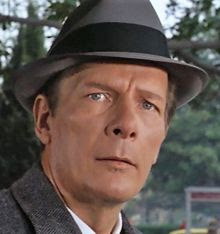
Frank Marth likewise appeared on multiple Cannon episodes. He, though, will always be that big guy from The Honeymooners. Among many roles in the series, the tall, lanky, somber-faced Marth played one of the bank robbers who held the Kramdens and Ed Norton hostage in the Kramden apartment.

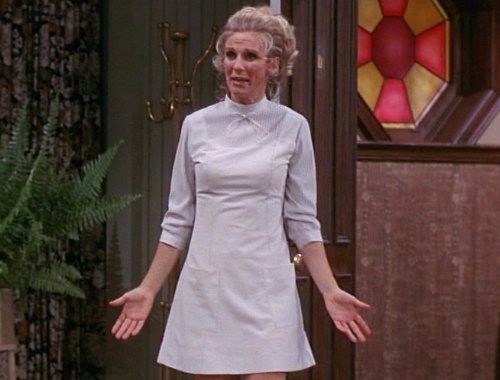
Actress Cloris Leachman died this week. She was ninety-four and known for many roles in television and movies, including landlady/neighbor Phyllis on The Mary Tyler Moore Show and then Phyllis on Phyllis (1975-1977). The latter spin-off series, as I recall, was only so-so, just like Rhoda. The Phyllis character was more tolerable in smaller doses, I guess. The show nonetheless featured some recurring characters played by notable character actors of the day: Henry Jones, Carmine Caridi, and Richard Schaal. It also made a little old lady, actress Judith Lowry, a familiar face in the role of Mother Dexter. Congenial old geezer Burt Mustin played her boyfriend, Arthur Lanson, for three episodes. The pair got married in the last one: “Mother Dexter’s Wedding,” which aired on December 13, 1976. Sadly, Judith Lowry passed away a couple of weeks before the airing. Happily, Burt Mustin got to tune in. He soldiered on for another month or so after that, but couldn’t outlive Phyllis in the prime-time lineup.

Those were the days, my friends, we thought they’d never end—when we tuned in to watch Mother Dexter marry Arthur Lanson and Rhoda marry Joe Gerard. Concerning the latter coupling, the writers quickly realized what a mistake that was vis-à-vis comedic plotlines. So, Rhoda and Joe got divorced, but Rhoda never quite recovered her quipping wit from The Mary Tyler Moore Show days. Julie Kavner and Nancy Walker got most of the laughs, playing Rhoda’s sister and mother, respectively. And, as always, it was a pleasure to watch Dr. Harold Gould…in whatever role he played.

So many thespians have passed in the wake of Judith Lowry and Burt Mustin. Television is a wholly different experience nowadays. Everyday living is a wholly different experience nowadays. But there was something to be said for a “Quinn Martin Production” and the memorable intonations of Hank Simms. There was something to be said for character actors getting their due. 

Wednesday, January 13, 2021

In the Year of Our Lord 1976

A month before I graduated from grammar school—in May of our bicentennial year—the entire eighth-grade class embarked on a field trip. This was the big enchilada—a reward of sorts for making it that far. And far it was in comparison with past field trips that ranged from a stroll over to the local police precinct to a subway ride downtown to Radio City Music Hall to a bus trip to a decrepit amusement park in Lake Hopatcong, New Jersey. This latest bus excursion, though, was a four-hour excursion to our nation’s capital, Washington, D.C.

Days before the big adventure, our principal, Sister Estelle, furnished us with the trip’s itinerary. We were poised to cram in a lot of sightseeing in a single day’s daylight minus, of course, the eight hours traveling from and back to the Bronx. Sister Estelle later remarked to a smaller group of us, which included little Johnny, “Maybe we’ll see someone important like President Ford.” Johnny, who fancied himself a thirteen-year-old wit extraordinaire, replied, “He’s not important!” When his snarky rejoinder fell on deaf ears, he repeated it to a second resounding thud.

What I remember most about that day was assembling at the school in dawn’s early light. Down the street, the hearty staff of Bill’s Friendly Spot gathered up and assembled the new day’s various newspapers. This fortuitous set of circumstances permitted Jimmy Mannion to have a thermos bottle filled with his drink of choice—a chocolate egg cream—for our impending long and exciting day. And, as memory serves, we didn’t see President Ford or anyone all that important, except House Speaker Carl Albert—a little known figure in those days—presiding over a rather empty chamber. We did spend an inordinate amount of time in a Capitol building gift shop with very long lines. For my grandmother and aunt, I purchased a decorative aluminum bowl that featured images of everything from the Smithsonian National Museum to the White House to the Washington Monument. Despite being a non-smoker and it having nothing to do with Washington, D.C., a skull-shaped ashtray so intrigued me that I bought it for myself. The skull sported a pair of metal glasses, which doubled as cigarette holders.

I distinctly recall walking through the impressive Capitol Rotunda in awe—a kid’s kind, especially one interested in American history and American institutions. Fast-forward almost forty-five years and a ragtag band of faux insurrectionists barreled their way through the very same hallowed halls, ostensibly to interfere with and cast aside a free and fair democratic election. Egged on by the loser of the election, it was simultaneously unprecedented and unbelievable—a disturbing visual from disturbing times. The aforementioned President Ford is reputed to have said, “If Lincoln were alive today, he’d be turning over in his grave.” He certainly would!

I consider myself fortunate that I don’t have another forty-five years to witness further erosion of American democracy and the Constitution. The genie’s out of the bottle, though, and absolute nuttiness now travels at the speed of light. Many seemingly intelligent people—and lots of really dumb ones, too—throw in nowadays with the most preposterous conspiracy theories. So, pardon me for briefly returning to 1976, when we weren’t completely obsessed with red and blue allegiances, cult worship of unsavory demagogic politicians, and insidious woke censorship—when most people voted because it was their civic duty and then got on with their lives.

Back to Washington, D.C. back in the day: As our multiple buses pulled into Arlington Cemetery—the last leg of the day’s journey—the skies opened up big time. Courtesy of Mother Nature, we couldn’t even exit the bus to lay eyes on that Eternal Flame. A footnote here: Sister Estelle, a rather large woman, was nicknamed Sister Estell-e-phant by some, which wasn’t very nice. Yes, kids can be cruel—and adults, too. Gerald Ford certainly wouldn’t have called her that, but Donald Trump would have had no such hesitation. That about says it all, I think.

Lastly, approximately a month after our field trip of all field trips, little Johnny hosted a graduation party in his old walk-up building apartment. Most of the apartments in the neighborhood were in old walk-ups. A couple of friends and I were invited, and we turned up in jeans and sneakers, only to discover that the party was “formal.” We didn’t get the memo. Oprah would have said, “Awwwwwkward!” I must say that entering a Ralph Kramden-esque apartment and encountering a group of my peers sitting on the barren floor dressed to the nines was a rather silly spectacle. I don’t remember much else about that party, except that I didn’t have a good time. Perhaps if I was wearing my Sunday best, things might have been different. I do, though, miss those more genteel, intelligent, and quieter times.

 (Photos from the personal collection of Nicholas Nigro)

Sunday, January 3, 2021

They Said, They Said


As we begin 2021, I thought I’d offer up some random thoughts concerning this, that, and the other thing. The U.S. House of Representatives is poised to go gender-neutral and replace he and she references with “they.” So, I suppose, he got up to speak would be replaced with they got up to speak. To paraphrase a senior citizen whom I worked alongside in retail a long, long time ago: “That don’t make no sense!” He was a “he,” by the way, not a “they.” At least I think they was.

In two-and-a-half weeks The Donald Trump Show will mercifully conclude its four-year run. It’ll be the stuff of history books. And speaking of them, imagine the spate of books in the offing—from weary insiders released from their bondage. In the ensuing weeks, however, this reality show’s going to get weirder still before it rides off into the night. I don’t know why I’m both astounded and ashamed that so many prominent politicians who should know better put partisanship above country and the Constitution, but I am. When I was a youth collecting autographed pictures of senators, governors, and mayors, they were very definitely a better breed. Apparently, some of these contemporary dunderheads reason that their anti-democratic antics—and being on the wrong side of history—will aid and abet their careers. I somehow doubt that.

Okay, enough of all that. It’s worth noting that while COVID-19 has—according to the numbers—reared its ugly head again, we the people don’t appeared all that fazed. I’ll not soon forget the fledgling days of the virus spread here—ground zero at the time—in New York City. It was freak-out time for sure. Toilet paper, hand sanitizer, and soap were coveted items and hard to come by. I’ve got this image seared in my mind of local deli owners festooned in hazmat suits with cases of Poland Spring bottled water barriers in front of their counters. Fast forward ten months and these very same folks wear masks around their necks but rarely over their noses and mouths. Nevertheless, the vast, vast majority of men, women, and children are masked when making their rounds. They are taking the necessary precautions and rather serenely living their lives in what has become the new normal.

Okay, it seems to me that during past holiday seasons, some person or persons in my small circle had the flu or a very bad cold. This year, though, everyone was—relatively speaking—healthy. I guess wearing masks while grocery shopping, sitting in a doctor’s waiting room, and riding mass transit has its benefits beyond preventing the spread of COVID-19. Perhaps daily mask wearing will survive this pandemic. Sporting one in the aforementioned circumstances during the flu season certainly makes sense.

Now, on to some good news: It’s Mayor Bill de Blasio’s last year in office. Most of his wannabe successors, though, appear as bad or worse than him. Murder and mayhem have returned to the Big Apple with a vengeance this year, but reducing crime is apparently a low priority with this sorry bunch. I refer you to what I previously said about the current political class. I do, however, like Andrew Yang and voted for him in last year’s Democratic presidential primary. But that was more a demeanor thing—a non-politician among a sea of pandering politicians. Time will tell what his mayoral run looks like.

A couple of final notes: I sincerely hope that 2021 brings back bi-partisanship in comedy. In the good old days, comedians were equal opportunity destroyers, as it were. In the post-Trump era, perhaps some of them will realize that Joe Biden, too, is comic gold—an inarticulate and ancient hack pol who wasn’t the brightest bulb in the chandelier during his prime. Let’s, too, rely on science over political posturing—that means you, as well, Democrats, the party of science. Enough also of identity politics and woke insanity—less is definitely better. Honestly, I’m not holding out much hope for any of that, but it is a new year and hope is supposed to spring eternal, isn’t it—for the first week in January at least?

(Photos from the personal collection of Nicholas Nigro)